
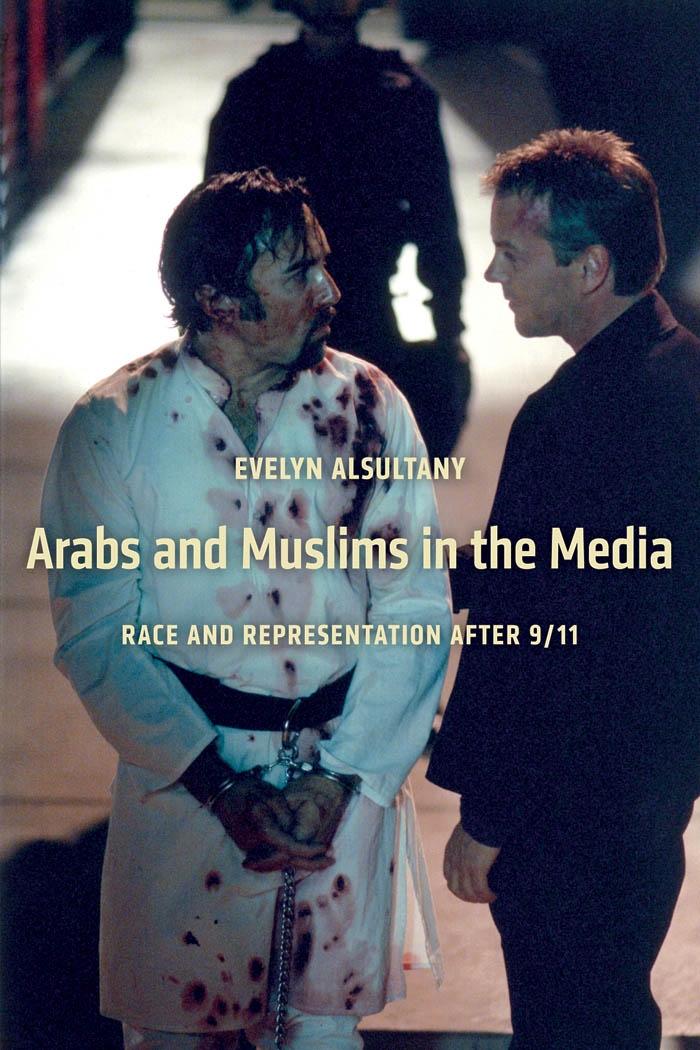
After 9/11, there was an increase in both the incidence of hate crimes and government policies that targeted Arabs and Muslims and the proliferation of sympathetic portrayals of Arabs and Muslims in the U.S. media. Arabs and Muslims in the Media examines this paradox and investigates the increase of sympathetic images of “the enemy” during the War on Terror.
Evelyn Alsultany explains that a new standard in racial and cultural representations emerged out of the multicultural movement of the 1990s that involves balancing a negative representation with a positive one, what she refers to as “simplified complex representations.” This has meant that if the storyline of a TV drama or film represents an Arab or Muslim as a terrorist, then the storyline also includes a “positive” representation of an Arab, Muslim, Arab American, or Muslim American to offset the potential stereotype. Analyzing how TV dramas such as The Practice, 24, Law and Order, NYPD Blue, and Sleeper Cell, news-reporting, and non-profit advertising have represented Arabs, Muslims, Arab Americans, and Muslim Americans during the War on Terror, this book demonstrates how more diverse representations do not in themselves solve the problem of racial stereotyping and how even seemingly positive images can produce meanings that can justify exclusion and inequality.
Betaal eenvoudig met kaart, Klarna, Apple Pay of Google Pay. Niet tevreden? Je hebt altijd 14 dagen bedenktijd. Lees meer in onze voorwaarden. Heb je vragen, mail ons dan via hello@memmo.org.
Memmo maakt studeren makkelijker – waar je ook bent ter wereld. Wij brengen je cursusboeken en slimme studietools samen op één plek: samenvattingen, quizzen, podcasts en flashcards. En Ted, je studievriend die antwoord geeft op alles wat je je afvraagt. Meer dan 50.000 studenten studeren hier al – gebouwd om je sneller te laten leren en minder stress te geven.