
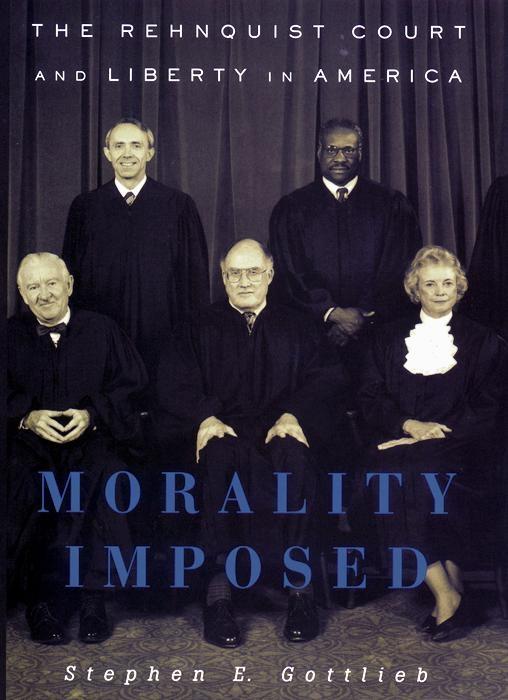
We like to think of judges and justices as making decisions based on the facts and the law. But to what extent do jurists decide cases in accordance with their own preexisting philosophy of law, and what specific ideological assumptions account for their decisions?
Stephen E. Gottlieb adopts a unique perspective on the decision-making of Supreme Court justices, blending and re-characterizing traditional accounts of political philosophy in a way that plausibly explains many of the justices' voting patterns.
A seminal study of the Rehnquist Court, Morality Imposed illustrates how, in contrast to previous courts which took their mandate to be a move toward a freer and/or happier society, the current court evidences little concern for this goal, focusing instead on thinly veiled moral judgments. Delineating a fault line between liberal and conservative justices on the Rehnquist Court, Gottlieb suggests that conservative justices have rejected the basic principles that informed post-New Deal individual rights jurisprudence and have substituted their own conceptions of moral character for these fundamental principles.
Morality Imposed adds substantially to our understanding of the Supreme Court, its most recent cases, and the evolution of judicial philosophy in the U.S.
Betaal eenvoudig met kaart, Klarna, Apple Pay of Google Pay. Niet tevreden? Je hebt altijd 14 dagen bedenktijd. Lees meer in onze voorwaarden. Heb je vragen, mail ons dan via hello@memmo.org.
Memmo maakt studeren makkelijker – waar je ook bent ter wereld. Wij brengen je cursusboeken en slimme studietools samen op één plek: samenvattingen, quizzen, podcasts en flashcards. En Ted, je studievriend die antwoord geeft op alles wat je je afvraagt. Meer dan 50.000 studenten studeren hier al – gebouwd om je sneller te laten leren en minder stress te geven.