
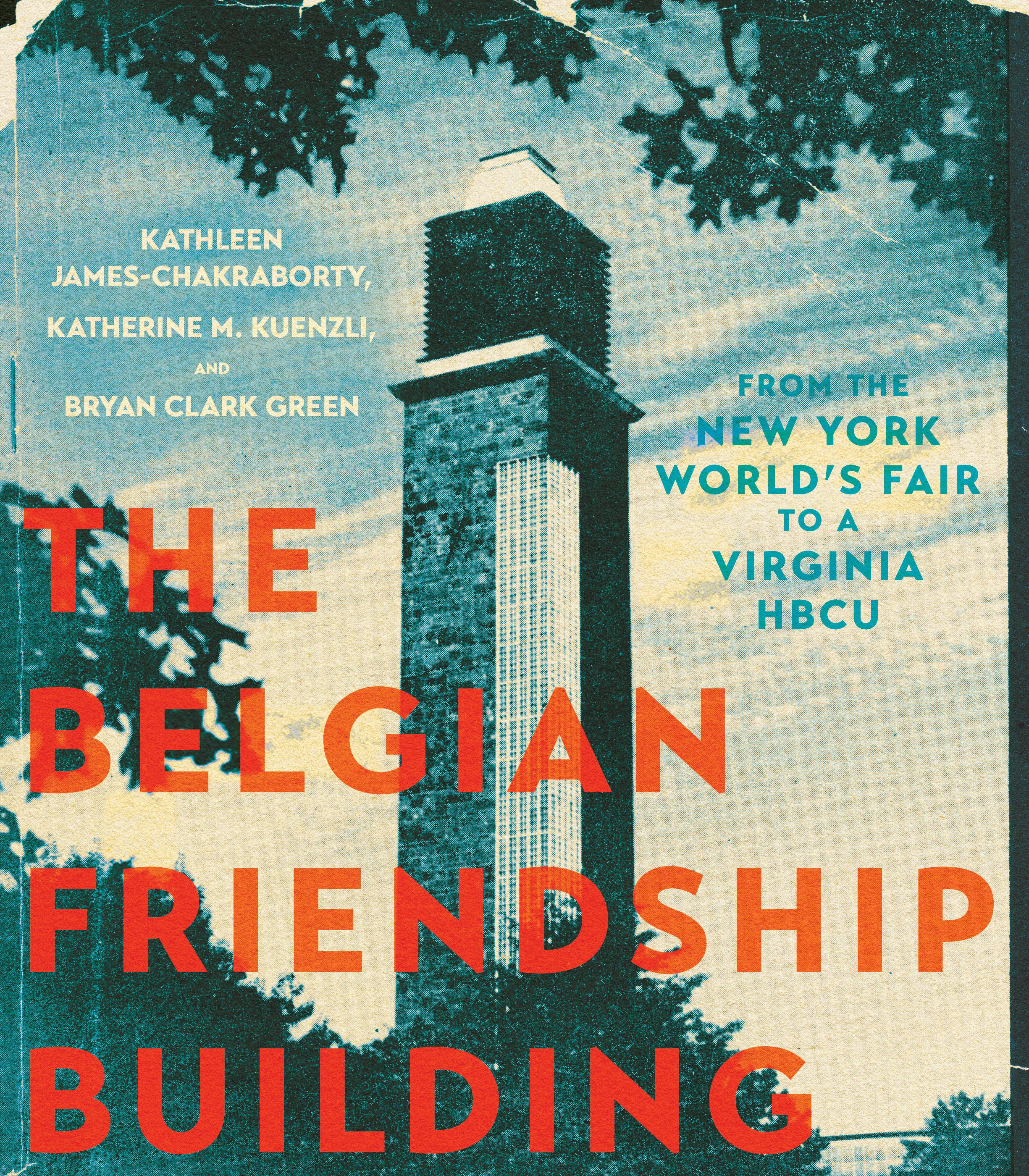
A singular architectural landmark bridging western Europe and the American South
How did the Belgian Friendship Building, originally constructed for the 1939 New York World’s Fair—and one of only a few surviving buildings from that celebrated exhibition—end up on the campus of an HBCU in Richmond, Virginia? In this richly illustrated book, Kathleen James-Chakraborty, Katherine Kuenzli, and Bryan Clark Green relate the fascinating story, spanning three continents, of a distinctly modern structure that has towered over Virginia Union University, in a city characterized by its traditional architecture, for more than eighty years. It is a structure whose original purposes—to present modern Belgian design and to extol its racist, colonial regime—stand in stark contrast to its dedication in 1941 to Robert L. Vann, longtime editor of one of America’s most illustrious historic Black newspapers. The Belgian Friendship Building is an enduring example of prewar modernism designed by a team of Belgian architects under the direction of Henry van de Velde that has until now been all but forgotten in histories of modern architecture. This indispensable, multifaceted account ties together the history of modern European architecture, colonial exploitation, and African American achievement in a brilliant and compelling case study.
How did the Belgian Friendship Building, originally constructed for the 1939 New York World’s Fair—and one of only a few surviving buildings from that celebrated exhibition—end up on the campus of an HBCU in Richmond, Virginia? In this richly illustrated book, Kathleen James-Chakraborty, Katherine Kuenzli, and Bryan Clark Green relate the fascinating story, spanning three continents, of a distinctly modern structure that has towered over Virginia Union University, in a city characterized by its traditional architecture, for more than eighty years. It is a structure whose original purposes—to present modern Belgian design and to extol its racist, colonial regime—stand in stark contrast to its dedication in 1941 to Robert L. Vann, longtime editor of one of America’s most illustrious historic Black newspapers. The Belgian Friendship Building is an enduring example of prewar modernism designed by a team of Belgian architects under the direction of Henry van de Velde that has until now been all but forgotten in histories of modern architecture. This indispensable, multifaceted account ties together the history of modern European architecture, colonial exploitation, and African American achievement in a brilliant and compelling case study.
Betaal eenvoudig met kaart, Klarna, Apple Pay of Google Pay. Niet tevreden? Je hebt altijd 14 dagen bedenktijd. Lees meer in onze voorwaarden. Heb je vragen, mail ons dan via hello@memmo.org.
Memmo maakt studeren makkelijker – waar je ook bent ter wereld. Wij brengen je cursusboeken en slimme studietools samen op één plek: samenvattingen, quizzen, podcasts en flashcards. En Ted, je studievriend die antwoord geeft op alles wat je je afvraagt. Meer dan 50.000 studenten studeren hier al – gebouwd om je sneller te laten leren en minder stress te geven.
Misschien vind je dit ook leuk
Koop het boek0