
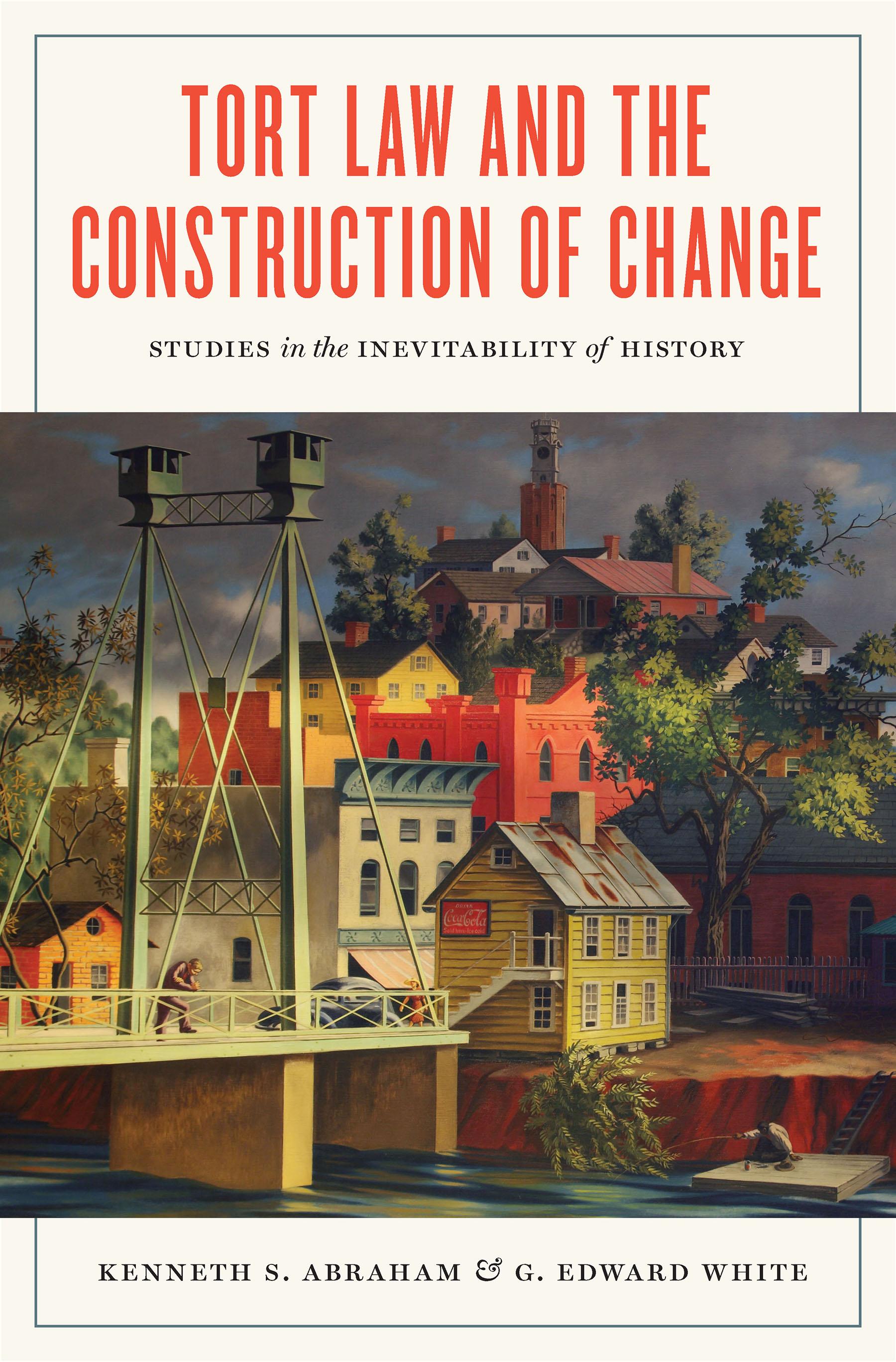
Tort Law and the Construction of Change studies the interaction of law and social change in American history. Tort law—civil law made by judges, not legislators—is traditionally thought to arise out of legal precedent. But Kenneth S. Abraham and G. Edward White show that American judges over the course of the previous two centuries also paid close attention to changing societal contexts in which lawsuits for civil injuries arose. They argue that two versions of history–one grounded in the application of previous legal rules and the other responsive to larger societal changes—must be considered in tandem to grasp fully how American civil law has evolved over time.
In five fascinating chapters, they cover understudied areas of tort law, such as liability for nonphysical harm—including lawsuits for defamation, privacy, emotional distress, sexual harassment, and the hacking of confidential information—and aspects of tort litigation that have now disappeared, such as the prohibition against "interested" parties testifying in civil actions or the intentional infliction of temporal damage without justification. What emerges is a picture of the complicated legal dance American judges performed to cloak their decisions to make at times radical changes in tort law in response to social transformations. When confronting established tort doctrines under pressure from emerging social changes, they found ways to preserve at least the appearance of doctrinal continuity.
Betaal eenvoudig met kaart, Klarna, Apple Pay of Google Pay. Niet tevreden? Je hebt altijd 14 dagen bedenktijd. Lees meer in onze voorwaarden. Heb je vragen, mail ons dan via hello@memmo.org.
Memmo maakt studeren makkelijker – waar je ook bent ter wereld. Wij brengen je cursusboeken en slimme studietools samen op één plek: samenvattingen, quizzen, podcasts en flashcards. En Ted, je studievriend die antwoord geeft op alles wat je je afvraagt. Meer dan 50.000 studenten studeren hier al – gebouwd om je sneller te laten leren en minder stress te geven.