
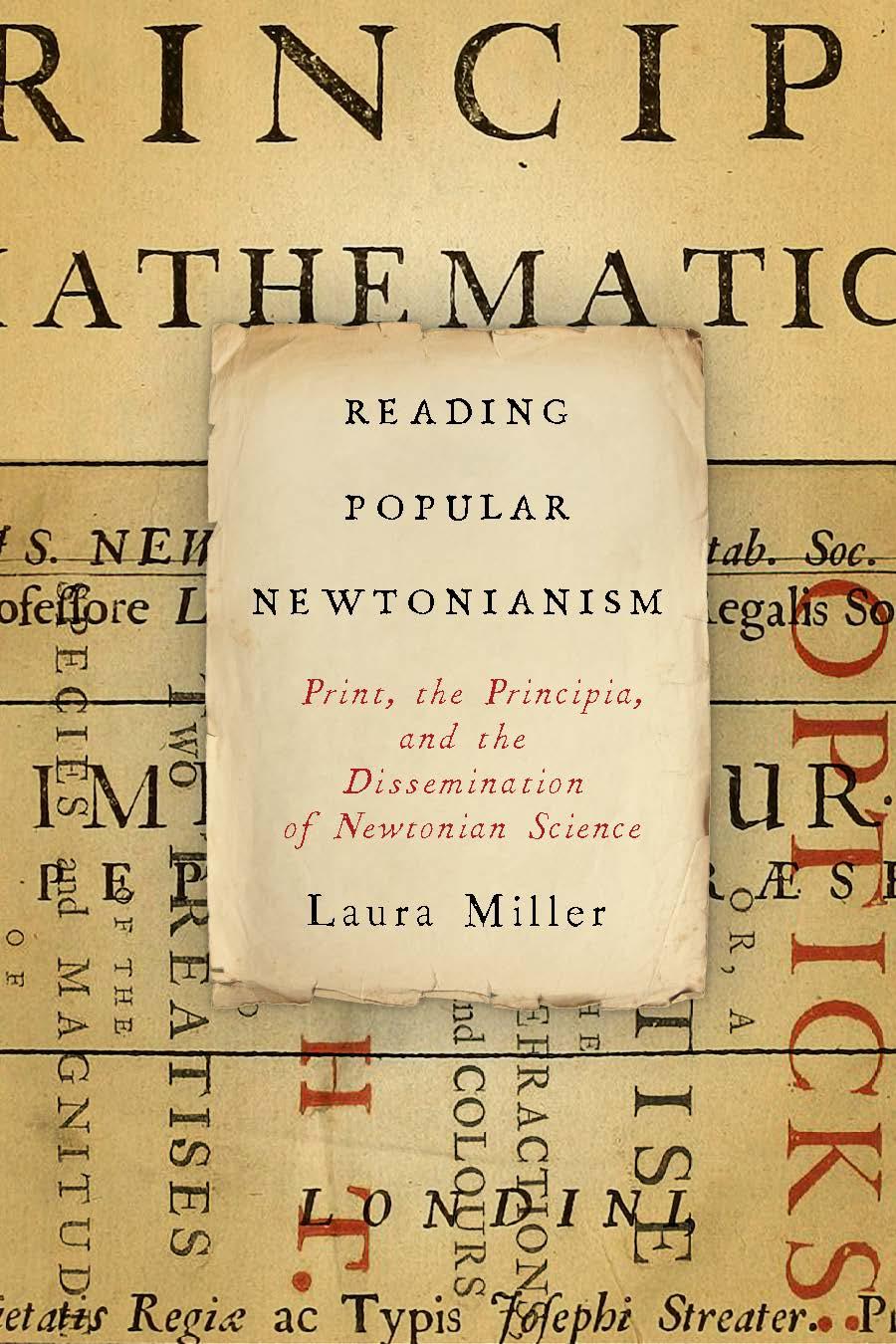
Sir Isaac Newton’s publications, and those he inspired, were among the most significant works published during the long eighteenth century in Britain. Concepts such as attraction and extrapolation—detailed in his landmark monograph Philosophiae Naturalis Principia Mathematica—found their way into both scientific and cultural discourse. Understanding the trajectory of Newton’s diverse critical and popular reception in print demands consideration of how his ideas were disseminated in a marketplace comprised of readers with varying levels of interest and expertise.
Reading Popular Newtonianism focuses on the reception of Newton's works in a context framed by authorship, print, editorial practices, and reading. Informed by sustained archival work and multiple critical approaches, Laura Miller asserts that print facilitated the mainstreaming of Newton's ideas. In addition to his reading habits and his manipulation of print conventions in the Principia, Miller analyzes the implied readership of various "popularizations" as well as readers traced through the New York Society Library's borrowing records. Many of the works considered—including encyclopedias, poems, and a work written "for the ladies"—are not scientifically innovative but are essential to eighteenth-century readers’ engagement with Newtonian ideas. Revising the timeline in which Newton’s scientific ideas entered eighteenth-century culture, Reading Popular Newtonianism is the first book to interrogate at length the importance of print to his consequential career.
Betaal eenvoudig met kaart, Klarna, Apple Pay of Google Pay. Niet tevreden? Je hebt altijd 14 dagen bedenktijd. Lees meer in onze voorwaarden. Heb je vragen, mail ons dan via hello@memmo.org.
Memmo maakt studeren makkelijker – waar je ook bent ter wereld. Wij brengen je cursusboeken en slimme studietools samen op één plek: samenvattingen, quizzen, podcasts en flashcards. En Ted, je studievriend die antwoord geeft op alles wat je je afvraagt. Meer dan 50.000 studenten studeren hier al – gebouwd om je sneller te laten leren en minder stress te geven.