
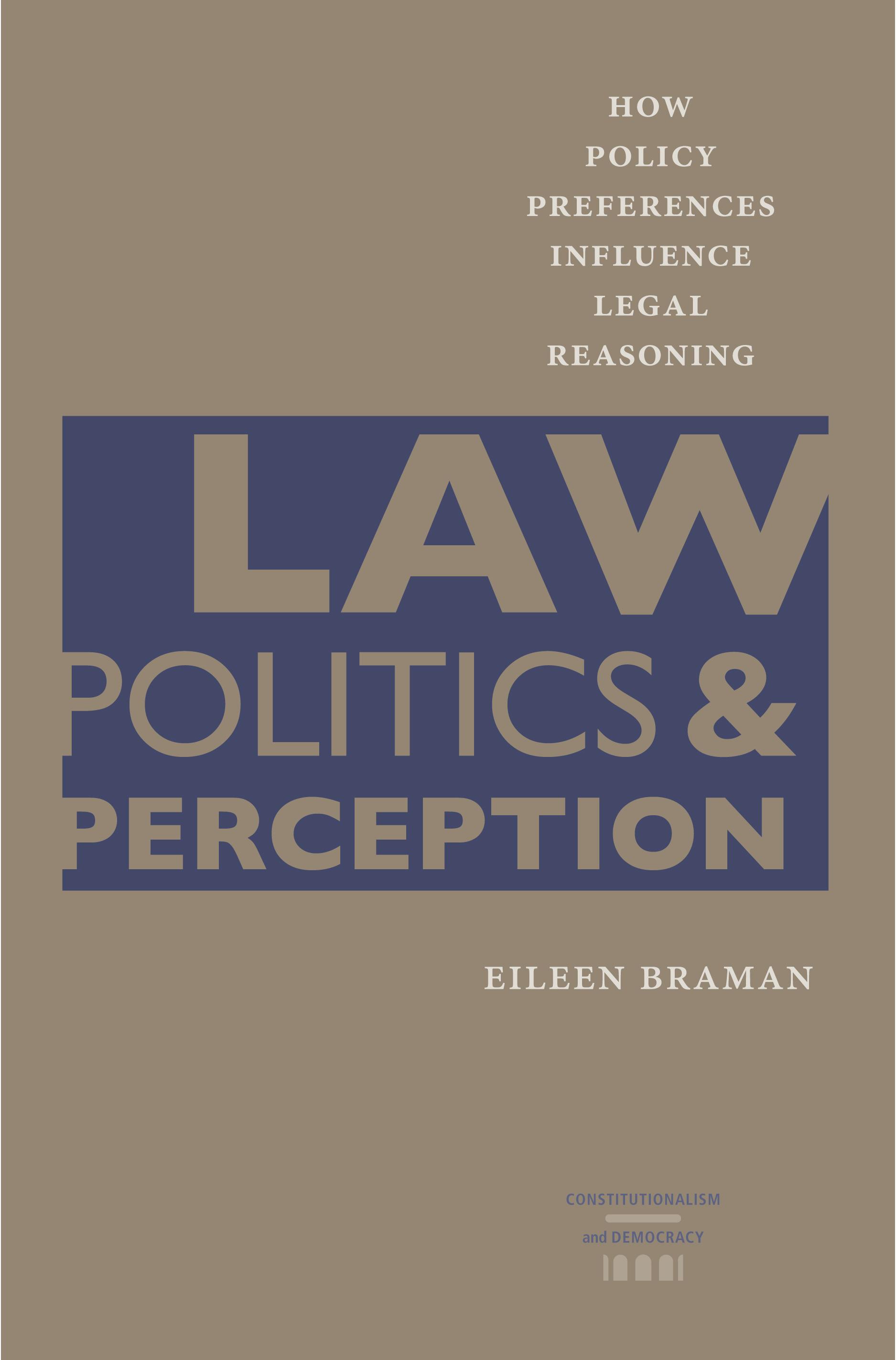
Are judges' decisions more likely to be based on personal inclinations or legal authority? The answer, Eileen Braman argues, is both. Law, Politics, and Perception brings cognitive psychology to bear on the question of the relative importance of norms of legal reasoning versus decision markers' policy preferences in legal decision-making. While Braman acknowledges that decision makers' attitudes—or, more precisely, their preference for policy outcomes—can play a significant role in judicial decisions, she also believes that decision-makers' belief that they must abide by accepted rules of legal analysis significantly limits the role of preferences in their judgements. To reconcile these competing factors, Braman posits that judges engage in "motivated reasoning," a biased process in which decision-makers are unconsciously predisposed to find legal authority that is consistent with their own preferences more convincing than those that go against them. But Braman also provides evidence that the scope of motivated reasoning is limited. Objective case facts and accepted norms of legal reasoning can often inhibit decision makers' ability to reach conclusions consistent with their preferences.
Betaal eenvoudig met kaart, Klarna, Apple Pay of Google Pay. Niet tevreden? Je hebt altijd 14 dagen bedenktijd. Lees meer in onze voorwaarden. Heb je vragen, mail ons dan via hello@memmo.org.
Memmo maakt studeren makkelijker – waar je ook bent ter wereld. Wij brengen je cursusboeken en slimme studietools samen op één plek: samenvattingen, quizzen, podcasts en flashcards. En Ted, je studievriend die antwoord geeft op alles wat je je afvraagt. Meer dan 50.000 studenten studeren hier al – gebouwd om je sneller te laten leren en minder stress te geven.