
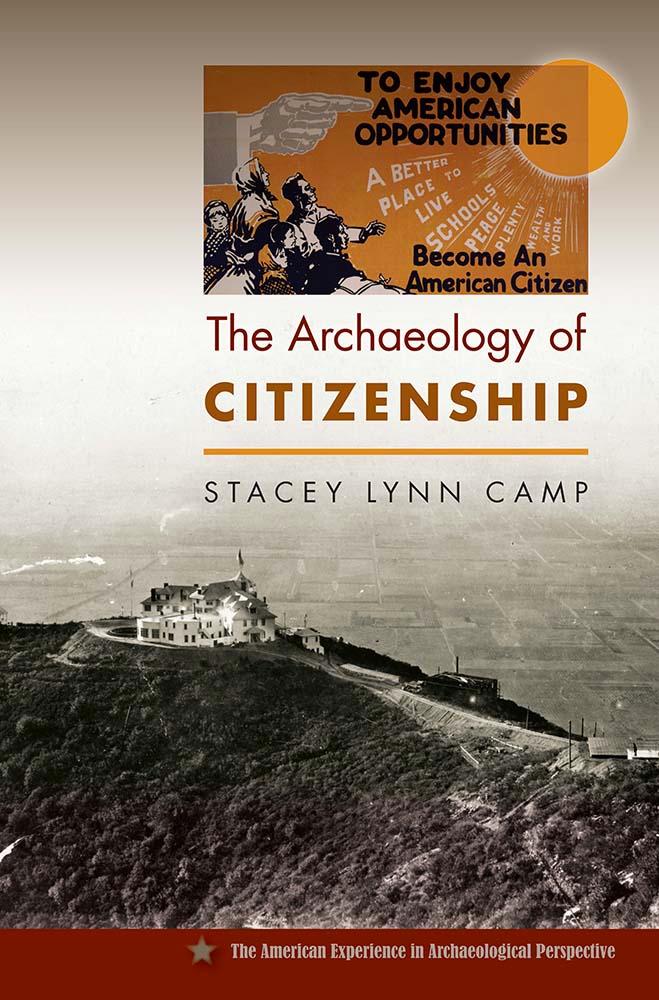
Since the founding of the United States, the rights to citizenship have been carefully crafted and policed by the Europeans who originally settled and founded the country. Immigrants have been extended and denied citizenship in various legal and cultural ways.
While the subject of citizenship has often been examined from a sociological, historical, or legal perspective, historical archaeologists have yet to fully explore the material aspects of these social boundaries. The Archaeology of Citizenship uses the material record to explore what it means to be an American.
Using a late-nineteenth-century California resort as a case study, Stacey Camp discusses how the parameters of citizenship and national belonging have been defined and redefined since Europeans arrived on the continent. In a unique and powerful contribution to the field of historical archaeology, Camp uses the remnants of material culture to reveal how those in power sought to mold the composition of the United States and how those on the margins of American society carved out their own definitions of citizenship.
Betaal eenvoudig met kaart, Klarna, Apple Pay of Google Pay. Niet tevreden? Je hebt altijd 14 dagen bedenktijd. Lees meer in onze voorwaarden. Heb je vragen, mail ons dan via hello@memmo.org.
Memmo maakt studeren makkelijker – waar je ook bent ter wereld. Wij brengen je cursusboeken en slimme studietools samen op één plek: samenvattingen, quizzen, podcasts en flashcards. En Ted, je studievriend die antwoord geeft op alles wat je je afvraagt. Meer dan 50.000 studenten studeren hier al – gebouwd om je sneller te laten leren en minder stress te geven.
Misschien vind je dit ook leuk
Koop het boek0