
“Street provides a crucial critical and cultural service by not only studying Eastwood’s individual films in sharp detail but also by providing a close and serious analysis of the cultural and historic times of the films.”—Sam B. Girgus, author of Clint Eastwood’s America
“By far the most comprehensive, sustained, and detailed discussion of the Dirty Harry phenomenon. A thorough and engaging account of how a fictitious renegade cop became an enduring icon of the angry conservative backlash that sought to halt 1960s liberalism in its tracks.”—Nick Heffernan, author of Culture, Environment and Ecopolitics
Clint Eastwood’s Dirty Harry became the prototype for a new kind of movie cop—an antihero in pursuit of his own vision of justice. The Dirty Harry series helped cement Eastwood and his character, Harry Callahan, as central figures in 1970s and 1980s Hollywood cinema.
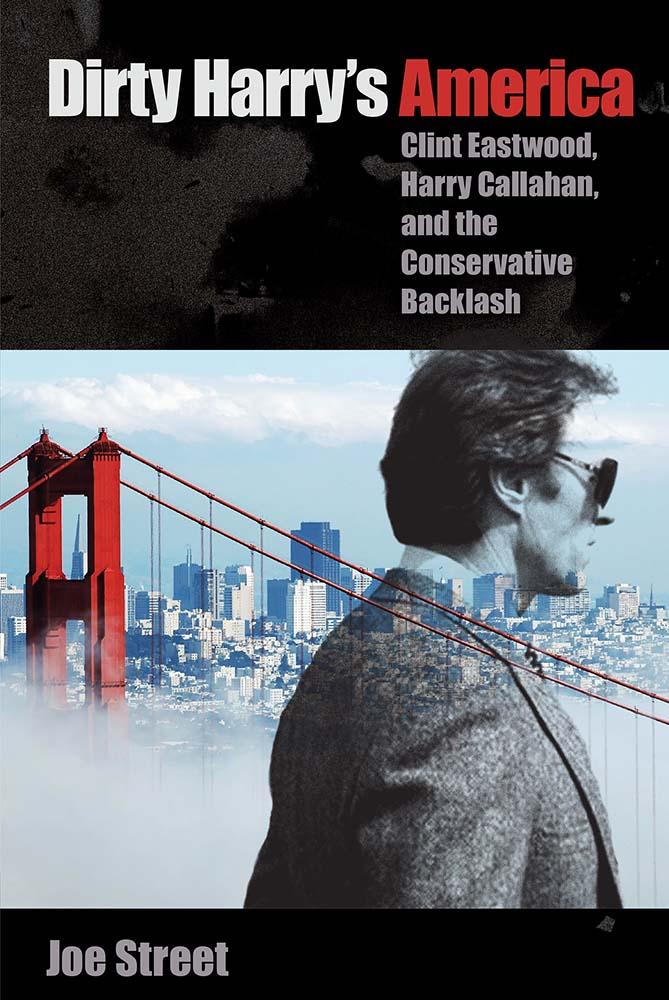
In Dirty Harry’s America, Joe Street argues that the movies shed critical light on the culture and politics of the post-1960s era and locates San Francisco as the symbolic cultural battleground of the time. Across the entire series, conservative anger and moral outrage confront elitist liberalism and moral relativism. Paying particular attention the films' representation of crime, family and community, sexuality, and race, Street maintains that through referencing real events and political struggles, the films themselves became active participants in the culture wars.
Unapologetic carrier of right and might, Harry Callahan becomes America’s Ur-conservative: “unbending, moral, incorruptible, and most important, always right.” Long after the series, Callahan’s legacy remains strong in American political discourse, cinema, and pop culture, and he continues to shape Eastwood’s later political and cinematic career.
“By far the most comprehensive, sustained, and detailed discussion of the Dirty Harry phenomenon. A thorough and engaging account of how a fictitious renegade cop became an enduring icon of the angry conservative backlash that sought to halt 1960s liberalism in its tracks.”—Nick Heffernan, author of Culture, Environment and Ecopolitics
Clint Eastwood’s Dirty Harry became the prototype for a new kind of movie cop—an antihero in pursuit of his own vision of justice. The Dirty Harry series helped cement Eastwood and his character, Harry Callahan, as central figures in 1970s and 1980s Hollywood cinema.
In Dirty Harry’s America, Joe Street argues that the movies shed critical light on the culture and politics of the post-1960s era and locates San Francisco as the symbolic cultural battleground of the time. Across the entire series, conservative anger and moral outrage confront elitist liberalism and moral relativism. Paying particular attention the films' representation of crime, family and community, sexuality, and race, Street maintains that through referencing real events and political struggles, the films themselves became active participants in the culture wars.
Unapologetic carrier of right and might, Harry Callahan becomes America’s Ur-conservative: “unbending, moral, incorruptible, and most important, always right.” Long after the series, Callahan’s legacy remains strong in American political discourse, cinema, and pop culture, and he continues to shape Eastwood’s later political and cinematic career.
Betaal eenvoudig met kaart, Klarna, Apple Pay of Google Pay. Niet tevreden? Je hebt altijd 14 dagen bedenktijd. Lees meer in onze voorwaarden. Heb je vragen, mail ons dan via hello@memmo.org.
Memmo maakt studeren makkelijker – waar je ook bent ter wereld. Wij brengen je cursusboeken en slimme studietools samen op één plek: samenvattingen, quizzen, podcasts en flashcards. En Ted, je studievriend die antwoord geeft op alles wat je je afvraagt. Meer dan 50.000 studenten studeren hier al – gebouwd om je sneller te laten leren en minder stress te geven.
Misschien vind je dit ook leuk
Koop het boek0