
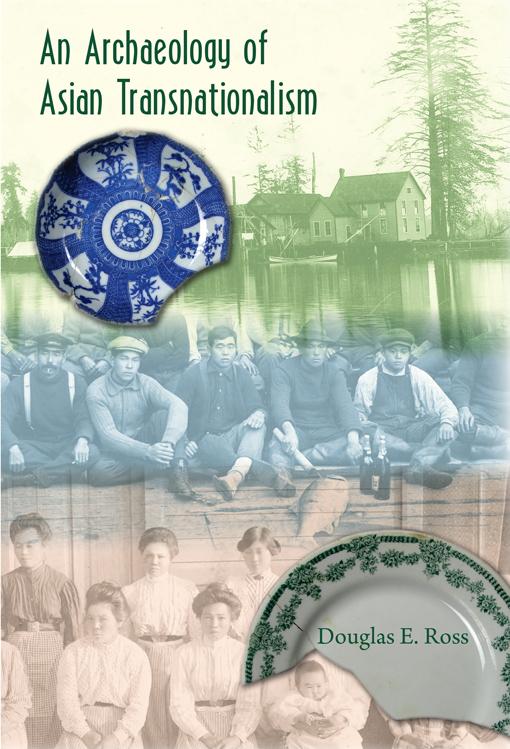
In the early twentieth century, an industrial salmon cannery thrived along the Fraser River in British Columbia. Chinese factory workers lived in an adjoining bunkhouse, and Japanese fishermen lived with their families in a nearby camp. Today the complex is nearly gone and the site overgrown with vegetation, but artifacts from these immigrant communities linger just beneath the surface.
In this groundbreaking comparative archaeological study of Asian immigrants in North America, Douglas Ross excavates the Ewen Cannery to explore how its immigrant workers formed a new cultural identity in the face of dramatic displacement. Ross demonstrates how some homeland practices persisted while others changed in response to new contextual factors, reflecting the complexity of migrant experiences. Instead of treating ethnicity as a bounded, stable category, Ross shows that ethnic identity is shaped and transformed as cultural traditions from home and host societies come together in the context of local choices, structural constraints, and consumer society.
Betaal eenvoudig met kaart, Klarna, Apple Pay of Google Pay. Niet tevreden? Je hebt altijd 14 dagen bedenktijd. Lees meer in onze voorwaarden. Heb je vragen, mail ons dan via hello@memmo.org.
Memmo maakt studeren makkelijker – waar je ook bent ter wereld. Wij brengen je cursusboeken en slimme studietools samen op één plek: samenvattingen, quizzen, podcasts en flashcards. En Ted, je studievriend die antwoord geeft op alles wat je je afvraagt. Meer dan 50.000 studenten studeren hier al – gebouwd om je sneller te laten leren en minder stress te geven.