
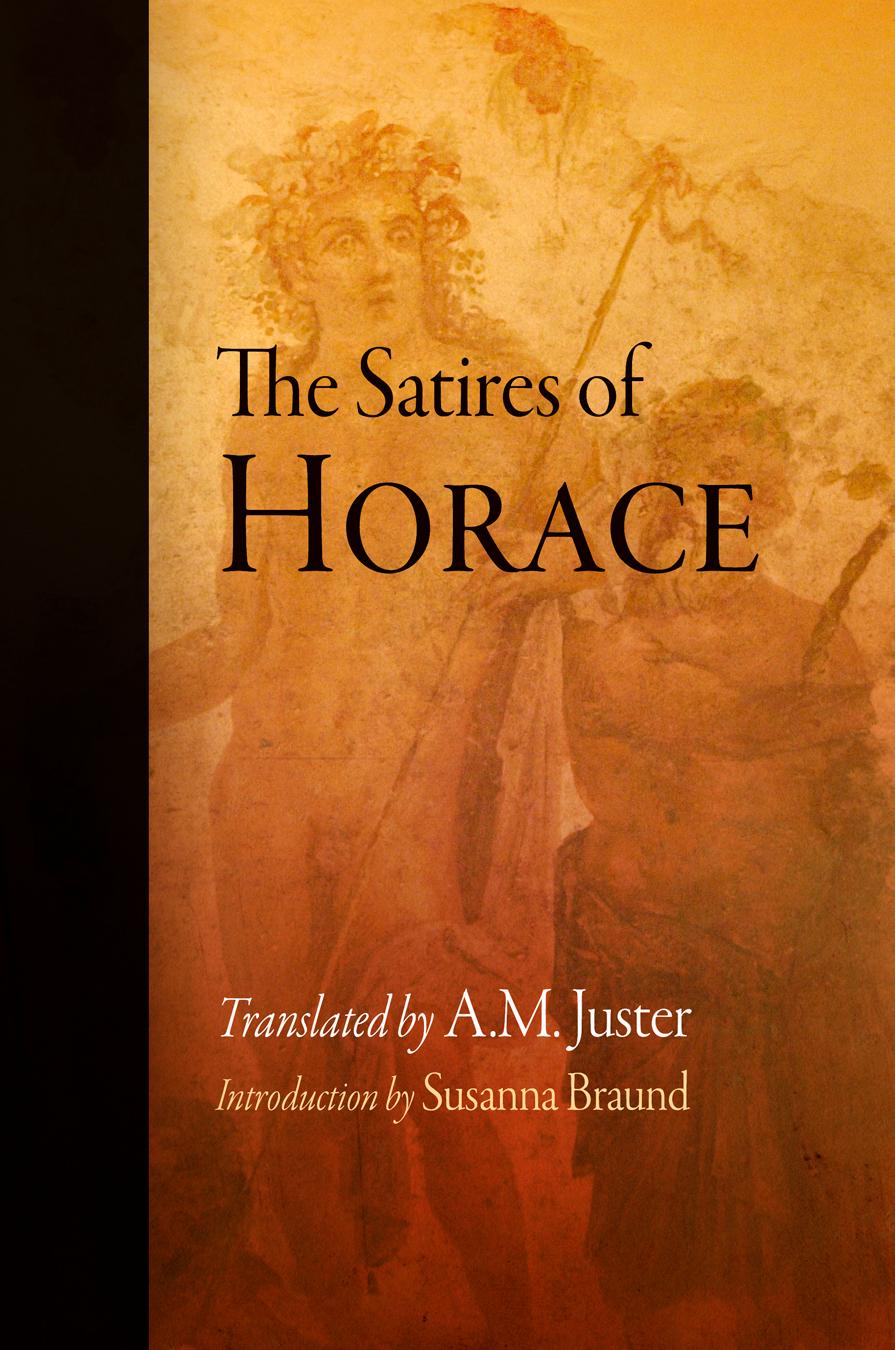
The Roman philosopher and dramatic critic Quintus Horatius Flaccus (65-3 B.C.), known in English as Horace, was also the most famous lyric poet of his age. Written in the troubled decade ending with the establishment of Augustus's regime, his Satires provide trenchant social commentary on men's perennial enslavement to money, power, fame, and sex. Not as frequently translated as his Odes, in recent decades the Satires have been rendered into prose or bland verse.
Horace continues to influence modern lyric poetry, and our greatest poets continue to translate and marvel at his command of formal style, his economy of expression, his variety, and his mature humanism. Horace's comic genius has also had a profound influence on the Western literary tradition through such authors as Swift, Pope, and Boileau, but interest in the Satires has dwindled due to the difficulty of capturing Horace's wit and formality with the techniques of contemporary free verse.
A. M. Juster's striking new translation relies on the tools and spirit of the English light verse tradition while taking care to render the original text as accurately as possible.
Betaal eenvoudig met kaart, Klarna, Apple Pay of Google Pay. Niet tevreden? Je hebt altijd 14 dagen bedenktijd. Lees meer in onze voorwaarden. Heb je vragen, mail ons dan via hello@memmo.org.
Memmo maakt studeren makkelijker – waar je ook bent ter wereld. Wij brengen je cursusboeken en slimme studietools samen op één plek: samenvattingen, quizzen, podcasts en flashcards. En Ted, je studievriend die antwoord geeft op alles wat je je afvraagt. Meer dan 50.000 studenten studeren hier al – gebouwd om je sneller te laten leren en minder stress te geven.