
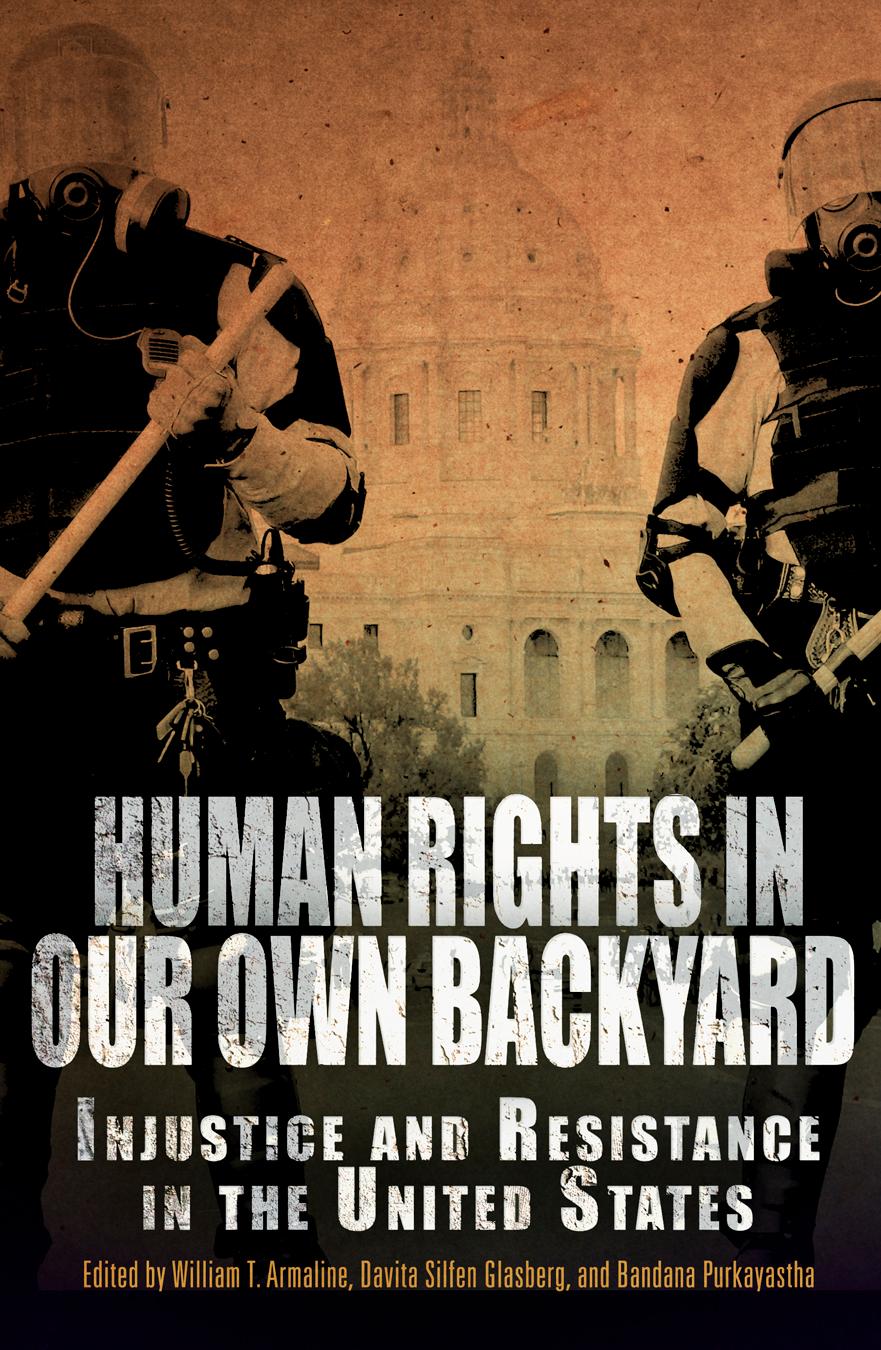
Most Americans assume that the United States provides a gold standard for human rights—a 2007 survey found that 80 percent of U.S. adults believed that "the U.S. does a better job than most countries when it comes to protecting human rights." As well, discussions among scholars and public officials in the United States frame human rights issues as concerning people, policies, or practices "over there." By contrast, the contributors to this volume argue that many of the greatest immediate and structural threats to human rights, and some of the most significant efforts to realize human rights in practice, can be found in our own backyard.
Human Rights in Our Own Backyard examines the state of human rights and responses to human rights issues, drawing on sociological literature and perspectives to interrogate assumptions of American exceptionalism. How do people in the U.S. address human rights issues? What strategies have they adopted, and how successful have these strategies been? Essays are organized around key conventions of human rights, focusing on the relationships between human rights and justice, the state and the individual, civil rights and human rights, and group rights versus individual rights. The contributors are united by a common conception of the human rights enterprise as a process involving not only state-defined and implemented rights but also human rights from below as promoted by activists.
Betaal eenvoudig met kaart, Klarna, Apple Pay of Google Pay. Niet tevreden? Je hebt altijd 14 dagen bedenktijd. Lees meer in onze voorwaarden. Heb je vragen, mail ons dan via hello@memmo.org.
Memmo maakt studeren makkelijker – waar je ook bent ter wereld. Wij brengen je cursusboeken en slimme studietools samen op één plek: samenvattingen, quizzen, podcasts en flashcards. En Ted, je studievriend die antwoord geeft op alles wat je je afvraagt. Meer dan 50.000 studenten studeren hier al – gebouwd om je sneller te laten leren en minder stress te geven.