
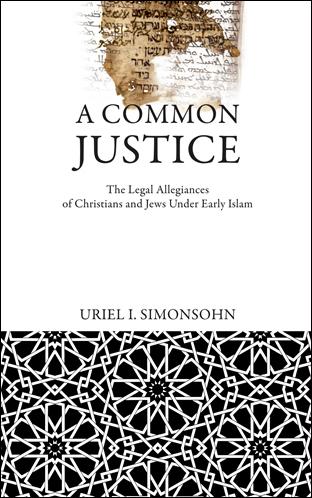
In A Common Justice Uriel I. Simonsohn examines the legislative response of Christian and Jewish religious elites to the problem posed by the appeal of their coreligionists to judicial authorities outside their communities. Focusing on the late seventh to early eleventh centuries in the region between Iraq in the east and present-day Tunisia in the west, Simonsohn explores the multiplicity of judicial systems that coexisted under early Islam to reveal a complex array of social obligations that connected individuals across confessional boundaries. By examining the incentives for appeal to external judicial institutions on the one hand and the response of minority confessional elites on the other, the study fundamentally alters our conception of the social history of the Near East in the early Islamic period.
Contrary to the prevalent scholarly notion of a rigid social setting strictly demarcated along confessional lines, Simonsohn's comparative study of Christian and Jewish legal behavior under early Muslim rule exposes a considerable degree of fluidity across communal boundaries. This seeming disregard for religious affiliations threatened to undermine the position of traditional religious elites; in response, they acted vigorously to reinforce communal boundaries, censuring recourse to external judicial institutions and even threatening transgressors with excommunication.
Betaal eenvoudig met kaart, Klarna, Apple Pay of Google Pay. Niet tevreden? Je hebt altijd 14 dagen bedenktijd. Lees meer in onze voorwaarden. Heb je vragen, mail ons dan via hello@memmo.org.
Memmo maakt studeren makkelijker – waar je ook bent ter wereld. Wij brengen je cursusboeken en slimme studietools samen op één plek: samenvattingen, quizzen, podcasts en flashcards. En Ted, je studievriend die antwoord geeft op alles wat je je afvraagt. Meer dan 50.000 studenten studeren hier al – gebouwd om je sneller te laten leren en minder stress te geven.