
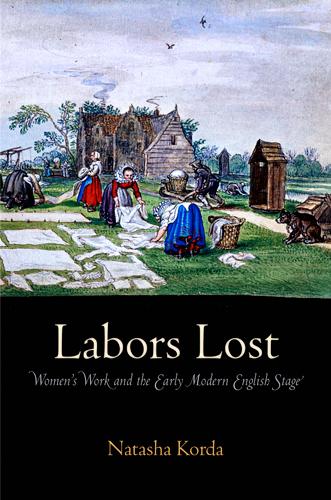
Labors Lost offers a fascinating and wide-ranging account of working women's behind-the-scenes and hitherto unacknowledged contributions to theatrical production in Shakespeare's time. Natasha Korda reveals that the purportedly all-male professional stage relied on the labor, wares, ingenuity, and capital of women of all stripes, including ordinary crafts- and tradeswomen who supplied costumes, props, and comestibles; wealthy heiresses and widows who provided much-needed capital and credit; wives, daughters, and widows of theater people who worked actively alongside their male kin; and immigrant women who fueled the fashion-driven stage with a range of newfangled skills and commodities.
Combining archival research on these and other women who worked in and around the playhouses with revisionist readings of canonical and lesser-known plays, Labors Lost retrieves this lost history by detailing the diverse ways women participated in the work of playing, and the ways male players and playwrights in turn helped to shape the cultural meanings of women's work. Far from a marginal phenomenon, the gendered division of theatrical labor was crucial to the rise of the commercial theaters in London and had an influence on the material culture of the stage and the dramatic works of Shakespeare and his contemporaries.
Betaal eenvoudig met kaart, Klarna, Apple Pay of Google Pay. Niet tevreden? Je hebt altijd 14 dagen bedenktijd. Lees meer in onze voorwaarden. Heb je vragen, mail ons dan via hello@memmo.org.
Memmo maakt studeren makkelijker – waar je ook bent ter wereld. Wij brengen je cursusboeken en slimme studietools samen op één plek: samenvattingen, quizzen, podcasts en flashcards. En Ted, je studievriend die antwoord geeft op alles wat je je afvraagt. Meer dan 50.000 studenten studeren hier al – gebouwd om je sneller te laten leren en minder stress te geven.