
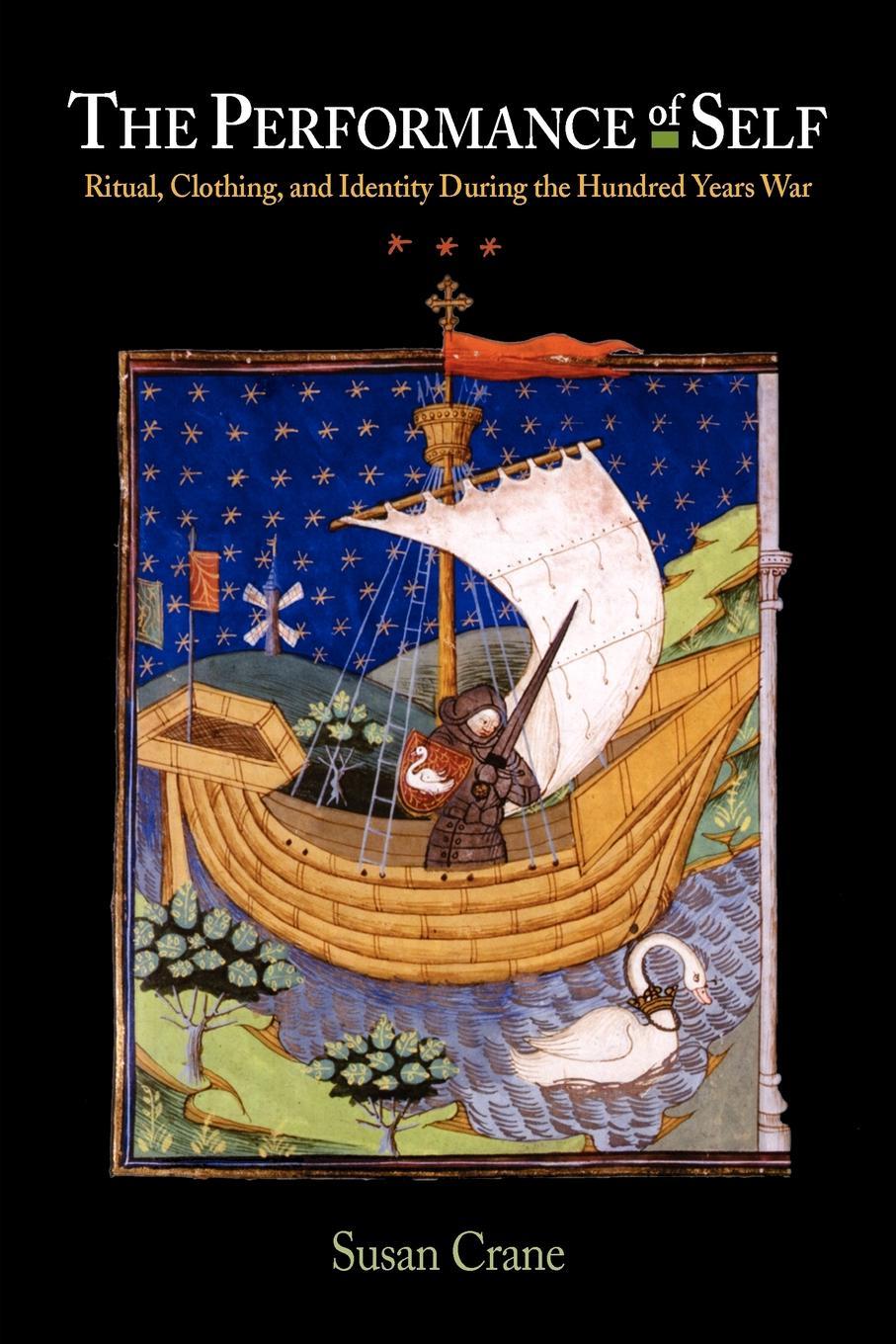
Medieval courtiers defined themselves in ceremonies and rituals. Tournaments, Maying, interludes, charivaris, and masking invited the English and French nobility to assert their identities in gesture and costume as well as in speech. These events presumed that performance makes a self, in contrast to the modern belief that identity precedes social performance and, indeed, that performance falsifies the true, inner self. Susan Crane resists the longstanding convictions that medieval rituals were trivial affairs, and that personal identity remained unarticulated until a later period.
Focusing on England and France during the Hundred Years War, Crane draws on wardrobe accounts, manuscript illuminations, chronicles, archaeological evidence, and literature to recover the material as well as the verbal constructions of identity. She seeks intersections between theories of practice and performance that explain how appearances and language connect when courtiers dress as wild men to interrupt a wedding feast, when knights choose crests and badges to supplement their coats of arms, and when Joan of Arc cross-dresses for the court of inquisition after her capture.
Betaal eenvoudig met kaart, Klarna, Apple Pay of Google Pay. Niet tevreden? Je hebt altijd 14 dagen bedenktijd. Lees meer in onze voorwaarden. Heb je vragen, mail ons dan via hello@memmo.org.
Memmo maakt studeren makkelijker – waar je ook bent ter wereld. Wij brengen je cursusboeken en slimme studietools samen op één plek: samenvattingen, quizzen, podcasts en flashcards. En Ted, je studievriend die antwoord geeft op alles wat je je afvraagt. Meer dan 50.000 studenten studeren hier al – gebouwd om je sneller te laten leren en minder stress te geven.