
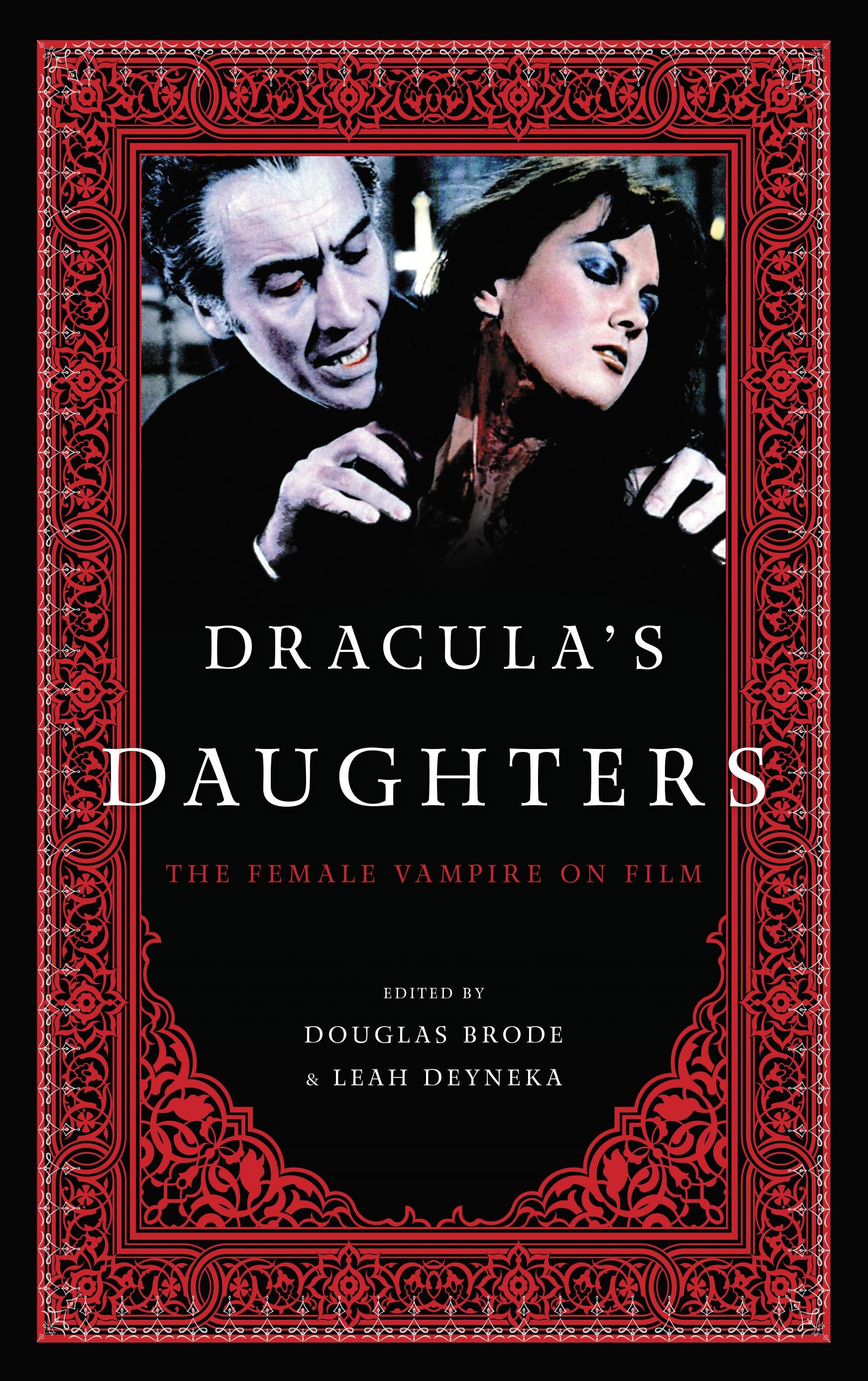
Almost as long as cinema has existed, vampires have appeared on screen. Symbolizing an unholy union between sex and death, the vampire—male or female—has represented the libido, a “repressed force” that consumed its victims. Early iconic representations of male vampires were seen in Nosferatu (1922) and Dracula (1931), but not until Dracula’s Daughter in 1936 did a female “sex vampire” assume the lead. Other female vampires followed, perhaps most provocatively in the Hammer films of the 1950s, ’60s, and ’70s. Later incarnations, in such films as Near Dark (1987) and From Dusk till Dawn (1996), offered modern takes on this now iconic figure.
In Dracula’s Daughters: The Female Vampire on Film, Douglas Brode and Leah Deyneka have assembled a varied collection of essays that explore this cinematic type that simultaneously frightens and seduces viewers. These essays address a number of issues raised by the female vampire film, such as violence perpetrated on and by women; reactions to the genre from feminists, antifeminists, and postfeminists; the implications of female vampire films for audiences both gay and straight; and how films reflected the period during which they were created. Other topics include female vampire films in relationship to vampire fiction, particularly by women such as Anne Rice; the relationship of the vampire myth to sexually transmitted diseases like AIDS; issues of race and misogyny; and the unique phenomenon of teen vampires in young adult books and films such as Twilight.
Featuring more than thirty photos spanning several decades, this collection offers a compelling assessment of an archetypal figure—an enduring representation of dark desires—that continues to captivate audiences. This book will appeal not only to scholars and students but also to any lover of transgressive cinema.
In Dracula’s Daughters: The Female Vampire on Film, Douglas Brode and Leah Deyneka have assembled a varied collection of essays that explore this cinematic type that simultaneously frightens and seduces viewers. These essays address a number of issues raised by the female vampire film, such as violence perpetrated on and by women; reactions to the genre from feminists, antifeminists, and postfeminists; the implications of female vampire films for audiences both gay and straight; and how films reflected the period during which they were created. Other topics include female vampire films in relationship to vampire fiction, particularly by women such as Anne Rice; the relationship of the vampire myth to sexually transmitted diseases like AIDS; issues of race and misogyny; and the unique phenomenon of teen vampires in young adult books and films such as Twilight.
Featuring more than thirty photos spanning several decades, this collection offers a compelling assessment of an archetypal figure—an enduring representation of dark desires—that continues to captivate audiences. This book will appeal not only to scholars and students but also to any lover of transgressive cinema.
Pagina's: 318
Categorie: Litteraturvetenskap & Teori
e-ISBN: 9780810892965
Verzendgewicht: 1.2 kg
Verzending binnen: 1-2 dagen
Betaal eenvoudig met kaart, Klarna, Apple Pay of Google Pay. Niet tevreden? Je hebt altijd 14 dagen bedenktijd. Lees meer in onze voorwaarden. Heb je vragen, mail ons dan via hello@memmo.org.
Memmo maakt studeren makkelijker – waar je ook bent ter wereld. Wij brengen je cursusboeken en slimme studietools samen op één plek: samenvattingen, quizzen, podcasts en flashcards. En Ted, je studievriend die antwoord geeft op alles wat je je afvraagt. Meer dan 50.000 studenten studeren hier al – gebouwd om je sneller te laten leren en minder stress te geven.