
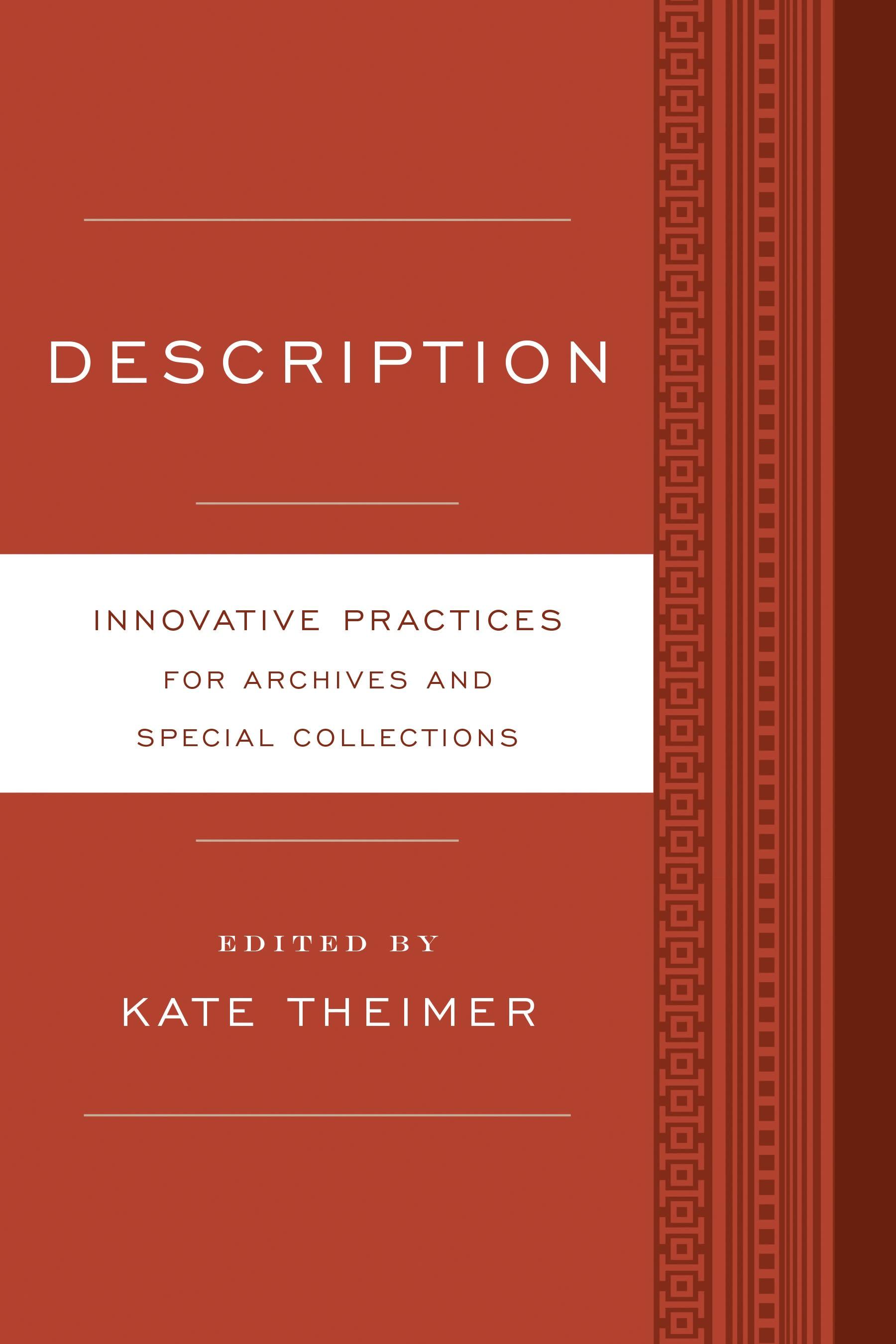
Description: Innovative Practices for Archives and Special Collections explores how archives of different sizes and types can enhance the accessibility of their holdings. The book uses eleven case studies to demonstrate innovative ideas that could be transferred into many other settings.
Case studies cover
Crowdsourcing the Description of Collections Early Experiences with Implementing EAC-CPFConducting a Comprehensive Survey to Reveal a Hidden Repository Getting a Diverse Backlog of Legacy Finding Aids Online A Collaborative Standards-Based Approach to Creating Item-Level Metadata for Digitized Archival MaterialsCreating Policies and Procedures for Mandatory Arrangement and Description by Records CreatorsCollaboration in Cataloging: Sourcing Knowledge from Near and Far for a Challenging CollectionUsing LibGuides to Rescue Paper Ephemera from the Bibliographic UnderbrushDescribing Records, People, Organizations and Functions: The Empowering the User Project’s Flexible Archival Catalogue Integrating Born-Digital Materials into Regular Workflows Describing Single Items for Discovery and Access
These successful and innovative practices will help archivists and special collections librarians better describe their collections so that they can be successfully accessed and users can locate the right materials.
Readers can use these as models, sources of inspiration, or starting points for new discussions. The volume will be useful to those working in archives and special collections as well as other cultural heritage organizations, and provides ideas ranging from those that require long-term planning and coordination to ones that could be immediately implemented. It also provides students and educators in archives, library, and public history graduate programs a resource for understanding the variety of ways materials are being described in the field today and the kinds of strategies archivists are using to ensure collections can be found by the people who want to use them.
Case studies cover
Crowdsourcing the Description of Collections Early Experiences with Implementing EAC-CPFConducting a Comprehensive Survey to Reveal a Hidden Repository Getting a Diverse Backlog of Legacy Finding Aids Online A Collaborative Standards-Based Approach to Creating Item-Level Metadata for Digitized Archival MaterialsCreating Policies and Procedures for Mandatory Arrangement and Description by Records CreatorsCollaboration in Cataloging: Sourcing Knowledge from Near and Far for a Challenging CollectionUsing LibGuides to Rescue Paper Ephemera from the Bibliographic UnderbrushDescribing Records, People, Organizations and Functions: The Empowering the User Project’s Flexible Archival Catalogue Integrating Born-Digital Materials into Regular Workflows Describing Single Items for Discovery and Access
These successful and innovative practices will help archivists and special collections librarians better describe their collections so that they can be successfully accessed and users can locate the right materials.
Readers can use these as models, sources of inspiration, or starting points for new discussions. The volume will be useful to those working in archives and special collections as well as other cultural heritage organizations, and provides ideas ranging from those that require long-term planning and coordination to ones that could be immediately implemented. It also provides students and educators in archives, library, and public history graduate programs a resource for understanding the variety of ways materials are being described in the field today and the kinds of strategies archivists are using to ensure collections can be found by the people who want to use them.
Betaal eenvoudig met kaart, Klarna, Apple Pay of Google Pay. Niet tevreden? Je hebt altijd 14 dagen bedenktijd. Lees meer in onze voorwaarden. Heb je vragen, mail ons dan via hello@memmo.org.
Memmo maakt studeren makkelijker – waar je ook bent ter wereld. Wij brengen je cursusboeken en slimme studietools samen op één plek: samenvattingen, quizzen, podcasts en flashcards. En Ted, je studievriend die antwoord geeft op alles wat je je afvraagt. Meer dan 50.000 studenten studeren hier al – gebouwd om je sneller te laten leren en minder stress te geven.