
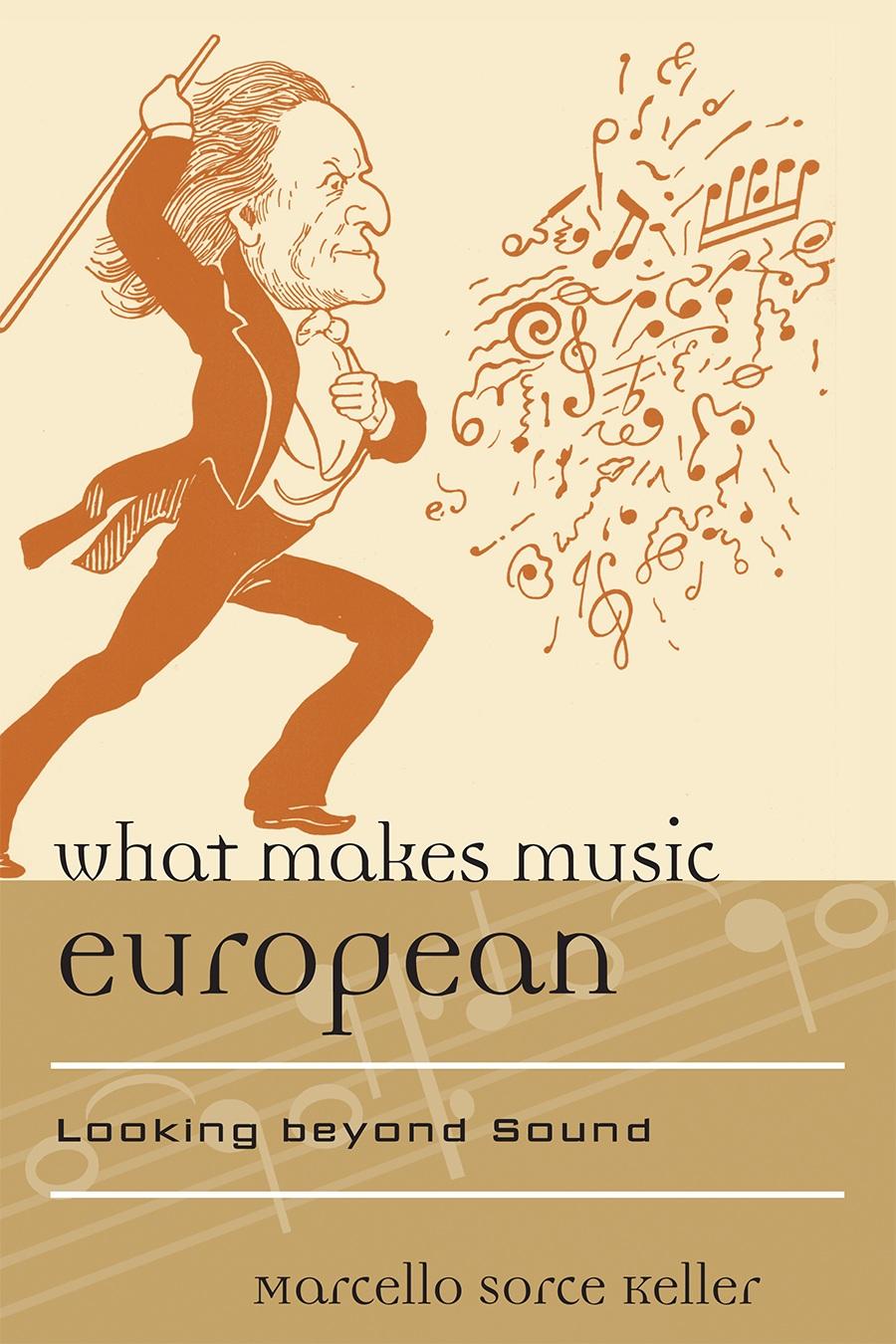
We seldom consider how much we mistakenly presume in hewing to definitions of music that differ dramatically from the standpoint of other cultures. In What Makes Music European, Marcello Sorce Keller examines the limitations of accepted wisdom about the concept of music in Euro-Western culture. His investigations of the conclusions reached by music researchers of the past several decades considerably upsets the concepts relied upon by the concert-going public. Sorce Keller insightfully asks: Who makes the music? Should music be original, and how much can it be? Why do people identify with songs, pieces, styles, and repertoire? Why is music so ideological? Why do we misunderstand the music of different times and places, and why do we enjoy doing so? He also explores the juxtaposition of economy, society, and music making, as well as the concept of "illegal harmonies."
In What Makes Music European, Sorce Keller addresses the little-discussed matters that are essential to an understanding of how music intersects with the life of so many people. Readers are offered an approach for thinking about music that depends as much on its history as on the concepts and attitudes of the social sciences. What Makes Music European concisely demonstrates, to those familiar with Western music, how peculiar Euro-Western concepts of music appear from a cross-cultural perspective. At the same time, it encourages ethnomusicologists to apply their knowledge to Western music and explain to its public how much of what listeners take for granted is, at the very least, highly debatable.
In What Makes Music European, Sorce Keller addresses the little-discussed matters that are essential to an understanding of how music intersects with the life of so many people. Readers are offered an approach for thinking about music that depends as much on its history as on the concepts and attitudes of the social sciences. What Makes Music European concisely demonstrates, to those familiar with Western music, how peculiar Euro-Western concepts of music appear from a cross-cultural perspective. At the same time, it encourages ethnomusicologists to apply their knowledge to Western music and explain to its public how much of what listeners take for granted is, at the very least, highly debatable.
Pagina's: 336
Categorie: Musikvetenskap
e-ISBN: 9780810876736
Verzendgewicht: 1.2 kg
Verzending binnen: 1-2 dagen
Betaal eenvoudig met kaart, Klarna, Apple Pay of Google Pay. Niet tevreden? Je hebt altijd 14 dagen bedenktijd. Lees meer in onze voorwaarden. Heb je vragen, mail ons dan via hello@memmo.org.
Memmo maakt studeren makkelijker – waar je ook bent ter wereld. Wij brengen je cursusboeken en slimme studietools samen op één plek: samenvattingen, quizzen, podcasts en flashcards. En Ted, je studievriend die antwoord geeft op alles wat je je afvraagt. Meer dan 50.000 studenten studeren hier al – gebouwd om je sneller te laten leren en minder stress te geven.