
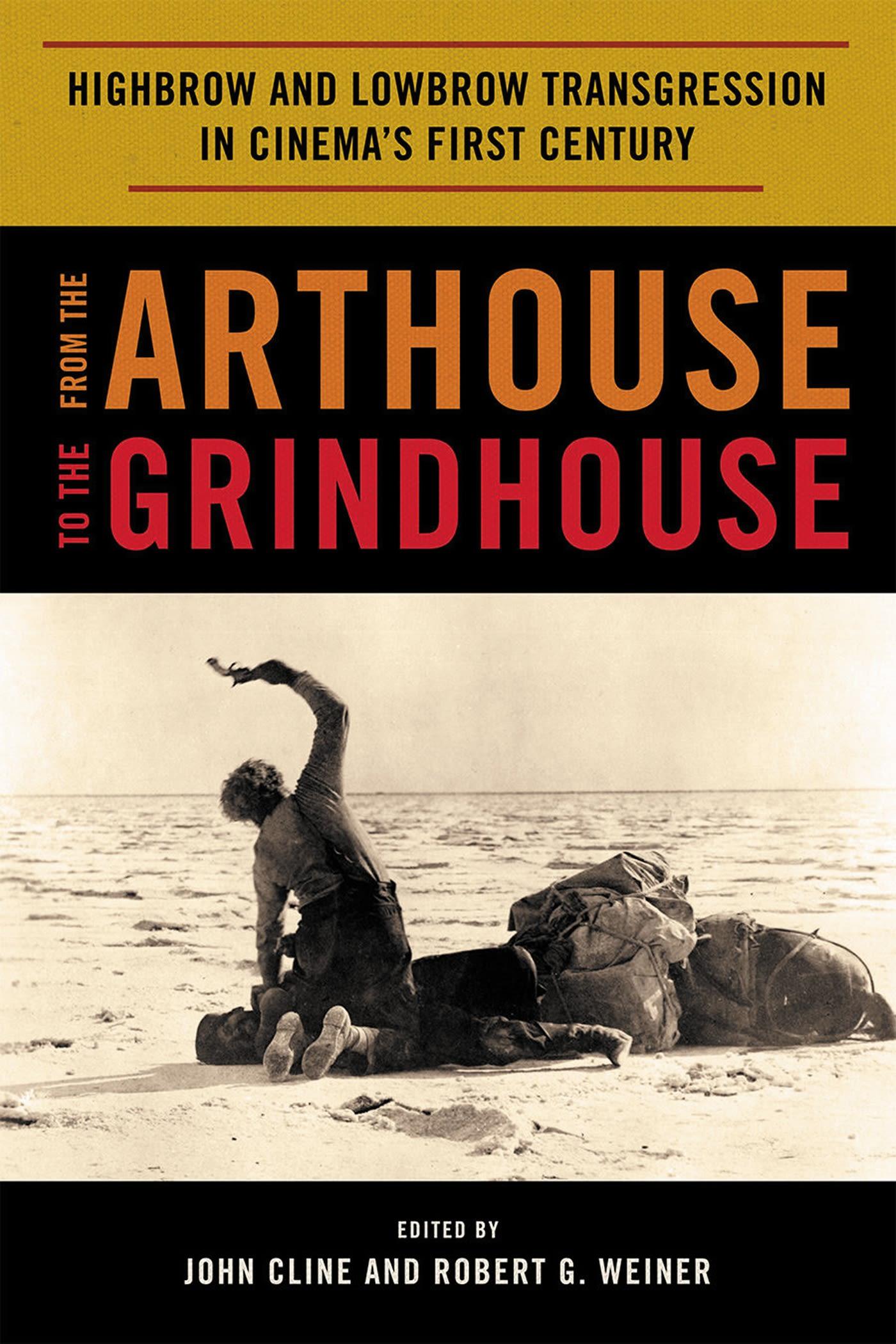
While there are numerous books on art and exploitation cinema, very few attempt to examine both. Covering the first 100 years of cinematic transgressions, From the Arthouse to the Grindhouse is a collection of numerous essays representing key contributions to overlooked, forgotten, or under-analyzed parts of film history. From cult favorites like Arch Hall Jr. to revered but under-documented marquee names like Lon Chaney, filmmakers both major and minor are covered here.
Starting with a section that pairs exploitation pioneers like Dwain Esper alongside cutting edge auteurs like Erich Von Stroheim, the volume documents the bleeding edge of the high/low cultural divide. Other essays examine the sexual melodramas of Weimer German cinema, explore the concept of Borat as a model for the new standardized cult film, and discuss the films of directors Tod Browning, Pier Pasolini, and Peter Watkins. This volume also contains a section devoted to the idea of "reality" inside and outside the documentary sphere, emphasizing audiences' desire to believe that "this is really happening," whether they're horrified or titillated. Addressing many aspects of "transgression" in cinema, these essays suggest that the distance between the venues and the audiences may not be quite as wide as viewers might imagine.
Starting with a section that pairs exploitation pioneers like Dwain Esper alongside cutting edge auteurs like Erich Von Stroheim, the volume documents the bleeding edge of the high/low cultural divide. Other essays examine the sexual melodramas of Weimer German cinema, explore the concept of Borat as a model for the new standardized cult film, and discuss the films of directors Tod Browning, Pier Pasolini, and Peter Watkins. This volume also contains a section devoted to the idea of "reality" inside and outside the documentary sphere, emphasizing audiences' desire to believe that "this is really happening," whether they're horrified or titillated. Addressing many aspects of "transgression" in cinema, these essays suggest that the distance between the venues and the audiences may not be quite as wide as viewers might imagine.
Betaal eenvoudig met kaart, Klarna, Apple Pay of Google Pay. Niet tevreden? Je hebt altijd 14 dagen bedenktijd. Lees meer in onze voorwaarden. Heb je vragen, mail ons dan via hello@memmo.org.
Memmo maakt studeren makkelijker – waar je ook bent ter wereld. Wij brengen je cursusboeken en slimme studietools samen op één plek: samenvattingen, quizzen, podcasts en flashcards. En Ted, je studievriend die antwoord geeft op alles wat je je afvraagt. Meer dan 50.000 studenten studeren hier al – gebouwd om je sneller te laten leren en minder stress te geven.