
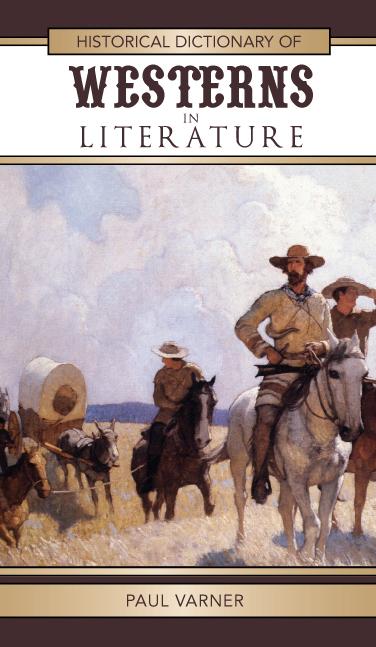
When in 1902 Owen Wister, a member of the Eastern blueblood aristocracy and friend of novelist Henry James, became a best-selling novelist with the publication of The Virginian, few readers would have guessed that a new kind of American literature was being born. While Owen Wister was enjoying his success, Edwin S. Porter in New Jersey was filming the first cinema Western The Great Train Robbery, which would usher in a new era both of movies in general and of Western movies in particular. Both events would lead to a century of cultural fascination with stories of the old West.
The Historical Dictionary of Westerns in Literature tells the story of the Western through a chronology, a bibliography, an introductory essay, and hundreds of cross-referenced dictionary entries on authors such as Owen Wister, Zane Grey, Max Brand, Clarence Mulford, Ernest Haycox, Luke Short, Dorothy Johnson, Louis L'Amour, and Cormac McCarthy.
The Historical Dictionary of Westerns in Literature tells the story of the Western through a chronology, a bibliography, an introductory essay, and hundreds of cross-referenced dictionary entries on authors such as Owen Wister, Zane Grey, Max Brand, Clarence Mulford, Ernest Haycox, Luke Short, Dorothy Johnson, Louis L'Amour, and Cormac McCarthy.
Betaal eenvoudig met kaart, Klarna, Apple Pay of Google Pay. Niet tevreden? Je hebt altijd 14 dagen bedenktijd. Lees meer in onze voorwaarden. Heb je vragen, mail ons dan via hello@memmo.org.
Memmo maakt studeren makkelijker – waar je ook bent ter wereld. Wij brengen je cursusboeken en slimme studietools samen op één plek: samenvattingen, quizzen, podcasts en flashcards. En Ted, je studievriend die antwoord geeft op alles wat je je afvraagt. Meer dan 50.000 studenten studeren hier al – gebouwd om je sneller te laten leren en minder stress te geven.