
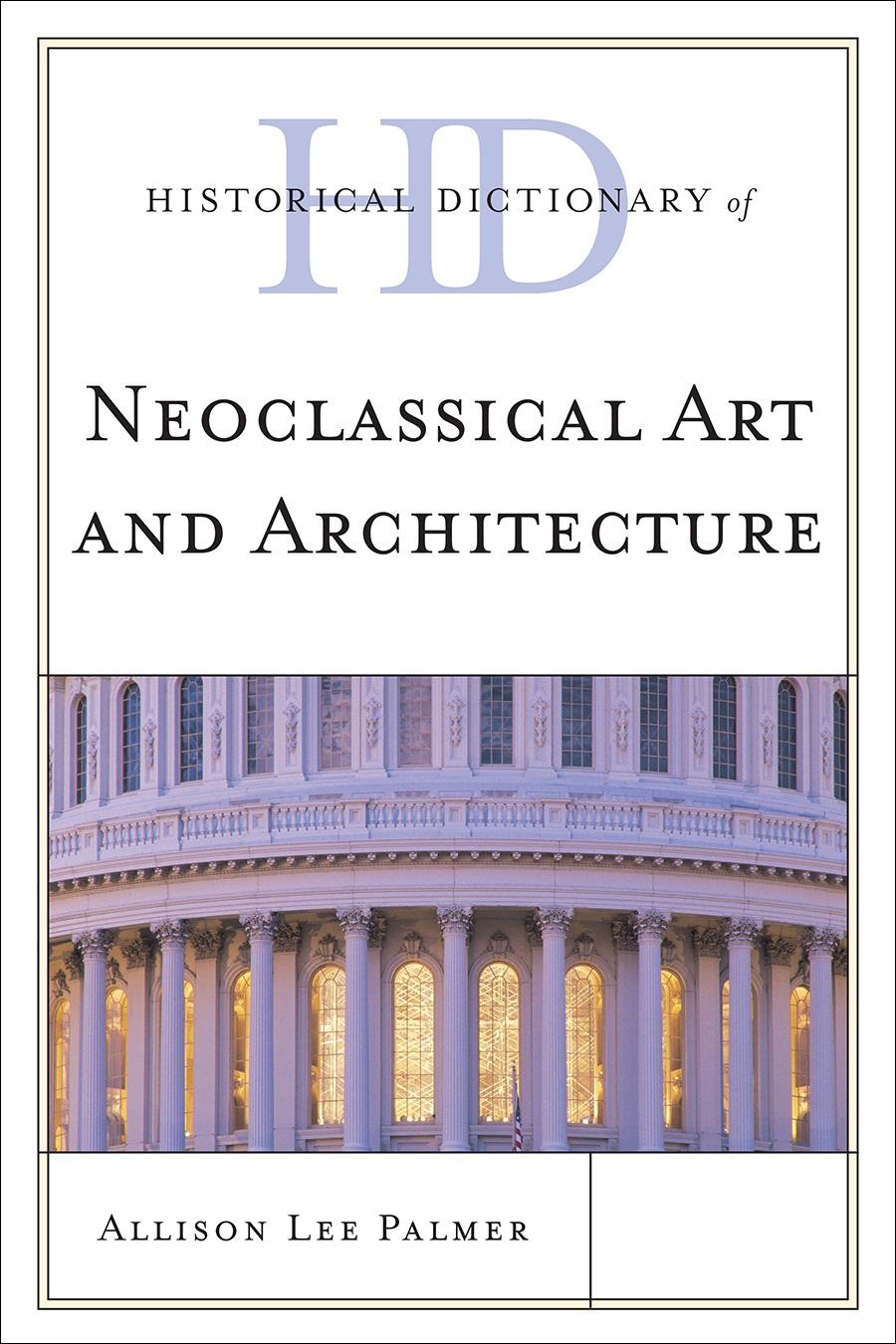
Neoclassicism refers to the revival of classical art and architecture beginning in Europe in the 1750s and lasting until around 1830, with late Neoclassicism lingering through the 1870s. Neoclassicism is a highly complex movement that brought together seemingly disparate issues into a new and culturally rich era, one that was, however, remarkably unified under the banner of classicism. This movement was born in Italy and France and then spread across Europe to Russia and across the ocean to the United States.
The Historical Dictionary of Neoclassical Art and Architecture provides an overview of Neoclassicism, focusing on its major artists, architects, stylistic subcategories, ideas, and historical framework of the 18th century style found mainly in Europe and the United States. This is done through a chronology, an introductory essay, an extensive bibliography, and over 200 dictionary entries on famous artists, sculptors, architects, patrons, and other historical figures and events.
The Historical Dictionary of Neoclassical Art and Architecture provides an overview of Neoclassicism, focusing on its major artists, architects, stylistic subcategories, ideas, and historical framework of the 18th century style found mainly in Europe and the United States. This is done through a chronology, an introductory essay, an extensive bibliography, and over 200 dictionary entries on famous artists, sculptors, architects, patrons, and other historical figures and events.
Betaal eenvoudig met kaart, Klarna, Apple Pay of Google Pay. Niet tevreden? Je hebt altijd 14 dagen bedenktijd. Lees meer in onze voorwaarden. Heb je vragen, mail ons dan via hello@memmo.org.
Memmo maakt studeren makkelijker – waar je ook bent ter wereld. Wij brengen je cursusboeken en slimme studietools samen op één plek: samenvattingen, quizzen, podcasts en flashcards. En Ted, je studievriend die antwoord geeft op alles wat je je afvraagt. Meer dan 50.000 studenten studeren hier al – gebouwd om je sneller te laten leren en minder stress te geven.