
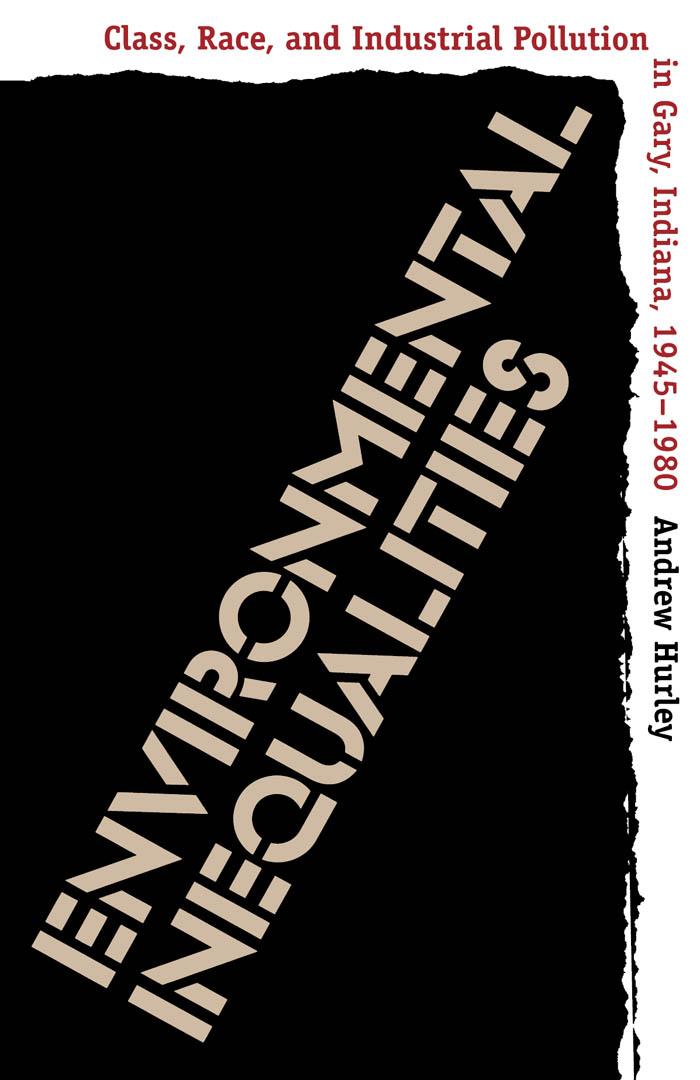
By examining environmental change through the lens of conflicting social agendas, Andrew Hurley uncovers the historical roots of environmental inequality in contemporary urban America. Hurley’s study focuses on the steel mill community of Gary, Indiana, a city that was sacrificed, like a thousand other American places, to industrial priorities in the decades following World War II. Although this period witnessed the emergence of a powerful environmental crusade and a resilient quest for equality and social justice among blue-collar workers and African Americans, such efforts often conflicted with the needs of industry. To secure their own interests, manufacturers and affluent white suburbanites exploited divisions of race and class, and the poor frequently found themselves trapped in deteriorating neighborhoods and exposed to dangerous levels of industrial pollution. In telling the story of Gary, Hurley reveals liberal capitalism’s difficulties in reconciling concerns about social justice and quality of life with the imperatives of economic growth. He also shows that the power to mold the urban landscape was intertwined with the ability to govern social relations.
Betaal eenvoudig met kaart, Klarna, Apple Pay of Google Pay. Niet tevreden? Je hebt altijd 14 dagen bedenktijd. Lees meer in onze voorwaarden. Heb je vragen, mail ons dan via hello@memmo.org.
Memmo maakt studeren makkelijker – waar je ook bent ter wereld. Wij brengen je cursusboeken en slimme studietools samen op één plek: samenvattingen, quizzen, podcasts en flashcards. En Ted, je studievriend die antwoord geeft op alles wat je je afvraagt. Meer dan 50.000 studenten studeren hier al – gebouwd om je sneller te laten leren en minder stress te geven.
Misschien vind je dit ook leuk
Koop het boek0