
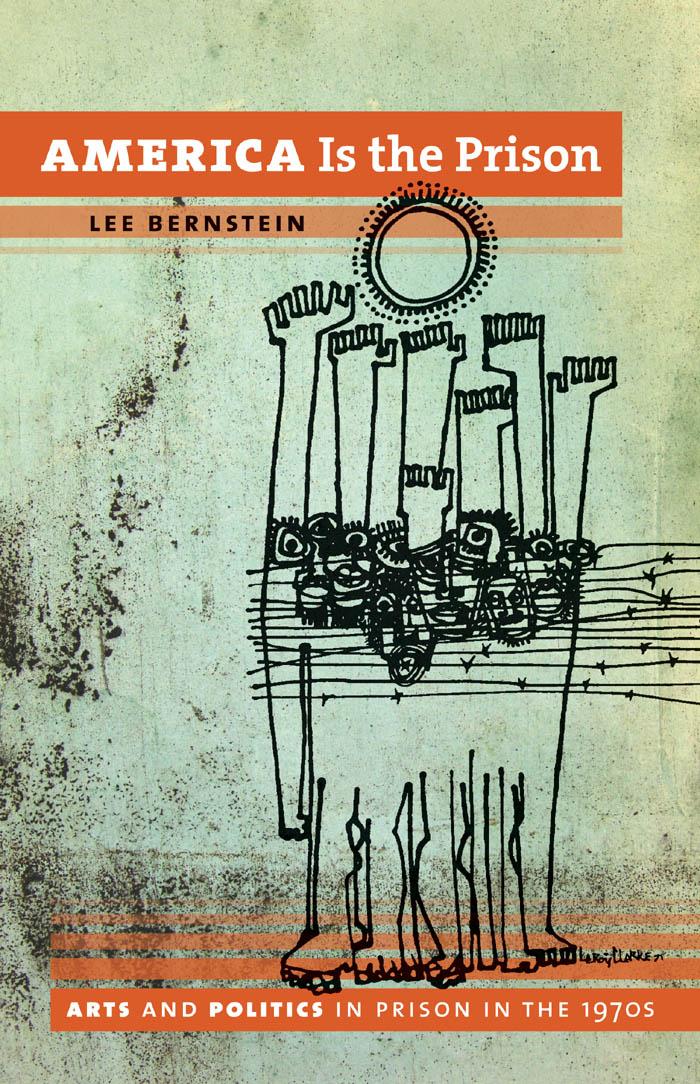
In the 1970s, while politicians and activists outside prisons debated the proper response to crime, incarcerated people helped shape those debates though a broad range of remarkable political and literary writings.
Lee Bernstein explores the forces that sparked a dramatic “prison art renaissance,” shedding light on how incarcerated people produced powerful works of writing, performance, and visual art. These included everything from George Jackson’s revolutionary Soledad Brother to Miguel Piñero’s acclaimed off-Broadway play and Hollywood film Short Eyes. An extraordinary range of prison programs — fine arts, theater, secondary education, and prisoner-run programs — allowed the voices of prisoners to influence the Black Arts Movement, the Nuyorican writers, “New Journalism,” and political theater, among the most important aesthetic contributions of the decade.
By the 1980s and '90s, prisoners' educational and artistic programs were scaled back or eliminated as the “war on crime” escalated. But by then these prisoners' words had crossed over the wall, helping many Americans to rethink the meaning of the walls themselves and, ultimately, the meaning of the society that produced them.
Lee Bernstein explores the forces that sparked a dramatic “prison art renaissance,” shedding light on how incarcerated people produced powerful works of writing, performance, and visual art. These included everything from George Jackson’s revolutionary Soledad Brother to Miguel Piñero’s acclaimed off-Broadway play and Hollywood film Short Eyes. An extraordinary range of prison programs — fine arts, theater, secondary education, and prisoner-run programs — allowed the voices of prisoners to influence the Black Arts Movement, the Nuyorican writers, “New Journalism,” and political theater, among the most important aesthetic contributions of the decade.
By the 1980s and '90s, prisoners' educational and artistic programs were scaled back or eliminated as the “war on crime” escalated. But by then these prisoners' words had crossed over the wall, helping many Americans to rethink the meaning of the walls themselves and, ultimately, the meaning of the society that produced them.
Betaal eenvoudig met kaart, Klarna, Apple Pay of Google Pay. Niet tevreden? Je hebt altijd 14 dagen bedenktijd. Lees meer in onze voorwaarden. Heb je vragen, mail ons dan via hello@memmo.org.
Memmo maakt studeren makkelijker – waar je ook bent ter wereld. Wij brengen je cursusboeken en slimme studietools samen op één plek: samenvattingen, quizzen, podcasts en flashcards. En Ted, je studievriend die antwoord geeft op alles wat je je afvraagt. Meer dan 50.000 studenten studeren hier al – gebouwd om je sneller te laten leren en minder stress te geven.
Misschien vind je dit ook leuk
Koop het boek0