
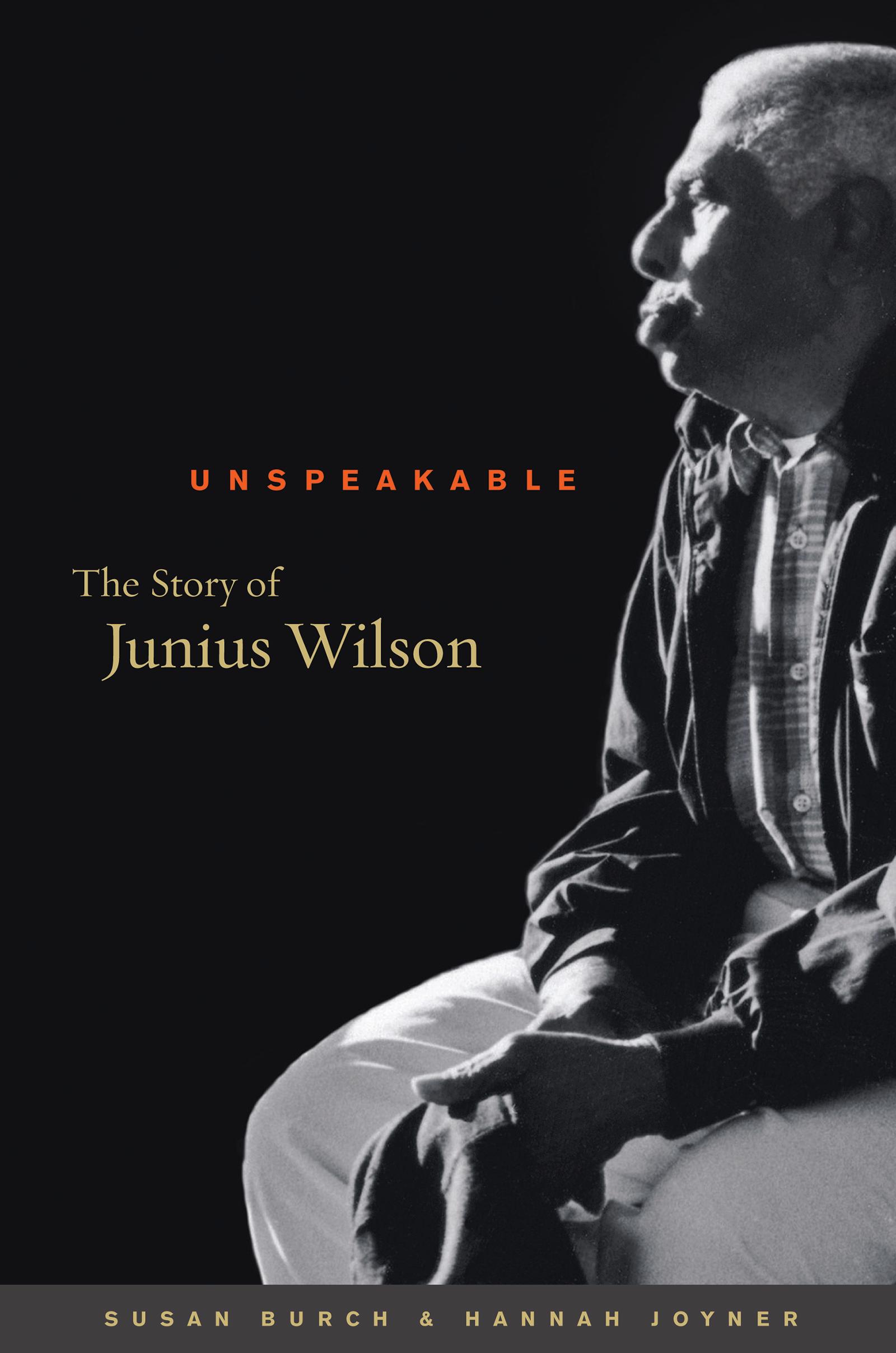
Junius Wilson (1908–2001) spent seventy-six years at a state mental hospital in Goldsboro, North Carolina, including six in the criminal ward. He had never been declared insane by a medical professional or found guilty of any criminal charge. But he was deaf and black in the Jim Crow South. Unspeakable is the story of his life.
Using legal records, institutional files, and extensive oral history interviews — some conducted in sign language — Susan Burch and Hannah Joyner piece together the story of a deaf man accused in 1925 of attempted rape, found insane at a lunacy hearing, committed to the criminal ward of the State Hospital for the Colored Insane, castrated, forced to labor for the institution, and held at the hospital for more than seven decades. Junius Wilson’s life was shaped by some of the major developments of twentieth-century America: Jim Crow segregation, the civil rights movement, deinstitutionalization, the rise of professional social work, and the emergence of the deaf and disability rights movements. In addition to offering a bottom-up history of life in a segregated mental institution, Burch and Joyner’s work also enriches the traditional interpretation of Jim Crow by highlighting the complicated intersections of race and disability as well as of community and language.
This moving study expands the boundaries of what biography can and should be. There is much to learn and remember about Junius Wilson — and the countless others who have lived unspeakable histories.
Using legal records, institutional files, and extensive oral history interviews — some conducted in sign language — Susan Burch and Hannah Joyner piece together the story of a deaf man accused in 1925 of attempted rape, found insane at a lunacy hearing, committed to the criminal ward of the State Hospital for the Colored Insane, castrated, forced to labor for the institution, and held at the hospital for more than seven decades. Junius Wilson’s life was shaped by some of the major developments of twentieth-century America: Jim Crow segregation, the civil rights movement, deinstitutionalization, the rise of professional social work, and the emergence of the deaf and disability rights movements. In addition to offering a bottom-up history of life in a segregated mental institution, Burch and Joyner’s work also enriches the traditional interpretation of Jim Crow by highlighting the complicated intersections of race and disability as well as of community and language.
This moving study expands the boundaries of what biography can and should be. There is much to learn and remember about Junius Wilson — and the countless others who have lived unspeakable histories.
Betaal eenvoudig met kaart, Klarna, Apple Pay of Google Pay. Niet tevreden? Je hebt altijd 14 dagen bedenktijd. Lees meer in onze voorwaarden. Heb je vragen, mail ons dan via hello@memmo.org.
Memmo maakt studeren makkelijker – waar je ook bent ter wereld. Wij brengen je cursusboeken en slimme studietools samen op één plek: samenvattingen, quizzen, podcasts en flashcards. En Ted, je studievriend die antwoord geeft op alles wat je je afvraagt. Meer dan 50.000 studenten studeren hier al – gebouwd om je sneller te laten leren en minder stress te geven.
Misschien vind je dit ook leuk
Koop het boek0