
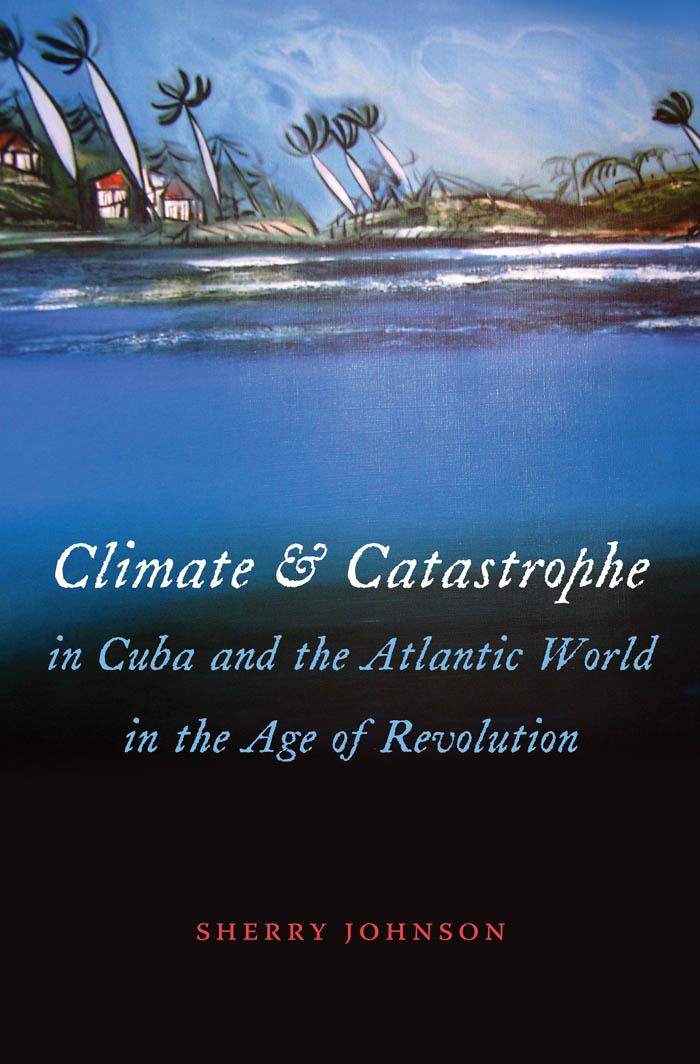
From 1750 to 1800, a critical period that saw the American Revolution, French Revolution, and Haitian Revolution, the Atlantic world experienced a series of environmental crises, including more frequent and severe hurricanes and extended drought. Drawing on historical climatology, environmental history, and Cuban and American colonial history, Sherry Johnson innovatively integrates the region’s experience with extreme weather events and patterns into the history of the Spanish Caribbean and the Atlantic world.
By superimposing this history of natural disasters over the conventional timeline of sociopolitical and economic events in Caribbean colonial history, Johnson presents an alternative analysis in which some of the signal events of the Age of Revolution are seen as consequences of ecological crisis and of the resulting measures for disaster relief. For example, Johnson finds that the general adoption in 1778 of free trade in the Americas was catalyzed by recognition of the harsh realities of food scarcity and the needs of local colonists reeling from a series of natural disasters. Weather-induced environmental crises and slow responses from imperial authorities, Johnson argues, played an inextricable and, until now, largely unacknowledged role in the rise of revolutionary sentiments in the eighteenth-century Caribbean.
By superimposing this history of natural disasters over the conventional timeline of sociopolitical and economic events in Caribbean colonial history, Johnson presents an alternative analysis in which some of the signal events of the Age of Revolution are seen as consequences of ecological crisis and of the resulting measures for disaster relief. For example, Johnson finds that the general adoption in 1778 of free trade in the Americas was catalyzed by recognition of the harsh realities of food scarcity and the needs of local colonists reeling from a series of natural disasters. Weather-induced environmental crises and slow responses from imperial authorities, Johnson argues, played an inextricable and, until now, largely unacknowledged role in the rise of revolutionary sentiments in the eighteenth-century Caribbean.
Betaal eenvoudig met kaart, Klarna, Apple Pay of Google Pay. Niet tevreden? Je hebt altijd 14 dagen bedenktijd. Lees meer in onze voorwaarden. Heb je vragen, mail ons dan via hello@memmo.org.
Memmo maakt studeren makkelijker – waar je ook bent ter wereld. Wij brengen je cursusboeken en slimme studietools samen op één plek: samenvattingen, quizzen, podcasts en flashcards. En Ted, je studievriend die antwoord geeft op alles wat je je afvraagt. Meer dan 50.000 studenten studeren hier al – gebouwd om je sneller te laten leren en minder stress te geven.
Misschien vind je dit ook leuk
Koop het boek0