
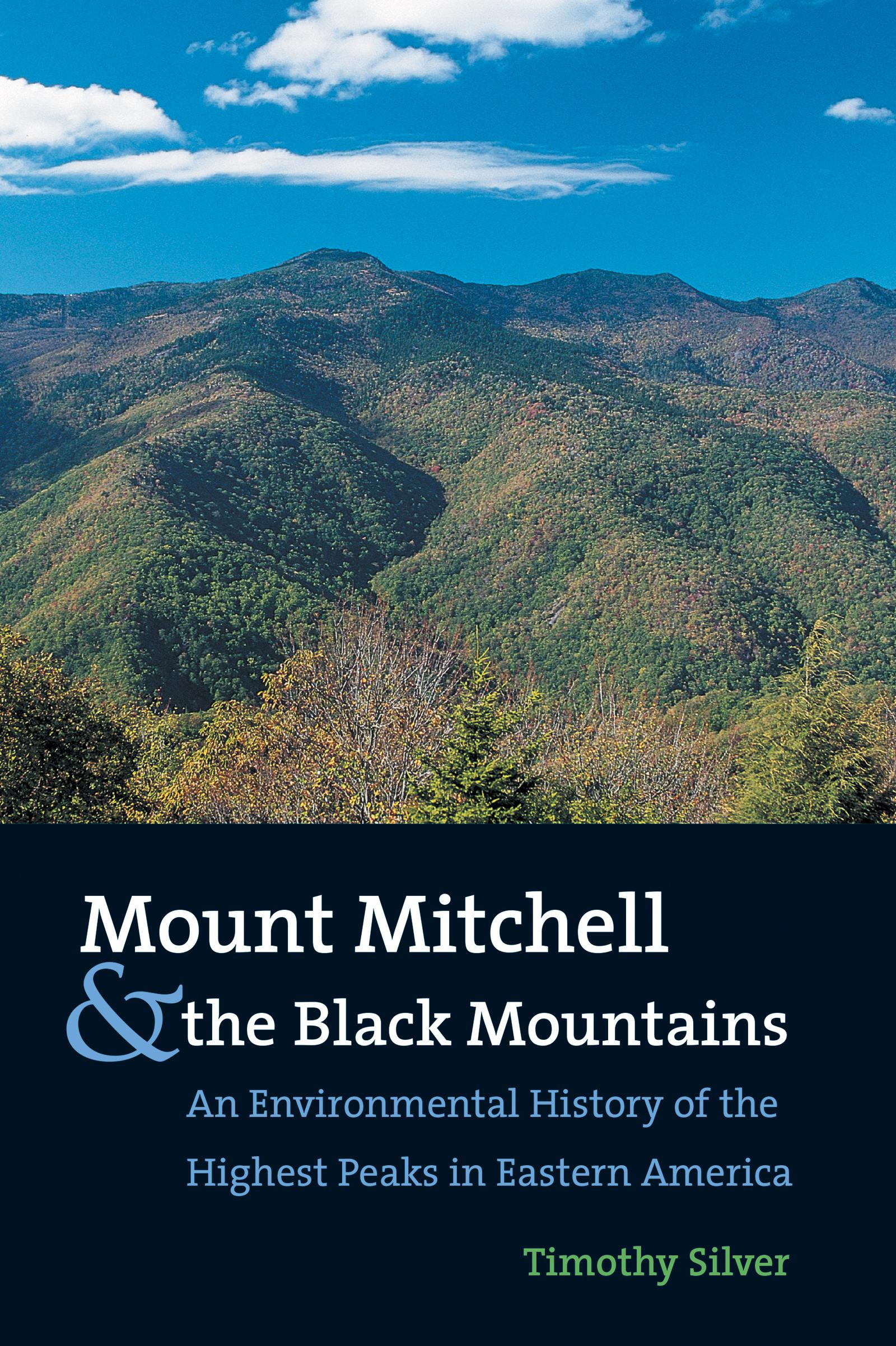
Each year, thousands of tourists visit Mount Mitchell, the most prominent feature of North Carolina’s Black Mountain range and the highest peak in the eastern United States. From Native Americans and early explorers to land speculators and conservationists, people have long been drawn to this rugged region. Timothy Silver explores the long and complicated history of the Black Mountains, drawing on both the historical record and his experience as a backpacker and fly fisherman. He chronicles the geological and environmental forces that created this intriguing landscape, then traces its history of environmental change and human intervention from the days of Indian-European contact to today.
Among the many tales Silver recounts is that of Elisha Mitchell, the renowned geologist and University of North Carolina professor for whom Mount Mitchell is named, who fell to his death there in 1857. But nature’s stories — of forest fires, chestnut blight, competition among plants and animals, insect invasions, and, most recently, airborne toxins and acid rain — are also part of Silver’s narrative, making it the first history of the Appalachians in which the natural world gets equal time with human history. It is only by understanding the dynamic between these two forces, Silver says, that we can begin to protect the Black Mountains for future generations.
Betaal eenvoudig met kaart, Klarna, Apple Pay of Google Pay. Niet tevreden? Je hebt altijd 14 dagen bedenktijd. Lees meer in onze voorwaarden. Heb je vragen, mail ons dan via hello@memmo.org.
Memmo maakt studeren makkelijker – waar je ook bent ter wereld. Wij brengen je cursusboeken en slimme studietools samen op één plek: samenvattingen, quizzen, podcasts en flashcards. En Ted, je studievriend die antwoord geeft op alles wat je je afvraagt. Meer dan 50.000 studenten studeren hier al – gebouwd om je sneller te laten leren en minder stress te geven.