
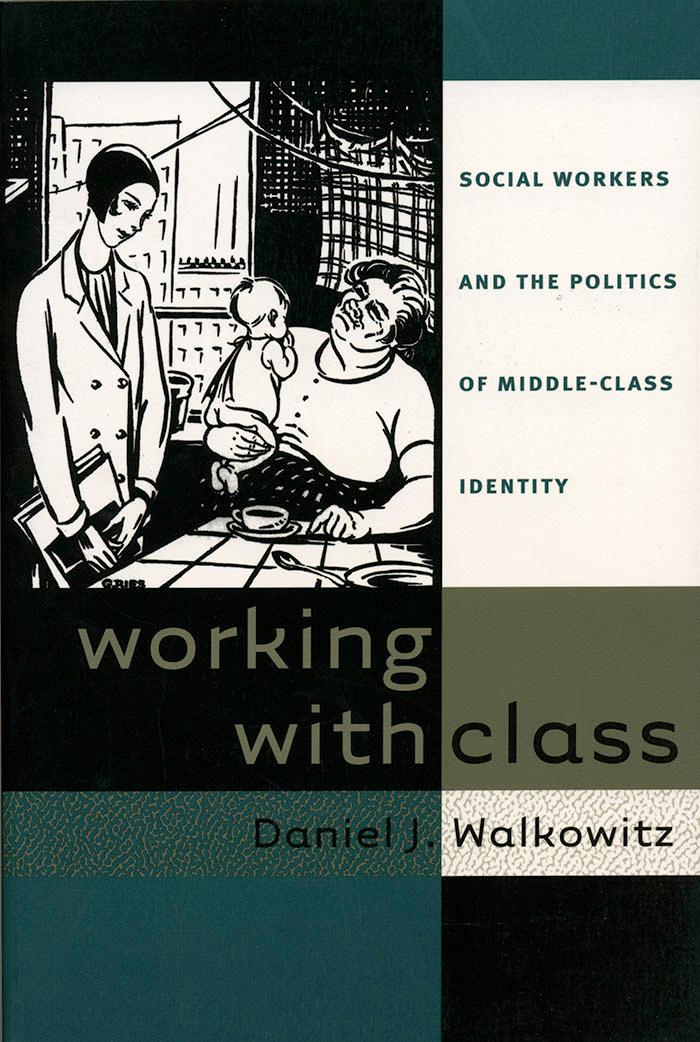
Polls tell us that most Americans — whether they earn $20,000 or $200,000 a year — think of themselves as middle class. As this phenomenon suggests, “middle class” is a category whose definition is not necessarily self-evident. In this book, historian Daniel Walkowitz approaches the question of what it means to be middle class from an innovative angle. Focusing on the history of social workers — who daily patrol the boundaries of class — he examines the changed and contested meaning of the term over the last one hundred years.
Walkowitz uses the study of social workers to explore the interplay of race, ethnicity, and gender with class. He examines the trade union movement within the mostly female field of social work and looks at how a paradigmatic conflict between blacks and Jews in New York City during the 1960s shaped late-twentieth-century social policy concerning work, opportunity, and entitlements. In all, this is a story about the ways race and gender divisions in American society have underlain the confusion about the identity and role of the middle class.
Betaal eenvoudig met kaart, Klarna, Apple Pay of Google Pay. Niet tevreden? Je hebt altijd 14 dagen bedenktijd. Lees meer in onze voorwaarden. Heb je vragen, mail ons dan via hello@memmo.org.
Memmo maakt studeren makkelijker – waar je ook bent ter wereld. Wij brengen je cursusboeken en slimme studietools samen op één plek: samenvattingen, quizzen, podcasts en flashcards. En Ted, je studievriend die antwoord geeft op alles wat je je afvraagt. Meer dan 50.000 studenten studeren hier al – gebouwd om je sneller te laten leren en minder stress te geven.