
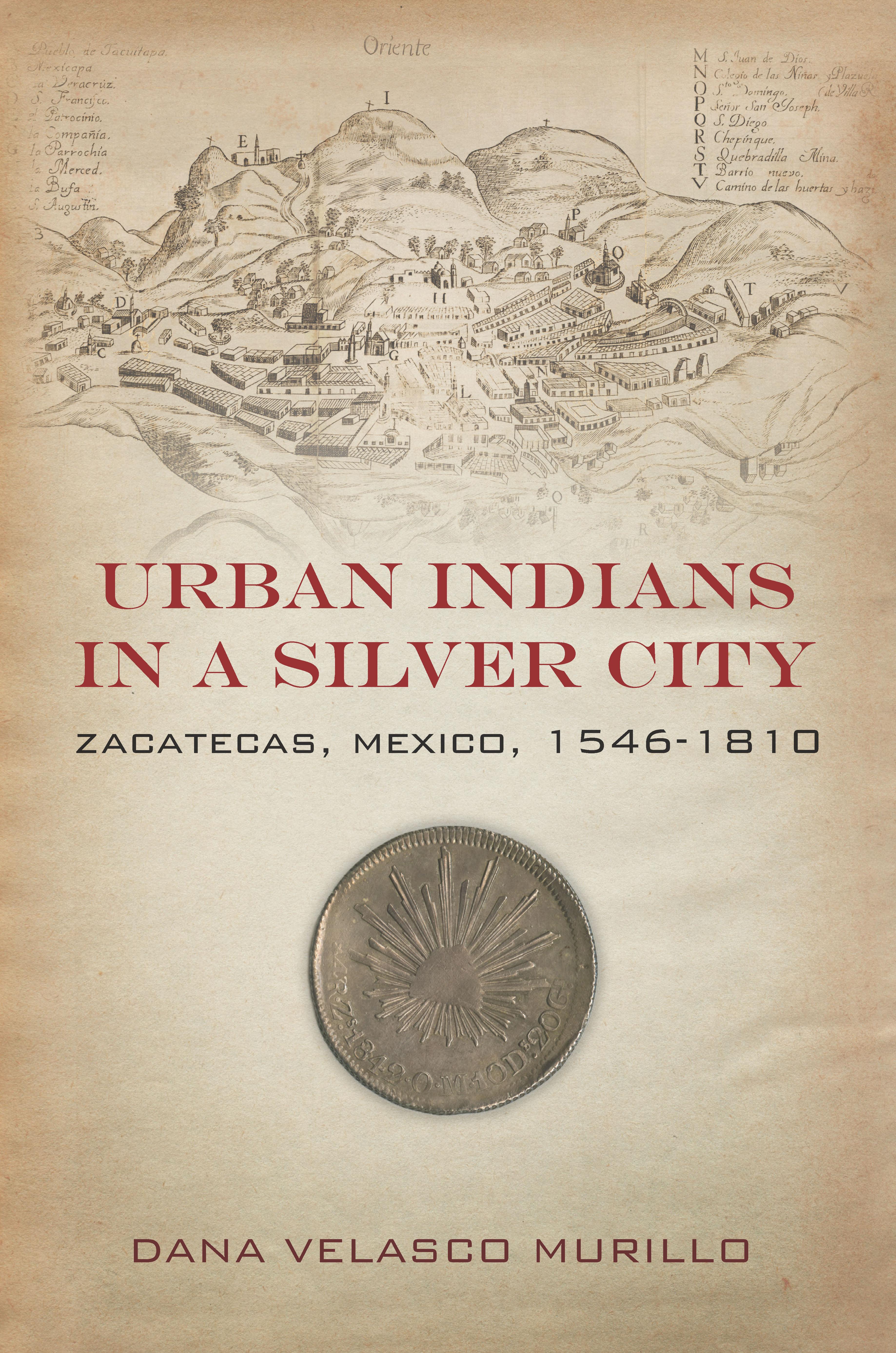
In the sixteenth century, silver mined by native peoples became New Spain's most important export. Silver production served as a catalyst for northern expansion, creating mining towns that led to the development of new industries, markets, population clusters, and frontier institutions. Within these towns, the need for labor, raw materials, resources, and foodstuffs brought together an array of different ethnic and social groups—Spaniards, Indians, Africans, and ethnically mixed individuals or castas. On the northern edge of the empire, 350 miles from Mexico City, sprung up Zacatecas, a silver-mining town that would grow in prominence to become the "Second City of New Spain."
Urban Indians in a Silver City illuminates the social footprint of colonial Mexico's silver mining district. It reveals the men, women, children, and families that shaped indigenous society and shifts the view of indigenous peoples from mere laborers to settlers and vecinos (municipal residents). Dana Velasco Murillo shows how native peoples exploited the urban milieu to create multiple statuses and identities that allowed them to live in Zacatecas as both Indians and vecinos. In reconsidering traditional paradigms about ethnicity and identity among the urban Indian population, she raises larger questions about the nature and rate of cultural change in the Mexican north.
Betaal eenvoudig met kaart, Klarna, Apple Pay of Google Pay. Niet tevreden? Je hebt altijd 14 dagen bedenktijd. Lees meer in onze voorwaarden. Heb je vragen, mail ons dan via hello@memmo.org.
Memmo maakt studeren makkelijker – waar je ook bent ter wereld. Wij brengen je cursusboeken en slimme studietools samen op één plek: samenvattingen, quizzen, podcasts en flashcards. En Ted, je studievriend die antwoord geeft op alles wat je je afvraagt. Meer dan 50.000 studenten studeren hier al – gebouwd om je sneller te laten leren en minder stress te geven.