
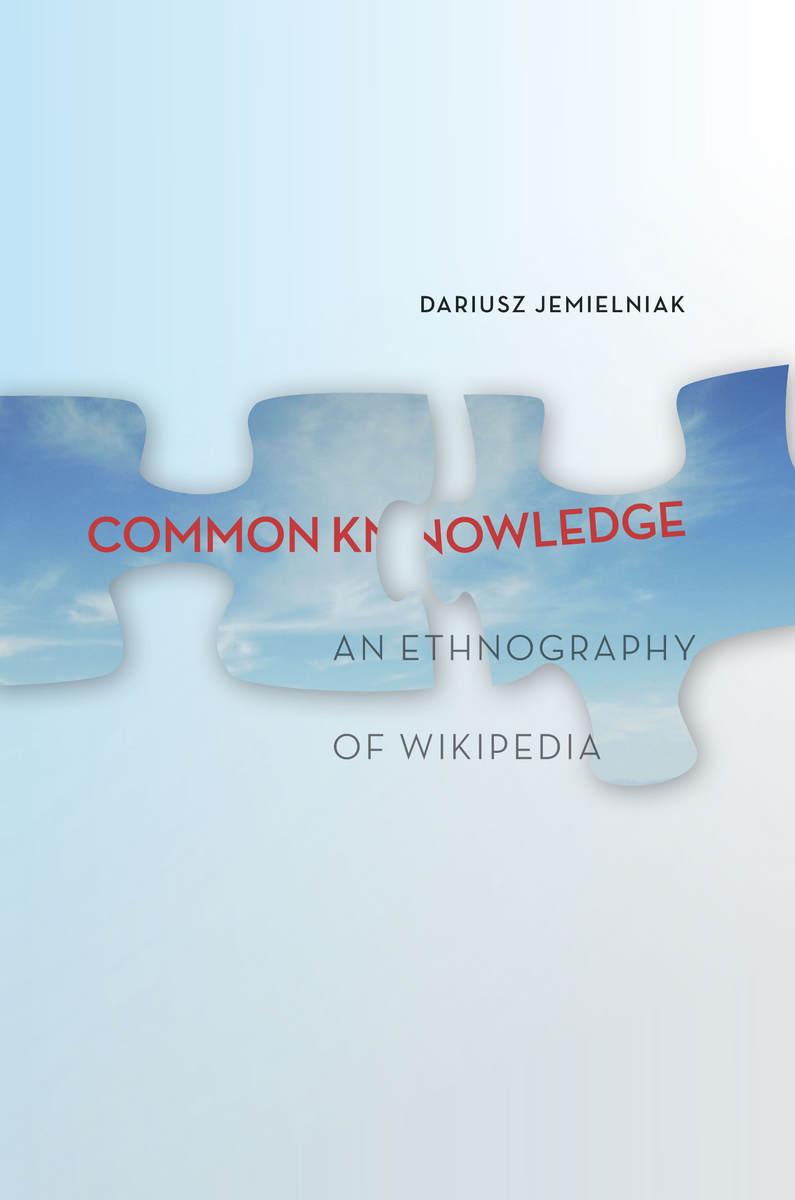
With an emphasis on peer–produced content and collaboration, Wikipedia exemplifies a departure from traditional management and organizational models. This iconic "project" has been variously characterized as a hive mind and an information revolution, attracting millions of new users even as it has been denigrated as anarchic and plagued by misinformation. Have Wikipedia's structure and inner workings promoted its astonishing growth and enduring public relevance?
In Common Knowledge?, Dariusz Jemielniak draws on his academic expertise and years of active participation within the Wikipedia community to take readers inside the site, illuminating how it functions and deconstructing its distinctive organization. Against a backdrop of misconceptions about its governance, authenticity, and accessibility, Jemielniak delivers the first ethnography of Wikipedia, revealing that it is not entirely at the mercy of the public: instead, it balances open access and power with a unique bureaucracy that takes a page from traditional organizational forms. Along the way, Jemielniak incorporates fascinating cases that highlight the tug of war among the participants as they forge ahead in this pioneering environment.
Betaal eenvoudig met kaart, Klarna, Apple Pay of Google Pay. Niet tevreden? Je hebt altijd 14 dagen bedenktijd. Lees meer in onze voorwaarden. Heb je vragen, mail ons dan via hello@memmo.org.
Memmo maakt studeren makkelijker – waar je ook bent ter wereld. Wij brengen je cursusboeken en slimme studietools samen op één plek: samenvattingen, quizzen, podcasts en flashcards. En Ted, je studievriend die antwoord geeft op alles wat je je afvraagt. Meer dan 50.000 studenten studeren hier al – gebouwd om je sneller te laten leren en minder stress te geven.