
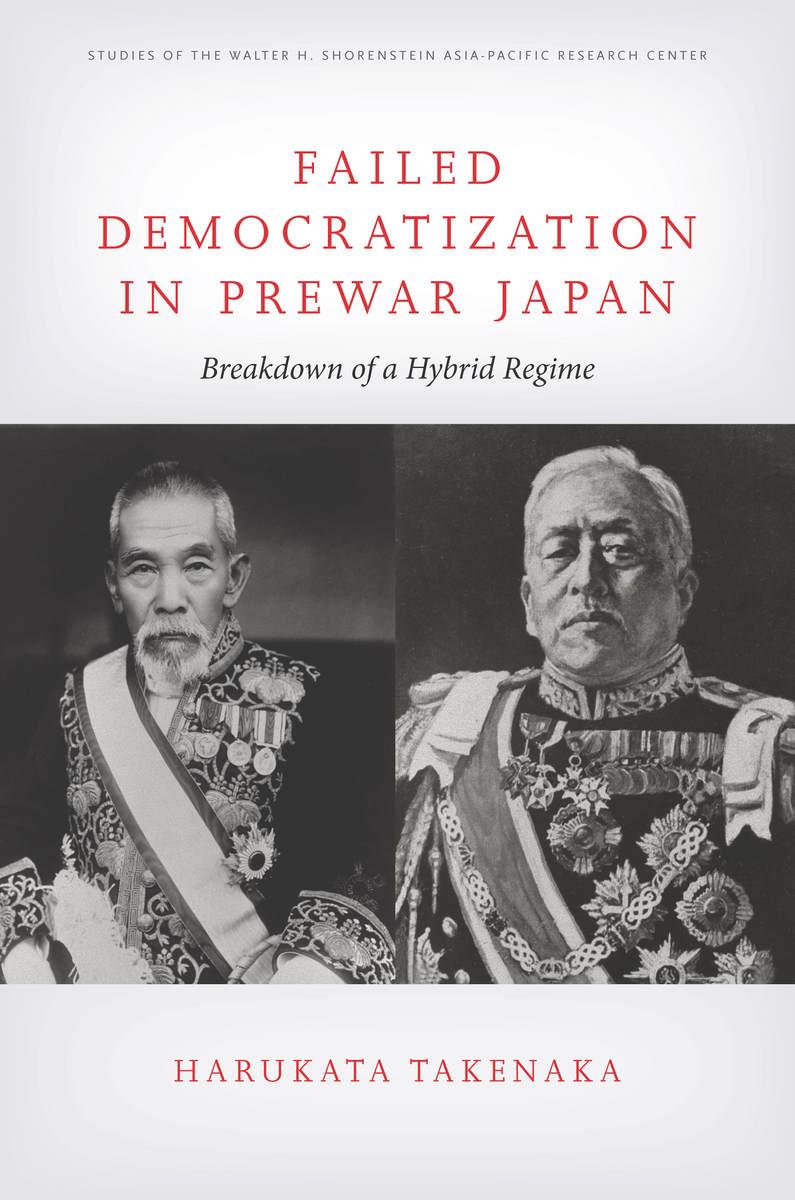
Failed Democratization in Prewar Japan presents a compelling case study on change in political regimes through its exploration of Japan's transition to democracy. Within a broad-ranging examination of Japan's "semi-democratic" political system from 1918 to 1932, when political parties tended to dominate the government, the book analyzes in detail why this system collapsed in 1932 and discusses the implications of the failure.
By reference to comparable cases—prewar Argentina, prewar Germany, postwar Brazil, and 1980s Thailand—Harukata Takenaka reveals that the factors responsible for the breakdown of the Taisho democracy in Japan replicated those that precipitated the collapse of democracy in Europe, Latin America, and elsewhere in Asia.
While most literature on these transitions focuses on successful cases, Takenaka explores democratic failure to answer questions about how and why political parties and their leaders can behave in ways that undermine the democratic institutions that serve as the basis for their formal authority.
Betaal eenvoudig met kaart, Klarna, Apple Pay of Google Pay. Niet tevreden? Je hebt altijd 14 dagen bedenktijd. Lees meer in onze voorwaarden. Heb je vragen, mail ons dan via hello@memmo.org.
Memmo maakt studeren makkelijker – waar je ook bent ter wereld. Wij brengen je cursusboeken en slimme studietools samen op één plek: samenvattingen, quizzen, podcasts en flashcards. En Ted, je studievriend die antwoord geeft op alles wat je je afvraagt. Meer dan 50.000 studenten studeren hier al – gebouwd om je sneller te laten leren en minder stress te geven.