
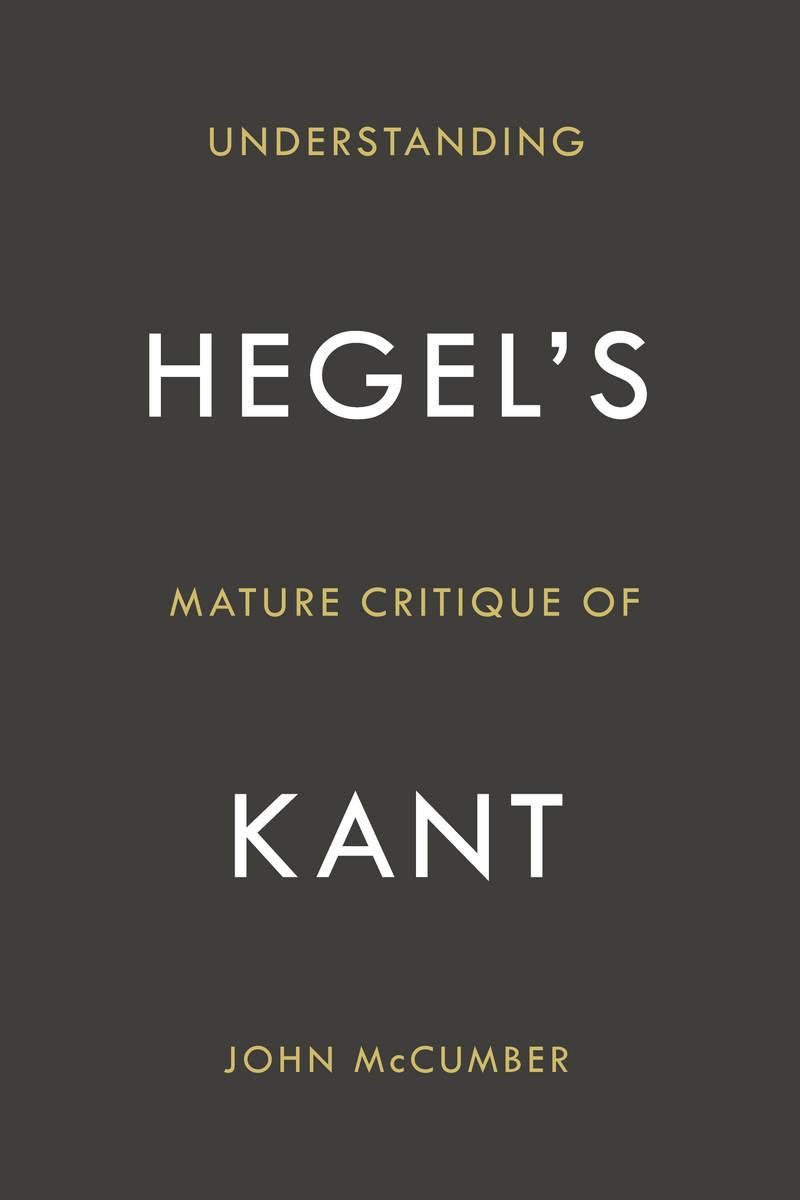
Hegel's critique of Kant was a turning point in the history of philosophy: for the first time, the concrete, situated, and in certain senses "naturalistic" style pioneered by Hegel confronted the thin, universalistic, and argumentatively purified style of philosophy that had found its most rigorous expression in Kant. The controversy has hardly died away: it virtually haunts contemporary philosophy from epistemology to ethical theory. Yet if this book is right, the full import of Hegel's critique of Kant has not been understood. Working from Hegel's mature texts (after 1807) and reading them in light of an overall interpretation of Hegel's project as a linguistic, "definitional" system, the book offers major reinterpretations of Hegel's views: The Kantian thing-in-itself is not denied but relocated as a temporal aspect of our experience. Hegel's linguistic idealism is understood in terms of his realistic view of sensation. Instead of claiming that Kant's categorical imperative is too empty to provide concrete moral guidance, Hegel praises its emptiness as the foundation for a diverse society.
Betaal eenvoudig met kaart, Klarna, Apple Pay of Google Pay. Niet tevreden? Je hebt altijd 14 dagen bedenktijd. Lees meer in onze voorwaarden. Heb je vragen, mail ons dan via hello@memmo.org.
Memmo maakt studeren makkelijker – waar je ook bent ter wereld. Wij brengen je cursusboeken en slimme studietools samen op één plek: samenvattingen, quizzen, podcasts en flashcards. En Ted, je studievriend die antwoord geeft op alles wat je je afvraagt. Meer dan 50.000 studenten studeren hier al – gebouwd om je sneller te laten leren en minder stress te geven.