
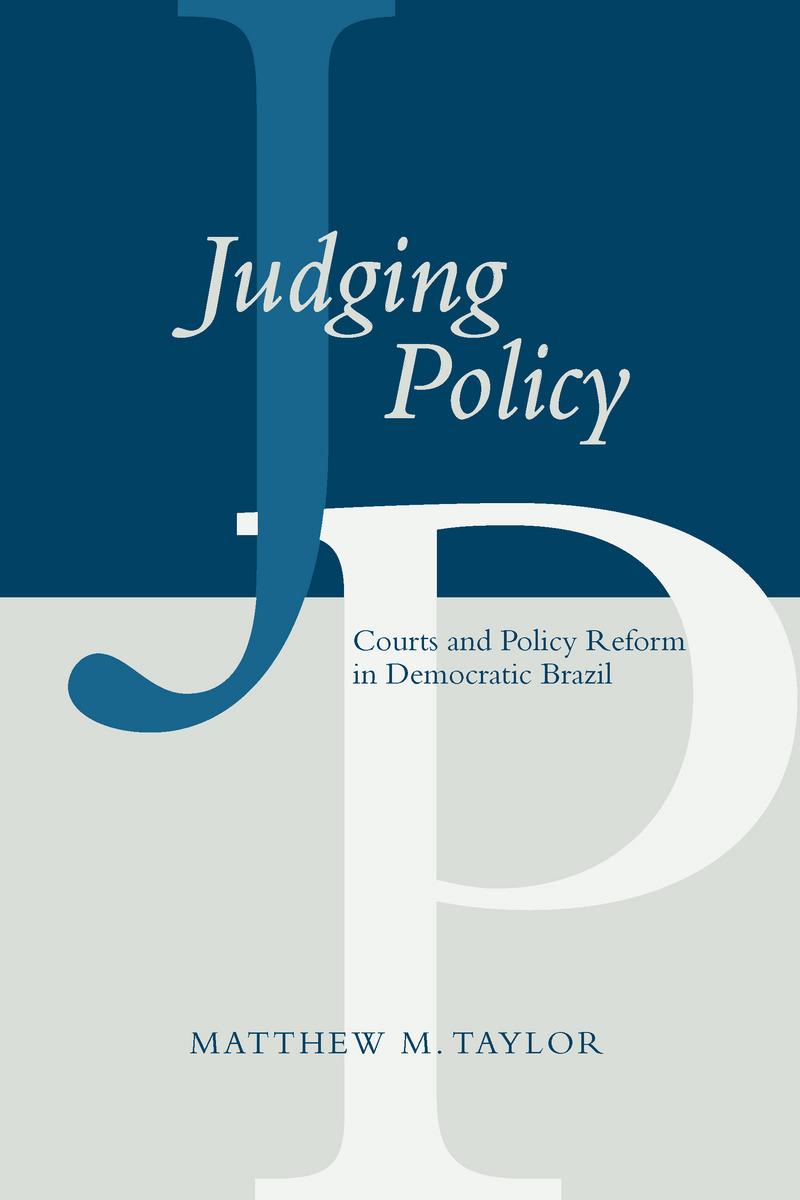
Courts, like other government institutions, shape public policy. But how are courts drawn into the policy process, and how are patterns of policy debate shaped by the institutional structure of the courts?
Drawing on the experience of the Brazilian federal courts since the transition to democracy, Judging Policy examines the judiciary's role in public policy debates. During a period of energetic policy reform, the high salience of many policies, combined with the conducive institutional structure of the judiciary, ensured that Brazilian courts would become an important institution at the heart of the policy process. The Brazilian case thus challenges the notion that Latin America's courts have been uniformly pliant or ineffectual, with little impact on politics and policy outcomes.
Judging Policy also inserts the judiciary into the scholarly debate regarding the extent of presidential control of the policy process in Latin America's largest nation. By analyzing the full Brazilian federal court system—including not only the high court, but also trial and appellate courts—the book develops a framework with cross-national implications for understanding how courts may influence policy actors' political strategies and the distribution of power within political systems.
Betaal eenvoudig met kaart, Klarna, Apple Pay of Google Pay. Niet tevreden? Je hebt altijd 14 dagen bedenktijd. Lees meer in onze voorwaarden. Heb je vragen, mail ons dan via hello@memmo.org.
Memmo maakt studeren makkelijker – waar je ook bent ter wereld. Wij brengen je cursusboeken en slimme studietools samen op één plek: samenvattingen, quizzen, podcasts en flashcards. En Ted, je studievriend die antwoord geeft op alles wat je je afvraagt. Meer dan 50.000 studenten studeren hier al – gebouwd om je sneller te laten leren en minder stress te geven.