
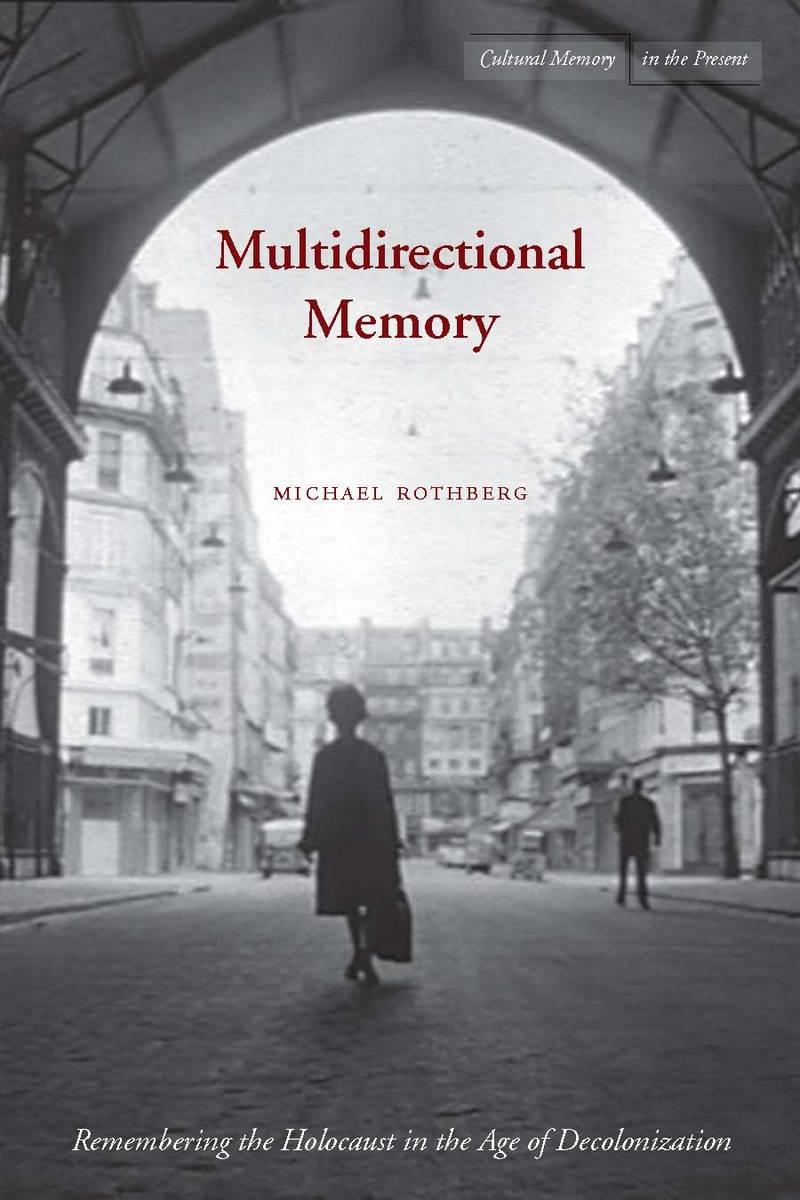
Multidirectional Memory brings together Holocaust studies and postcolonial studies for the first time. Employing a comparative and interdisciplinary approach, the book makes a twofold argument about Holocaust memory in a global age by situating it in the unexpected context of decolonization. On the one hand, it demonstrates how the Holocaust has enabled the articulation of other histories of victimization at the same time that it has been declared "unique" among human-perpetrated horrors. On the other, it uncovers the more surprising and seldom acknowledged fact that public memory of the Holocaust emerged in part thanks to postwar events that seem at first to have little to do with it. In particular, Multidirectional Memory highlights how ongoing processes of decolonization and movements for civil rights in the Caribbean, Africa, Europe, the United States, and elsewhere unexpectedly galvanized memory of the Holocaust.
Rothberg engages with both well-known and non-canonical intellectuals, writers, and filmmakers, including Hannah Arendt, Aimé Césaire, Charlotte Delbo, W.E.B. Du Bois, Marguerite Duras, Michael Haneke, Jean Rouch, and William Gardner Smith.
Betaal eenvoudig met kaart, Klarna, Apple Pay of Google Pay. Niet tevreden? Je hebt altijd 14 dagen bedenktijd. Lees meer in onze voorwaarden. Heb je vragen, mail ons dan via hello@memmo.org.
Memmo maakt studeren makkelijker – waar je ook bent ter wereld. Wij brengen je cursusboeken en slimme studietools samen op één plek: samenvattingen, quizzen, podcasts en flashcards. En Ted, je studievriend die antwoord geeft op alles wat je je afvraagt. Meer dan 50.000 studenten studeren hier al – gebouwd om je sneller te laten leren en minder stress te geven.