
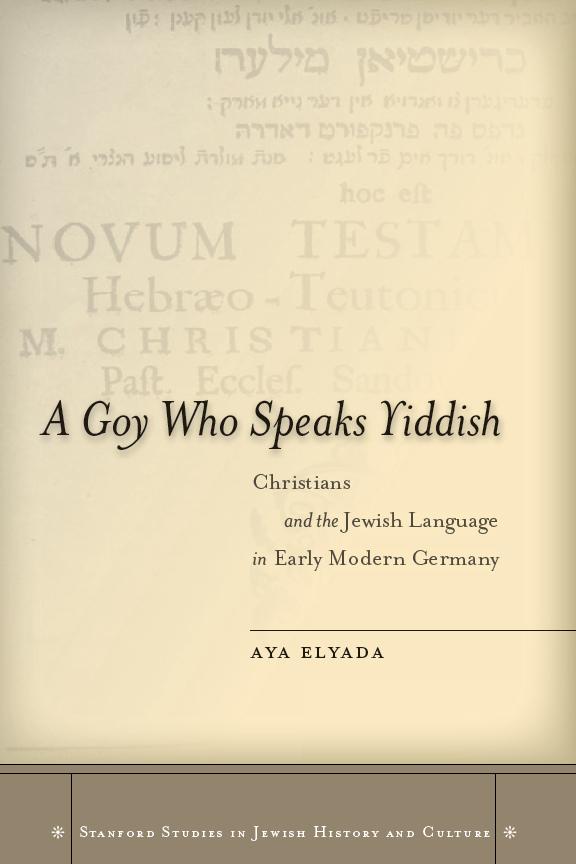
This book explores the unique phenomenon of Christian engagement with Yiddish language and literature from the beginning of the sixteenth century to the late eighteenth century. By exploring the motivations for Christian interest in Yiddish, and the differing ways in which Yiddish was discussed and treated in Christian texts, A Goy Who Speaks Yiddish addresses a wide array of issues, most notably Christian Hebraism, Protestant theology, early modern Yiddish culture, and the social and cultural history of language in early modern Europe.
Elyada's analysis of a wide range of philological and theological works, as well as textbooks, dictionaries, ethnographical writings, and translations, demonstrates that Christian Yiddishism had implications beyond its purely linguistic and philological dimensions. Indeed, Christian texts on Yiddish reveal not only the ways in which Christians perceived and defined Jews and Judaism, but also, in a contrasting vein, how they viewed their own language, religion, and culture.
Betaal eenvoudig met kaart, Klarna, Apple Pay of Google Pay. Niet tevreden? Je hebt altijd 14 dagen bedenktijd. Lees meer in onze voorwaarden. Heb je vragen, mail ons dan via hello@memmo.org.
Memmo maakt studeren makkelijker – waar je ook bent ter wereld. Wij brengen je cursusboeken en slimme studietools samen op één plek: samenvattingen, quizzen, podcasts en flashcards. En Ted, je studievriend die antwoord geeft op alles wat je je afvraagt. Meer dan 50.000 studenten studeren hier al – gebouwd om je sneller te laten leren en minder stress te geven.