
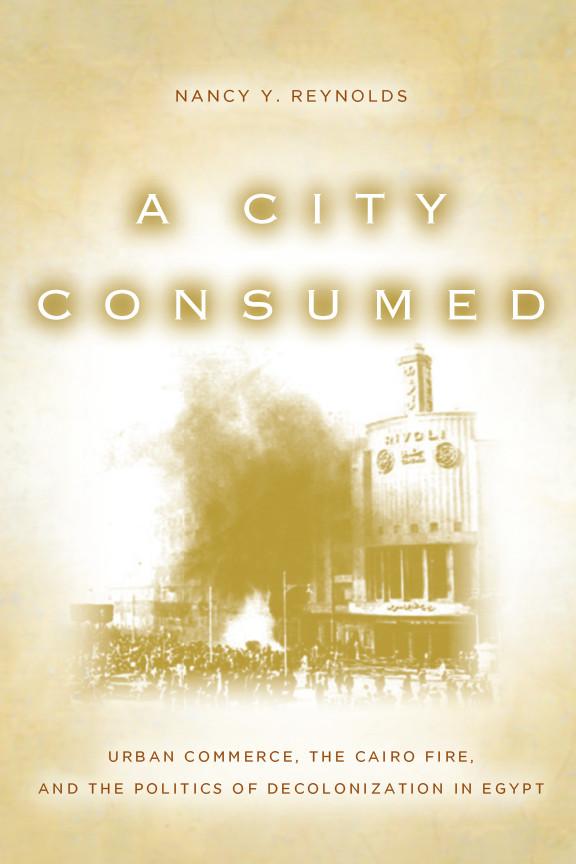
Though now remembered as an act of anti-colonial protest leading to the Egyptian military coup of 1952, the Cairo Fire that burned through downtown stores and businesses appeared to many at the time as an act of urban self-destruction and national suicide. The logic behind this latter view has now been largely lost. Offering a revised history, Nancy Reynolds looks to the decades leading up to the fire to show that the lines between foreign and native in city space and commercial merchandise were never so starkly drawn.
Consumer goods occupied an uneasy place on anti-colonial agendas for decades in Egypt before the great Cairo Fire. Nationalist leaders frequently railed against commerce as a form of colonial captivity, yet simultaneously expanded local production and consumption to anchor a newly independent economy. Close examination of struggles over dress and shopping reveals that nationhood coalesced informally from the conflicts and collaboration of consumers "from below" as well as more institutional and prescriptive mandates.
Betaal eenvoudig met kaart, Klarna, Apple Pay of Google Pay. Niet tevreden? Je hebt altijd 14 dagen bedenktijd. Lees meer in onze voorwaarden. Heb je vragen, mail ons dan via hello@memmo.org.
Memmo maakt studeren makkelijker – waar je ook bent ter wereld. Wij brengen je cursusboeken en slimme studietools samen op één plek: samenvattingen, quizzen, podcasts en flashcards. En Ted, je studievriend die antwoord geeft op alles wat je je afvraagt. Meer dan 50.000 studenten studeren hier al – gebouwd om je sneller te laten leren en minder stress te geven.