
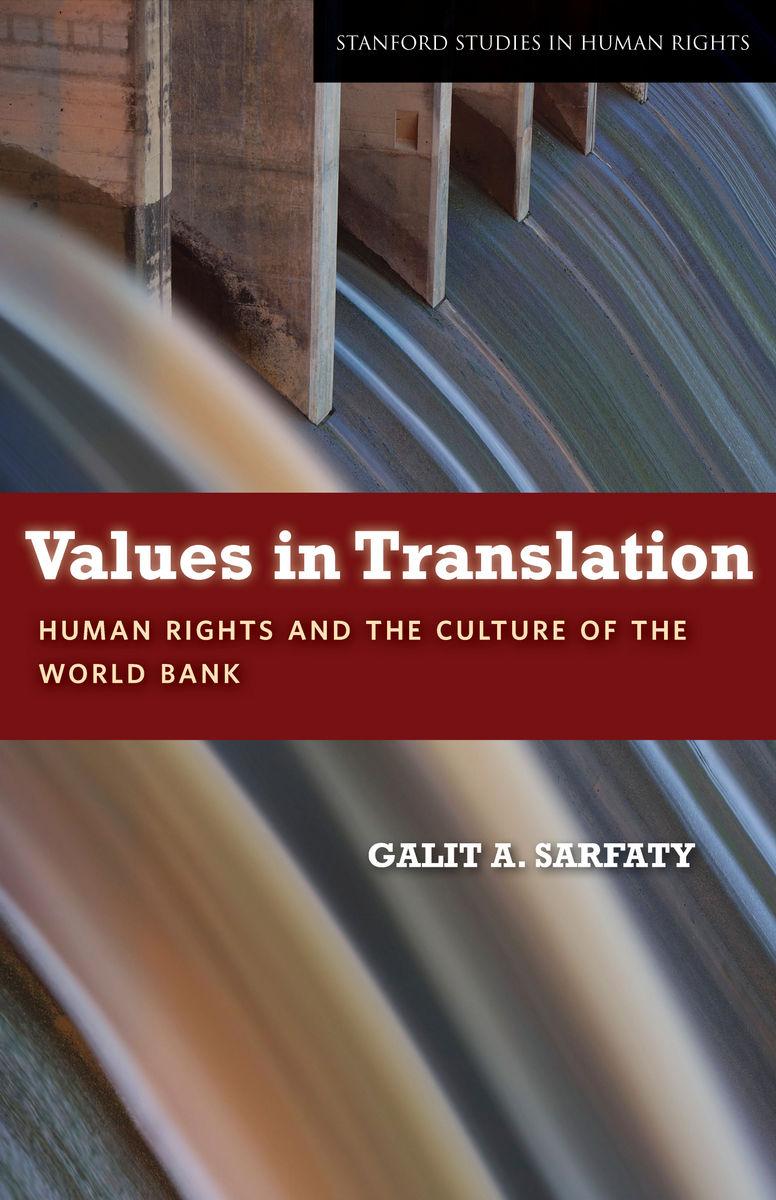
The World Bank is the largest lender to developing countries, making loans worth over $20 billion per year to finance development projects around the globe. To guide its investments, the Bank has adopted a number of social and environmental policies, yet it has never instituted any overarching policy on human rights. Despite the potential human rights impact of Bank projects—the forced displacement of indigenous peoples resulting from a Bank-financed dam project, for example—the issue of human rights remains marginal in the Bank's operational practices.
Values in Translation analyzes the organizational culture of the World Bank and addresses the question of why it has not adopted a human rights framework. Academics and social advocates have typically focused on legal restrictions in the Bank's Articles of Agreement. This work's anthropological analysis sheds light on internal obstacles including the employee incentive system and a clash of expertise between lawyers and economists over how to define human rights and justify their relevance to the Bank's mission.
Betaal eenvoudig met kaart, Klarna, Apple Pay of Google Pay. Niet tevreden? Je hebt altijd 14 dagen bedenktijd. Lees meer in onze voorwaarden. Heb je vragen, mail ons dan via hello@memmo.org.
Memmo maakt studeren makkelijker – waar je ook bent ter wereld. Wij brengen je cursusboeken en slimme studietools samen op één plek: samenvattingen, quizzen, podcasts en flashcards. En Ted, je studievriend die antwoord geeft op alles wat je je afvraagt. Meer dan 50.000 studenten studeren hier al – gebouwd om je sneller te laten leren en minder stress te geven.