
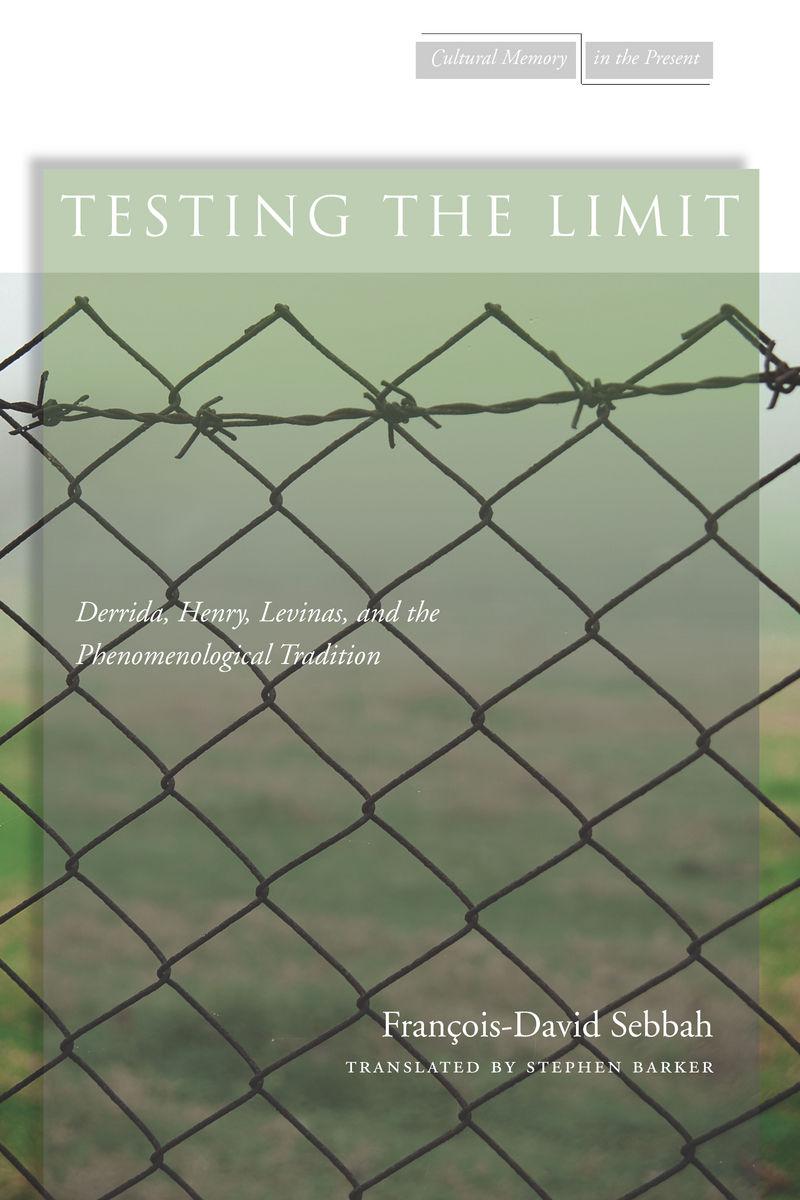
In exploring the nature of excess relative to a phenomenology of the limit, Testing the Limit claims that phenomenology itself is an exploration of excess. What does it mean that "the self" is "given"? Should we see it as originary; or rather, in what way is the self engendered from textual practices that transgress—or hover around and therefore within—the threshold of phenomenologial discourse? This is the first book to include Michel Henry in a triangulation with Derrida and Levinas and the first to critique Levinas on the basis of his interpolation of philosophy and religion. Sebbah claims that the textual origins of phenomenology determine, in their temporal rhythms, the nature of the subjectivation on which they focus. He situates these considerations within the broader picture of the state of contemporary French phenomenology (chiefly the legacy of Merleau-Ponty), in order to show that these three thinkers share a certain "family resemblance," the identification of which reveals something about the traces of other phenomenological families. It is by testing the limit within the context of traditional phenomenological concerns about the appearance of subjectivity and ipseity that Derrida, Henry, and Levinas radically reconsider phenomenology and that French phenomenology assumes its present form.
Betaal eenvoudig met kaart, Klarna, Apple Pay of Google Pay. Niet tevreden? Je hebt altijd 14 dagen bedenktijd. Lees meer in onze voorwaarden. Heb je vragen, mail ons dan via hello@memmo.org.
Memmo maakt studeren makkelijker – waar je ook bent ter wereld. Wij brengen je cursusboeken en slimme studietools samen op één plek: samenvattingen, quizzen, podcasts en flashcards. En Ted, je studievriend die antwoord geeft op alles wat je je afvraagt. Meer dan 50.000 studenten studeren hier al – gebouwd om je sneller te laten leren en minder stress te geven.