
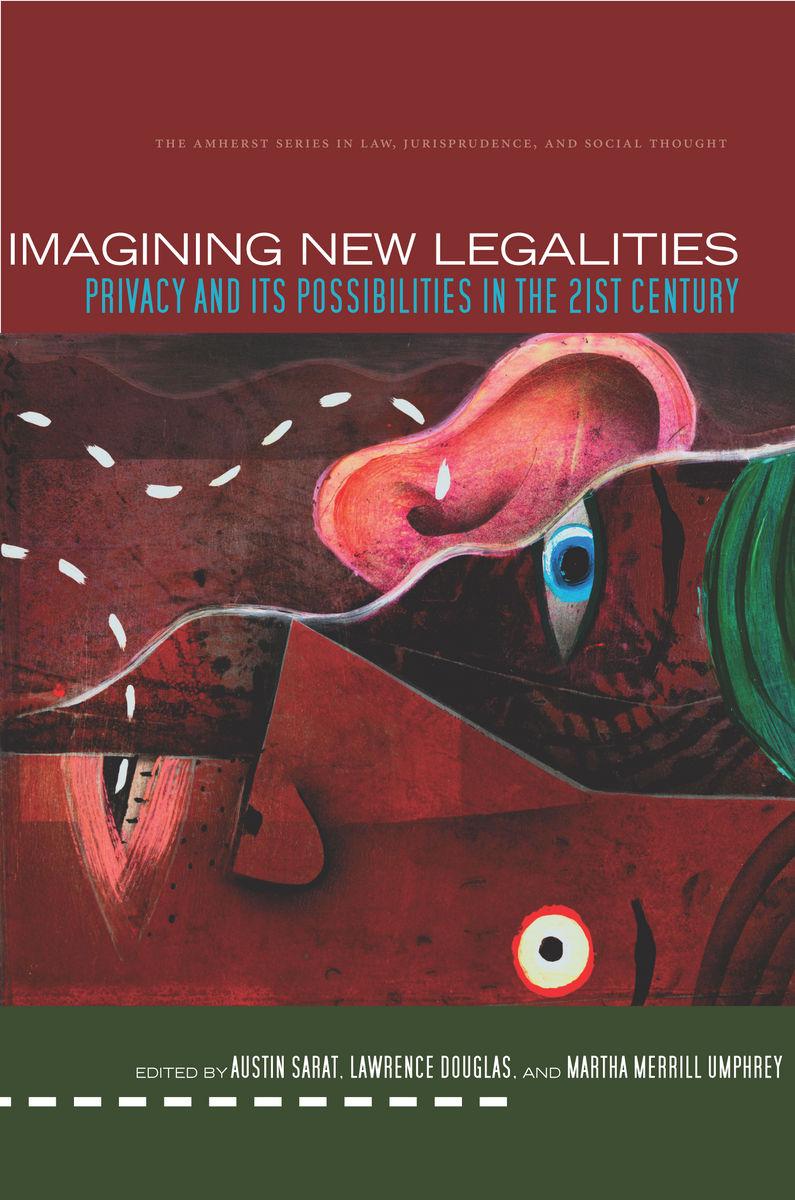
Imagining New Legalities reminds us that examining the right to privacy and the public/private distinction is an important way of mapping the forms and limits of power that can legitimately be exercised by collective bodies over individuals and by governments over their citizens. This book does not seek to provide a comprehensive overview of threats to privacy and rejoinders to them. Instead it considers several different conceptions of privacy and provides examples of legal inventiveness in confronting some contemporary challenges to the public/private distinction.
It provides a context for that consideration by surveying the meanings of privacy in three domains—-the first, involving intimacy and intimate relations; the second, implicating criminal procedure, in particular, the 4th amendment; and the third, addressing control of information in the digital age. The first two provide examples of what are taken to be classic breaches of the public/private distinction, namely instances when government intrudes in an area claimed to be private. The third has to do with voluntary circulation of information and the question of who gets to control what happens to and with that information.
Betaal eenvoudig met kaart, Klarna, Apple Pay of Google Pay. Niet tevreden? Je hebt altijd 14 dagen bedenktijd. Lees meer in onze voorwaarden. Heb je vragen, mail ons dan via hello@memmo.org.
Memmo maakt studeren makkelijker – waar je ook bent ter wereld. Wij brengen je cursusboeken en slimme studietools samen op één plek: samenvattingen, quizzen, podcasts en flashcards. En Ted, je studievriend die antwoord geeft op alles wat je je afvraagt. Meer dan 50.000 studenten studeren hier al – gebouwd om je sneller te laten leren en minder stress te geven.