
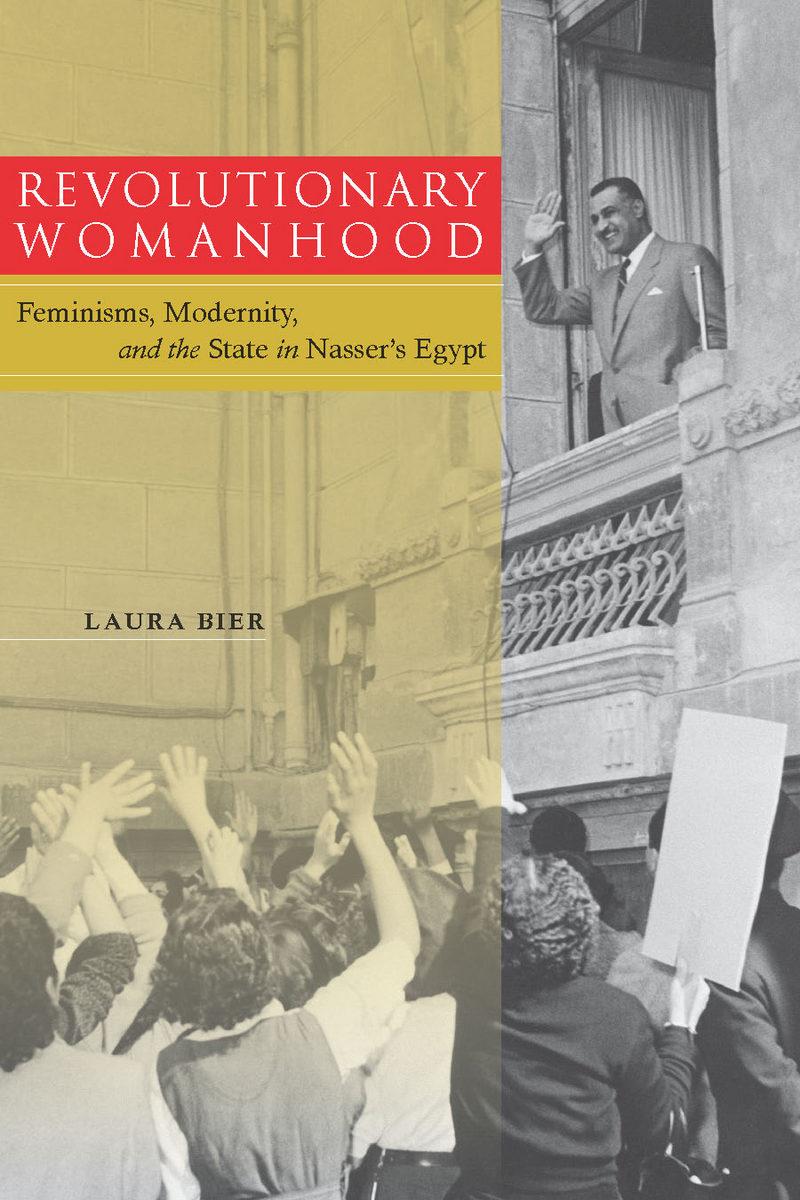
The first major historical account of gender politics during the Nasser era, Revolutionary Womanhood analyzes feminism as a system of ideas and political practices, international in origin but local in iteration. Drawing connections between the secular nationalist projects that emerged in the 1950s and the gender politics of Islamism today, Laura Bier reveals how discussions about education, companionate marriage, and enlightened motherhood, as well as veiling, work, and other means of claiming public space created opportunities to reconsider the relationship between modernity, state feminism, and postcolonial state-building.
Bier highlights attempts by political elites under Nasser to transform Egyptian women into national subjects. These attempts to fashion a "new" yet authentically Egyptian woman both enabled and constrained women's notions of gender, liberation, and agency. Ultimately, Bier challenges the common assumption that these emerging feminisms were somehow not culturally or religiously authentic, and details their lasting impact on Egyptian womanhood today.
Betaal eenvoudig met kaart, Klarna, Apple Pay of Google Pay. Niet tevreden? Je hebt altijd 14 dagen bedenktijd. Lees meer in onze voorwaarden. Heb je vragen, mail ons dan via hello@memmo.org.
Memmo maakt studeren makkelijker – waar je ook bent ter wereld. Wij brengen je cursusboeken en slimme studietools samen op één plek: samenvattingen, quizzen, podcasts en flashcards. En Ted, je studievriend die antwoord geeft op alles wat je je afvraagt. Meer dan 50.000 studenten studeren hier al – gebouwd om je sneller te laten leren en minder stress te geven.