
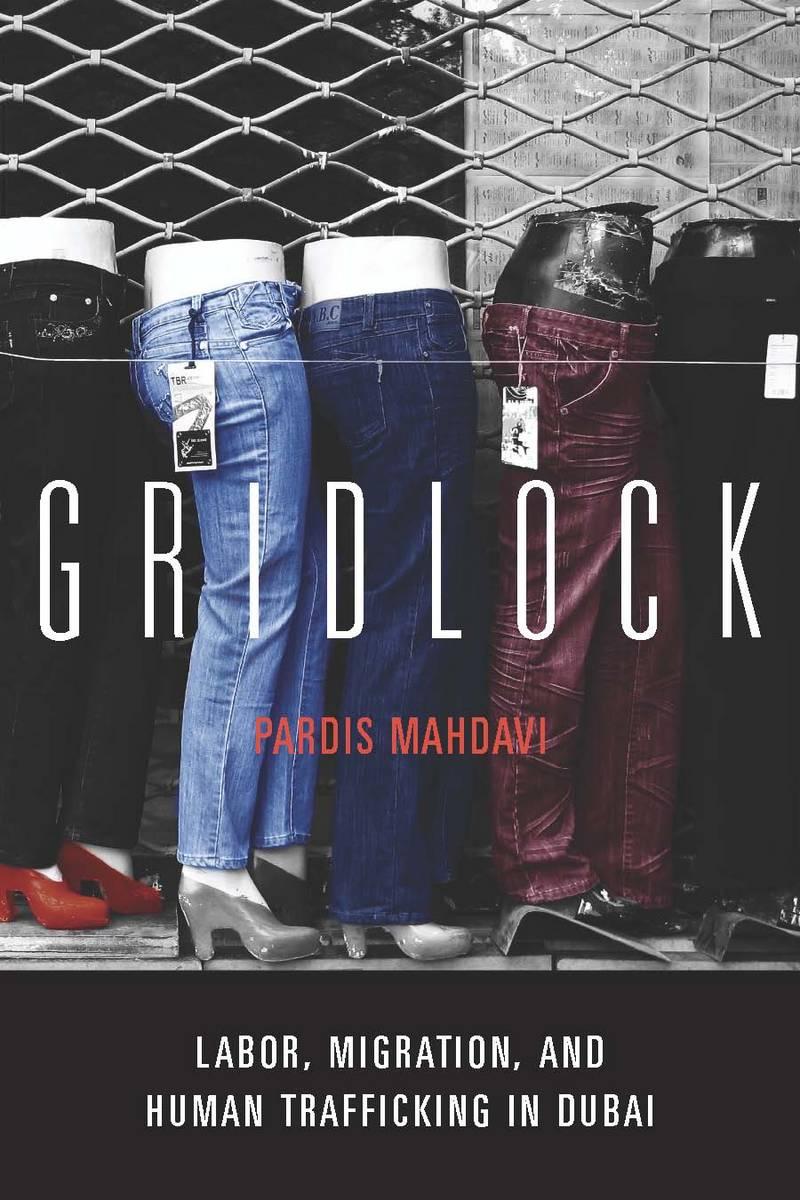
The images of human trafficking are all too often reduced to media tales of helpless young women taken by heavily accented, dark-skinned captors—but the reality is a far cry from this stereotype. In the Middle East, Dubai has been accused of being a hotbed of trafficking. Pardis Mahdavi, however, draws a more complicated and more personal picture of this city filled with migrants. Not all migrant workers are trapped, tricked, and abused. Like anyone else, they make choices to better their lives, though the risk of ending up in bad situations is high.
Legislators hoping to combat human trafficking focus heavily on women and sex work, but there is real potential for abuse of both male and female migrants in a variety of areas of employment—whether on the street, in a field, at a restaurant, or at someone's house. Gridlock explores how migrants' actual experiences in Dubai contrast with the typical discussions—and global moral panic—about human trafficking.
Mahdavi powerfully contrasts migrants' own stories with interviews with U.S. policy makers, revealing the gaping disconnect between policies on human trafficking and the realities of forced labor and migration in the Persian Gulf. To work toward solving this global problem, we need to be honest about what trafficking is—and is not—and to finally get past the stereotypes about trafficked persons so we can really understand the challenges migrant workers are living through every day.
Betaal eenvoudig met kaart, Klarna, Apple Pay of Google Pay. Niet tevreden? Je hebt altijd 14 dagen bedenktijd. Lees meer in onze voorwaarden. Heb je vragen, mail ons dan via hello@memmo.org.
Memmo maakt studeren makkelijker – waar je ook bent ter wereld. Wij brengen je cursusboeken en slimme studietools samen op één plek: samenvattingen, quizzen, podcasts en flashcards. En Ted, je studievriend die antwoord geeft op alles wat je je afvraagt. Meer dan 50.000 studenten studeren hier al – gebouwd om je sneller te laten leren en minder stress te geven.