
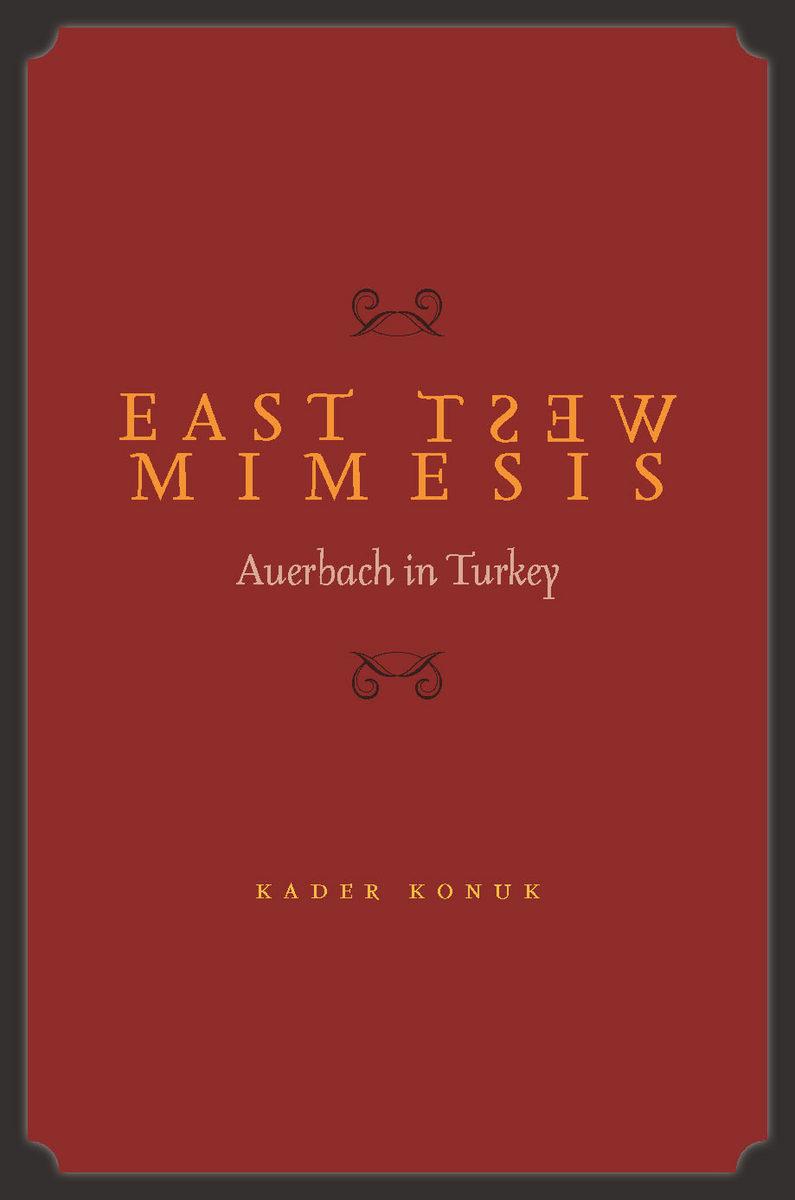
East West Mimesis follows the plight of German-Jewish humanists who escaped Nazi persecution by seeking exile in a Muslim-dominated society. Kader Konuk asks why philologists like Erich Auerbach found humanism at home in Istanbul at the very moment it was banished from Europe. She challenges the notion of exile as synonymous with intellectual isolation and shows the reciprocal effects of German émigrés on Turkey's humanist reform movement. By making literary critical concepts productive for our understanding of Turkish cultural history, the book provides a new approach to the study of East-West relations.
Central to the book is Erich Auerbach's Mimesis: The Representation of Reality in Western Literature, written in Istanbul after he fled Germany in 1936. Konuk draws on some of Auerbach's key concepts—figura as a way of conceptualizing history and mimesis as a means of representing reality—to show how Istanbul shaped Mimesis and to understand Turkey's humanist reform movement as a type of cultural mimesis.
Betaal eenvoudig met kaart, Klarna, Apple Pay of Google Pay. Niet tevreden? Je hebt altijd 14 dagen bedenktijd. Lees meer in onze voorwaarden. Heb je vragen, mail ons dan via hello@memmo.org.
Memmo maakt studeren makkelijker – waar je ook bent ter wereld. Wij brengen je cursusboeken en slimme studietools samen op één plek: samenvattingen, quizzen, podcasts en flashcards. En Ted, je studievriend die antwoord geeft op alles wat je je afvraagt. Meer dan 50.000 studenten studeren hier al – gebouwd om je sneller te laten leren en minder stress te geven.