
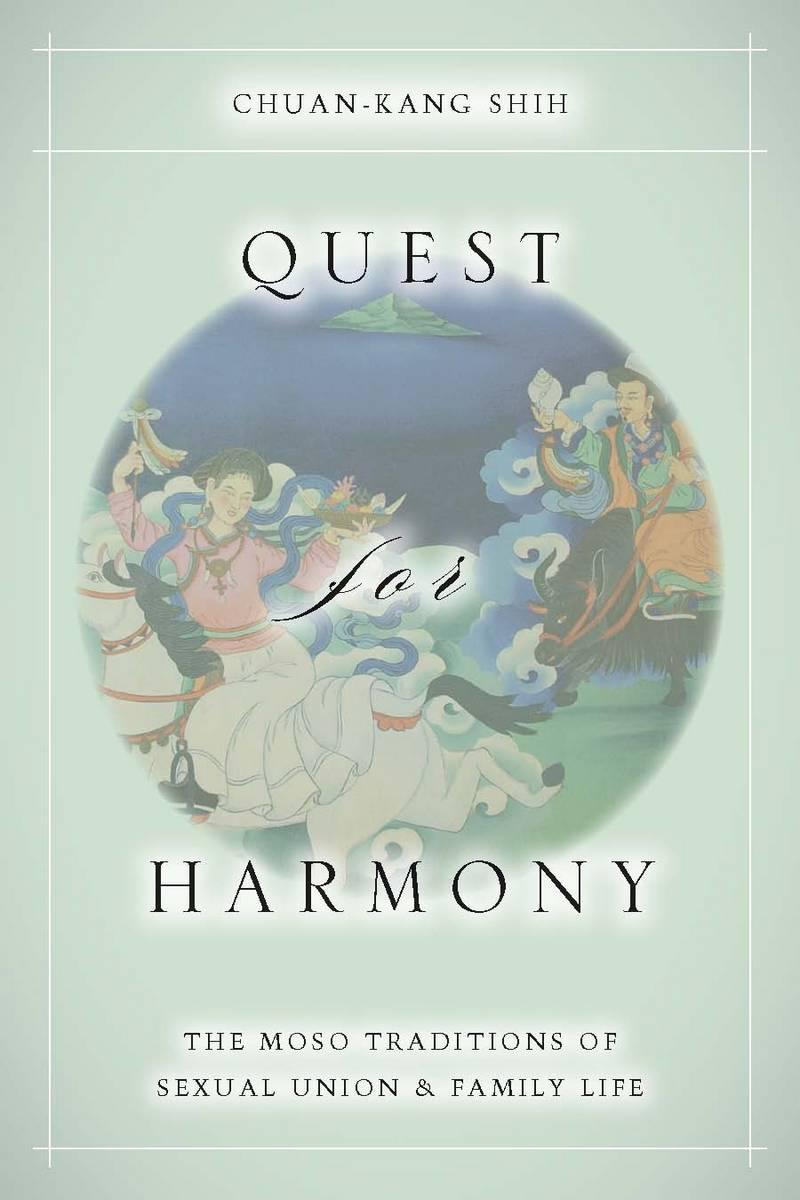
In this long-awaited ethnography, Chuan-kang Shih details the traditional social and cultural conditions of the Moso, a matrilineal group living on the border of Yunnan and Sichuan Provinces in southwest China. Among the Moso, a majority of the adult population practice a visiting system called tisese instead of marriage as the normal sexual and reproductive institution. Until recently, tisese was noncontractual, nonobligatory, and nonexclusive. Partners lived and worked in separate households. The only prerequisite for a tisese relationship was a mutual agreement between the man and the woman to allow sexual access to each other. In a comprehensive account, Quest for Harmony explores this unique practice specifically, and offers thorough documentation, fine-grained analysis, and an engaging discussion of the people, history, and structure of Moso society. Drawing on the author's extensive fieldwork, conducted from 1987 to 2006, this is the first ethnography of the Moso written in English.
Betaal eenvoudig met kaart, Klarna, Apple Pay of Google Pay. Niet tevreden? Je hebt altijd 14 dagen bedenktijd. Lees meer in onze voorwaarden. Heb je vragen, mail ons dan via hello@memmo.org.
Memmo maakt studeren makkelijker – waar je ook bent ter wereld. Wij brengen je cursusboeken en slimme studietools samen op één plek: samenvattingen, quizzen, podcasts en flashcards. En Ted, je studievriend die antwoord geeft op alles wat je je afvraagt. Meer dan 50.000 studenten studeren hier al – gebouwd om je sneller te laten leren en minder stress te geven.