
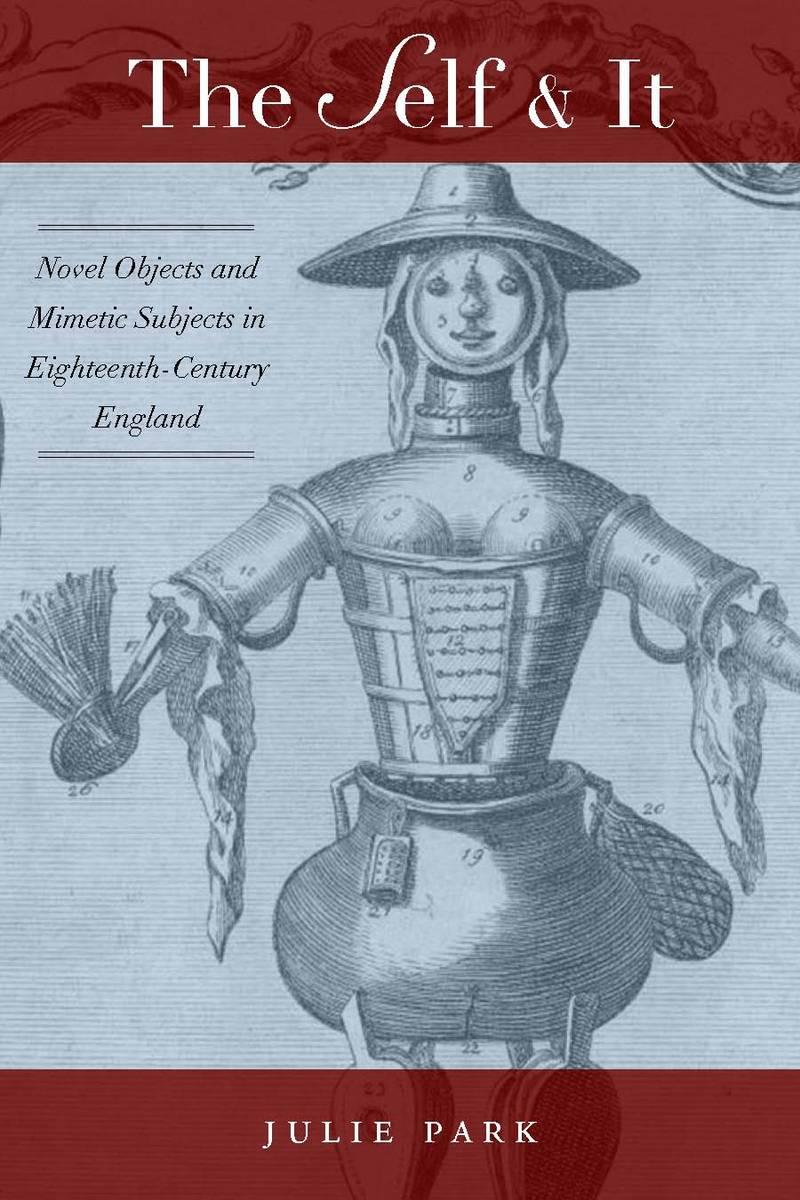
Objects we traditionally regard as "mere" imitations of the human—dolls, automata, puppets—proliferated in eighteenth-century England's rapidly expanding market culture. During the same period, there arose a literary genre called "the novel" that turned the experience of life into a narrated object of psychological plausibility. Park makes a bold intervention in histories of the rise of the novel by arguing that the material objects abounding in eighteenth-century England's consumer markets worked in conjunction with the novel, itself a commodity fetish, as vital tools for fashioning the modern self. As it constructs a history for the psychology of objects, The Self and It revises a story that others have viewed as originating later: in an age of Enlightenment, things have the power to move, affect people's lives, and most of all, enable a fictional genre of selfhood. The book demonstrates just how much the modern psyche—and its thrilling projections of "artificial life"—derive from the formation of the early novel, and the reciprocal activity between made things and invented identities that underlie it.
Betaal eenvoudig met kaart, Klarna, Apple Pay of Google Pay. Niet tevreden? Je hebt altijd 14 dagen bedenktijd. Lees meer in onze voorwaarden. Heb je vragen, mail ons dan via hello@memmo.org.
Memmo maakt studeren makkelijker – waar je ook bent ter wereld. Wij brengen je cursusboeken en slimme studietools samen op één plek: samenvattingen, quizzen, podcasts en flashcards. En Ted, je studievriend die antwoord geeft op alles wat je je afvraagt. Meer dan 50.000 studenten studeren hier al – gebouwd om je sneller te laten leren en minder stress te geven.