
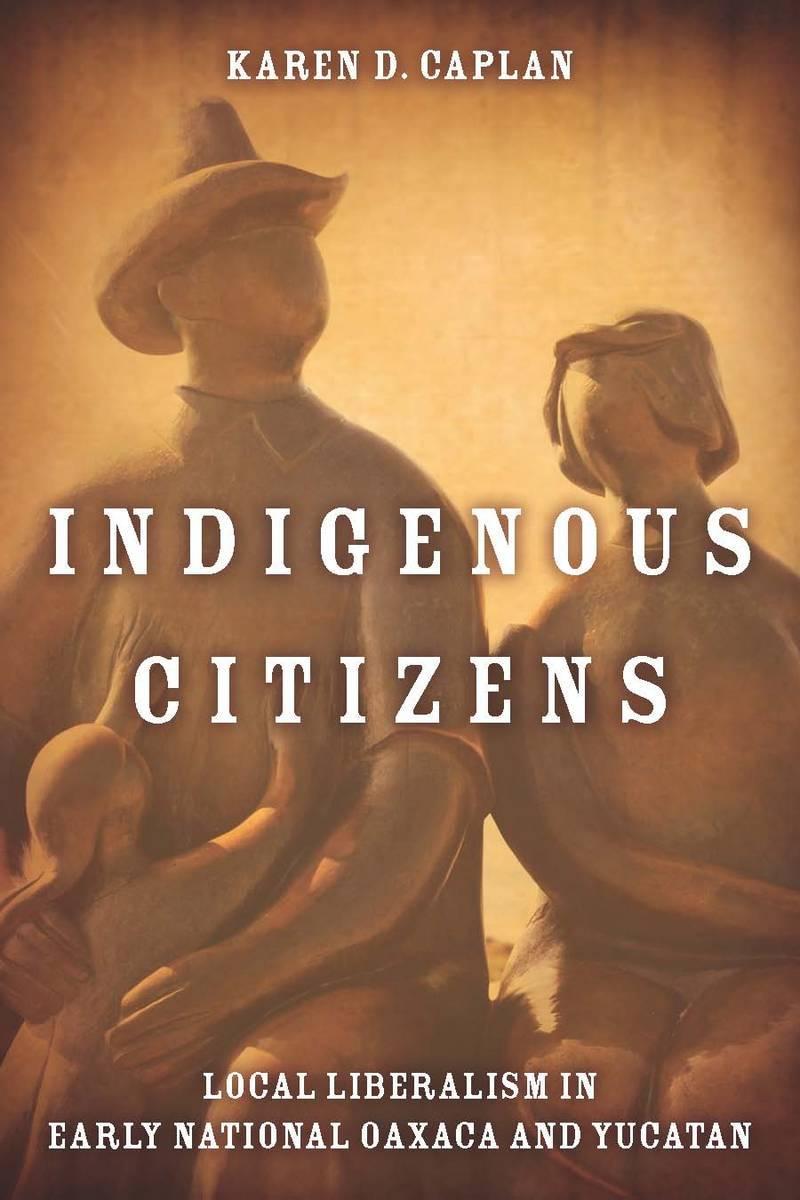
Indigenous Citizens challenges the commonly held assumption that early nineteenth-century Mexican state-building was a failure of liberalism. By comparing the experiences of two Mexican states, Oaxaca and Yucatán, Caplan shows how the institutions and ideas associated with liberalism became deeply entrenched in Mexico's regions, but only on locally acceptable terms.
Faced with the common challenge of incorporating new institutions into political life, Mexicans—be they indigenous villagers, government officials, or local elites—negotiated ways to make those institutions compatible with a range of local interests. Although Oaxaca and Yucatán both had large indigenous majorities, the local liberalisms they constructed incorporated indigenous people differently as citizens. As a result, Oaxaca experienced relative social peace throughout this era, while Yucatán exploded with indigenous rebellion beginning in 1847.
This book puts the interaction between local and national liberalisms at the center of the narrative of Mexico's nineteenth century. It suggests that "liberalism" must be understood not as an overarching system imposed on the Mexican nation but rather as a set of guiding assumptions and institutions that Mexicans put to use in locally specific ways.
Betaal eenvoudig met kaart, Klarna, Apple Pay of Google Pay. Niet tevreden? Je hebt altijd 14 dagen bedenktijd. Lees meer in onze voorwaarden. Heb je vragen, mail ons dan via hello@memmo.org.
Memmo maakt studeren makkelijker – waar je ook bent ter wereld. Wij brengen je cursusboeken en slimme studietools samen op één plek: samenvattingen, quizzen, podcasts en flashcards. En Ted, je studievriend die antwoord geeft op alles wat je je afvraagt. Meer dan 50.000 studenten studeren hier al – gebouwd om je sneller te laten leren en minder stress te geven.