
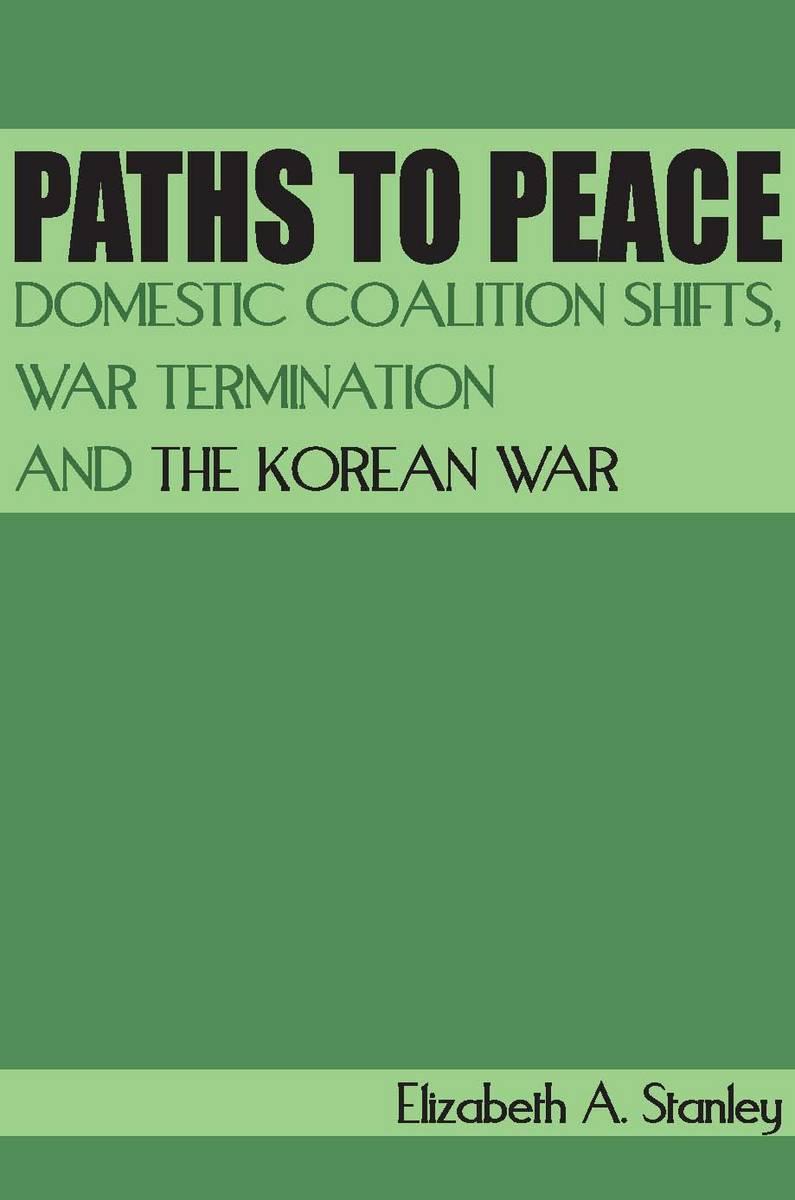
Paths to Peace begins by developing a theory about the domestic obstacles to making peace and the role played by shifts in states' governing coalitions in overcoming these obstacles. In particular, it explains how the longer the war, the harder it is to end, because domestic obstacles to peace become institutionalized over time. Next, it tests this theory with a mixed methods approach—through historical case studies and quantitative statistical analysis. Finally, it applies the theory to an in-depth analysis of the ending of the Korean War. By analyzing the domestic politics of the war's major combatants—the Soviet Union, the United States, China, and North and South Korea—it explains why the final armistice terms accepted in July 1953 were little different from those proposed at the start of negotiations in July 1951, some 294,000 additional battle-deaths later.
Betaal eenvoudig met kaart, Klarna, Apple Pay of Google Pay. Niet tevreden? Je hebt altijd 14 dagen bedenktijd. Lees meer in onze voorwaarden. Heb je vragen, mail ons dan via hello@memmo.org.
Memmo maakt studeren makkelijker – waar je ook bent ter wereld. Wij brengen je cursusboeken en slimme studietools samen op één plek: samenvattingen, quizzen, podcasts en flashcards. En Ted, je studievriend die antwoord geeft op alles wat je je afvraagt. Meer dan 50.000 studenten studeren hier al – gebouwd om je sneller te laten leren en minder stress te geven.