
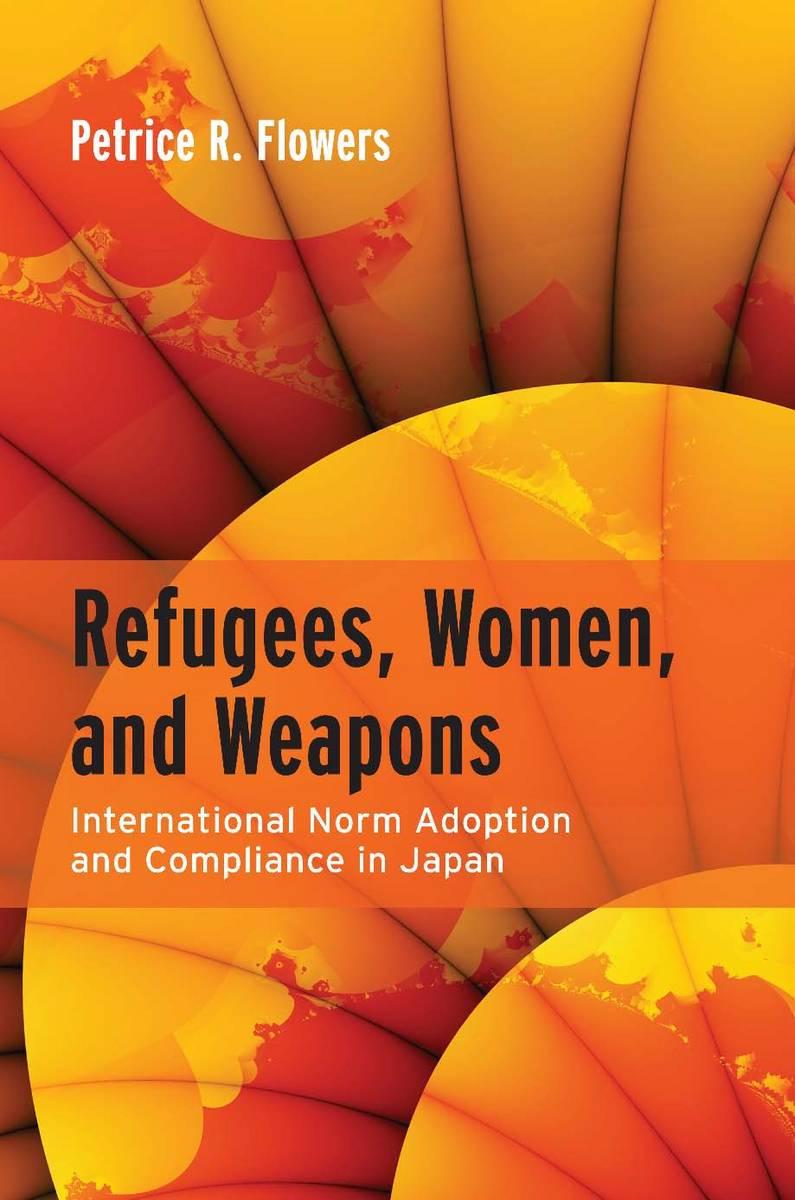
In a world dominated by considerations of material and security threats, Japan provides a fascinating case for why, and under what conditions, a state would choose to adopt international norms and laws that are seemingly in direct conflict with its domestic norms. Approaching compliance from within a constructivist framework, author Petrice R. Flowers analyzes three treaties—addressing refugee policy, women's employment, and the use of land mines—that Japan has adopted. Refugees, Women, and Weapons probes how international relations and domestic politics both play a role in constructing state identity, and how state identity in turn influences compliance.
Flowers argues that, although state desire for legitimacy is a key factor in norm adoption, to achieve anything other than a low level of compliance requires strong domestic advocacy. She offers a comprehensive theoretical model that tests the explanatory power of two understudied factors: the strength of nonstate actors and the degree to which international and domestic norms conflict. Flowers evaluates how these factors, typically studied and analyzed individually, interact and affect one another.
Betaal eenvoudig met kaart, Klarna, Apple Pay of Google Pay. Niet tevreden? Je hebt altijd 14 dagen bedenktijd. Lees meer in onze voorwaarden. Heb je vragen, mail ons dan via hello@memmo.org.
Memmo maakt studeren makkelijker – waar je ook bent ter wereld. Wij brengen je cursusboeken en slimme studietools samen op één plek: samenvattingen, quizzen, podcasts en flashcards. En Ted, je studievriend die antwoord geeft op alles wat je je afvraagt. Meer dan 50.000 studenten studeren hier al – gebouwd om je sneller te laten leren en minder stress te geven.