
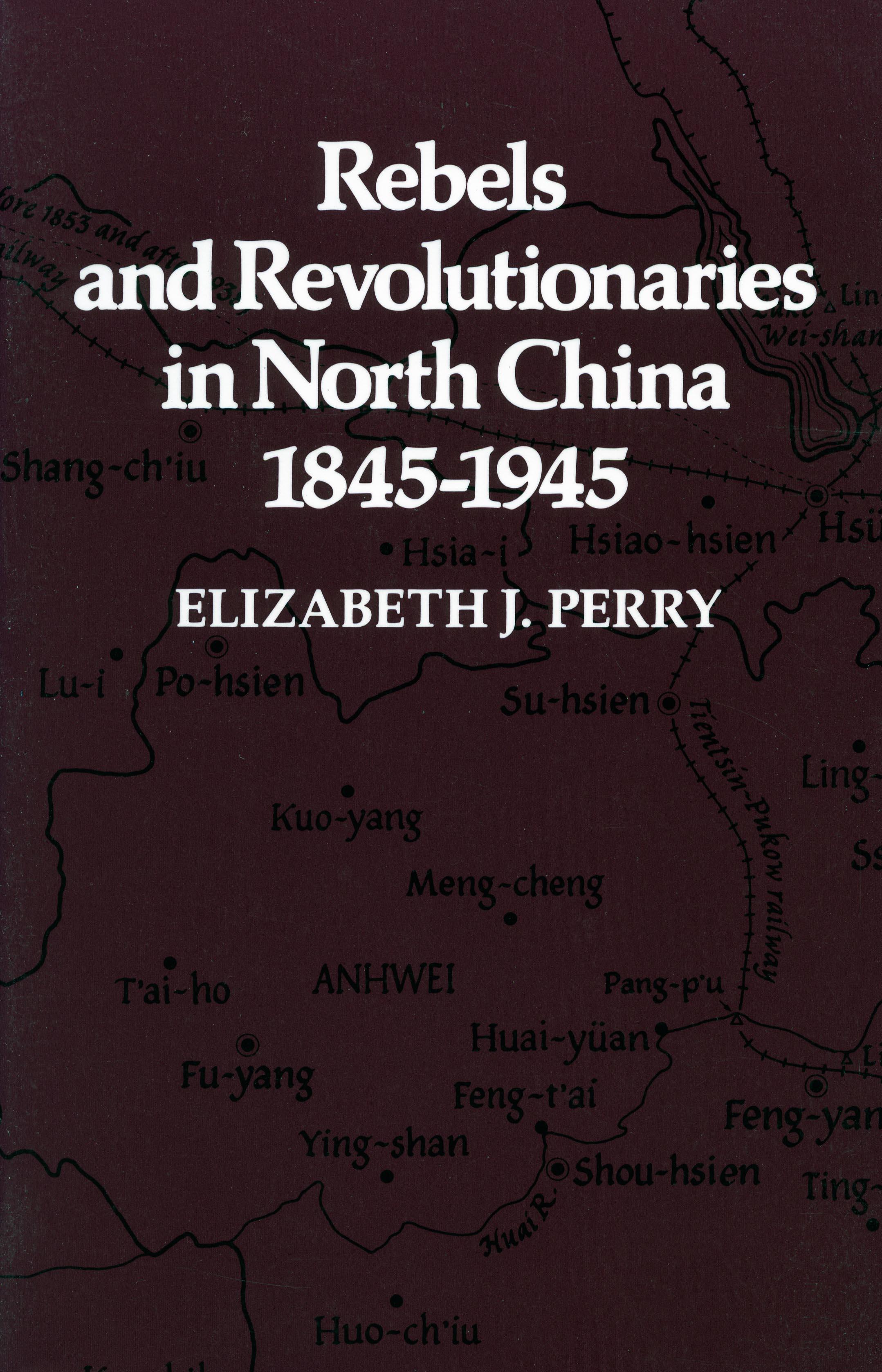
Why do peasants rebel? In particular, why do some peasants rebel and not others? Starting from the fact that only in certain geographical areas does rebellion seem to recur persistently, the author examines three notable rebel movements in one such area in China: Huaipei, a region of poor soil and unstable weather bounded by the Huai and Yellow (Huang He) rivers.
The Nien rebels of the 1850s and 1860s and the Red Spear Society of the Republican era are described as representing traditional forms of violent competition for scarce economic resources. The Nien were essentially "predatory," using violence as a way of obtaining food and other necessities; the Red Spears essentially "protective," concerned to defend peasant homes and property against bandits, warlord armies, and state efforts at taxation. The communist movement of the 1930s and 1940s, by contrast, looked beyond these traditional patterns to a national social revolution that would render local rebellions unnecessary.
The author throws new light on the role of secret societies in peasant protest, and offers a new interpretation of the relationship between rebellion and revolution.
Pagina's: 340
Categorie: Historia
e-ISBN: 9780804766524
Verzendgewicht: 1.2 kg
Verzending binnen: 1-2 dagen
Betaal eenvoudig met kaart, Klarna, Apple Pay of Google Pay. Niet tevreden? Je hebt altijd 14 dagen bedenktijd. Lees meer in onze voorwaarden. Heb je vragen, mail ons dan via hello@memmo.org.
Memmo maakt studeren makkelijker – waar je ook bent ter wereld. Wij brengen je cursusboeken en slimme studietools samen op één plek: samenvattingen, quizzen, podcasts en flashcards. En Ted, je studievriend die antwoord geeft op alles wat je je afvraagt. Meer dan 50.000 studenten studeren hier al – gebouwd om je sneller te laten leren en minder stress te geven.
Misschien vind je dit ook leuk
Koop het boek0