
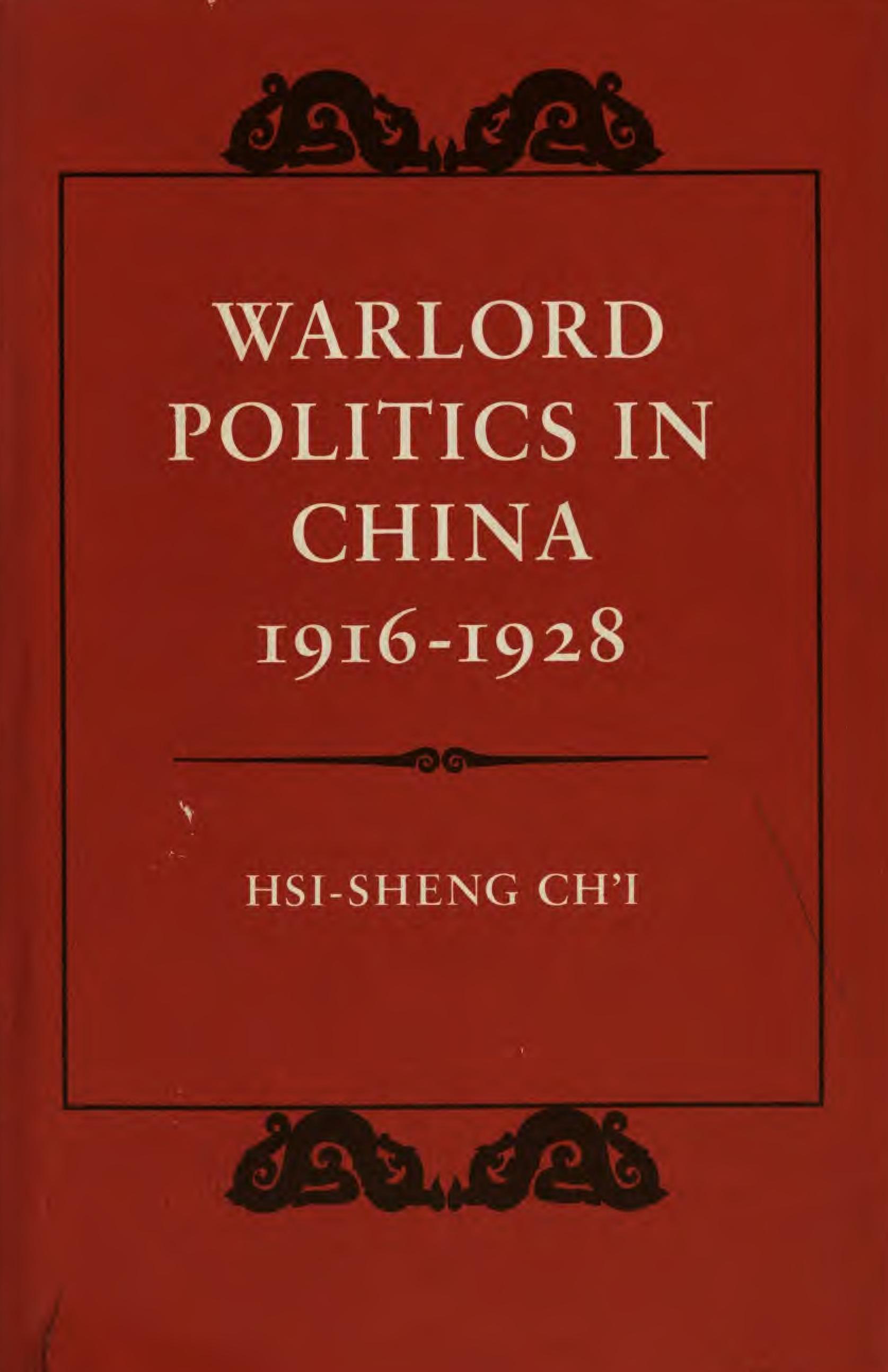
The first comprehensive analytical treatment of warlordism in twentieth-century China, this book approaches regional militarism as a generic phenomenon of Chinese politics in the most complex and chaotic era of recent Chinese history.
After describing the emergence of militarist regimes after the death of Yuan Shih-k'ai in 1916, the author analyzes their membership, goals, capabilities, and sources of cohesion, in the process presenting new information on their organization, methods of recruitment, quality of training, types of weapons, tactical and strategic concepts, and means of financing. On the strength of this information, he offers a convincing explanation I balance-of-power terms for the baffling advances, retreats, clashes, and changes of allegiance that have puzzled students of the era.
His analysis makes clear how the leading warlords viewed the state, themselves, and each other. A concluding chapter presents an explanation based on systems theory for the Kuomintang's triumph over the warlords who had sought to confine its domain to Kwangtung.
Included as appendixes are a chronology of events and lists of national leaders and provincial military authorities from 1916 to 1928.
Betaal eenvoudig met kaart, Klarna, Apple Pay of Google Pay. Niet tevreden? Je hebt altijd 14 dagen bedenktijd. Lees meer in onze voorwaarden. Heb je vragen, mail ons dan via hello@memmo.org.
Memmo maakt studeren makkelijker – waar je ook bent ter wereld. Wij brengen je cursusboeken en slimme studietools samen op één plek: samenvattingen, quizzen, podcasts en flashcards. En Ted, je studievriend die antwoord geeft op alles wat je je afvraagt. Meer dan 50.000 studenten studeren hier al – gebouwd om je sneller te laten leren en minder stress te geven.
Misschien vind je dit ook leuk
Koop het boek0