
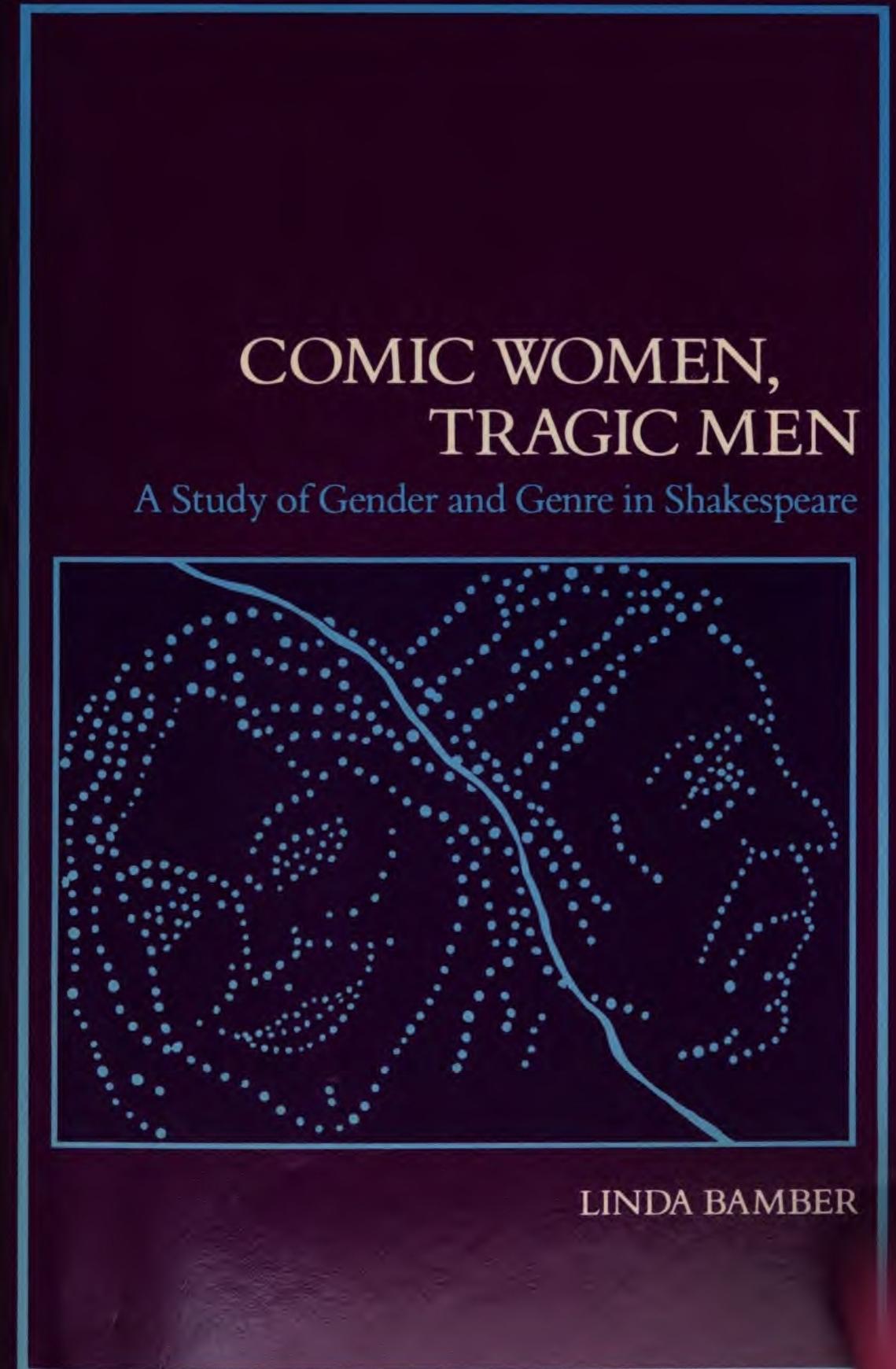
This book proceeds from the assumption that Shakespeare, so often perceived as the one writer who appears to have transcended the limits of gender, inevitably writes from the perspective of his own gender. From this perspective, whatever represents the Self is necessarily male; and the Other, which challenges the Self, is female. The author's approach gives us a fresh understanding of both Shakespeare's characters and the structure of the plays. The author defines genre in terms of the nature of the challenge offered by the Other to the Self. Using specific plays and characters of Shakespeare, the author shows how in tragedy the Other betrays or appears to betray the Self; in comedy the Other evades the social hierarchies dominated by versions of the male Self; in romance the Other comes and goes, leaving the Self bereft when she is gone and astounding him with happiness when she reappears. History is defined as a genre in which the masculine heroes confront no challenge from the Other but only from each other, from other versions of the Self. The book consists of a long theoretical introduction followed by chapters on comedy, history, and some individual plays: Hamlet, Antony and Cleopatra, Macbeth, Coriolanus, and The Tempest.
Betaal eenvoudig met kaart, Klarna, Apple Pay of Google Pay. Niet tevreden? Je hebt altijd 14 dagen bedenktijd. Lees meer in onze voorwaarden. Heb je vragen, mail ons dan via hello@memmo.org.
Memmo maakt studeren makkelijker – waar je ook bent ter wereld. Wij brengen je cursusboeken en slimme studietools samen op één plek: samenvattingen, quizzen, podcasts en flashcards. En Ted, je studievriend die antwoord geeft op alles wat je je afvraagt. Meer dan 50.000 studenten studeren hier al – gebouwd om je sneller te laten leren en minder stress te geven.
Misschien vind je dit ook leuk
Koop het boek0