
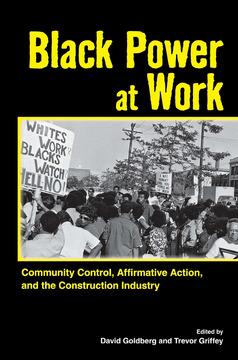
Black Power at Work chronicles the history of direct action campaigns to open up the construction industry to black workers in the 1960s and 1970s. The book's case studies of local movements in Brooklyn, Newark, the Bay Area, Detroit, Chicago, and Seattle show how struggles against racism in the construction industry shaped the emergence of Black Power politics outside the U.S. South. In the process, "community control" of the construction industry—especially government War on Poverty and post-rebellion urban reconstruction projects— became central to community organizing for black economic self-determination and political autonomy.
The history of Black Power's community organizing tradition shines a light on more recent debates about job training and placement for unemployed, underemployed, and underrepresented workers. Politicians responded to Black Power protests at federal construction projects by creating modern affirmative action and minority set-aside programs in the late 1960s and early 1970s, but these programs relied on "voluntary" compliance by contractors and unions, government enforcement was inadequate, and they were not connected to jobs programs. Forty years later, the struggle to have construction jobs serve as a pathway out of poverty for inner city residents remains an unfinished part of the struggle for racial justice and labor union reform in the United States.
Betaal eenvoudig met kaart, Klarna, Apple Pay of Google Pay. Niet tevreden? Je hebt altijd 14 dagen bedenktijd. Lees meer in onze voorwaarden. Heb je vragen, mail ons dan via hello@memmo.org.
Memmo maakt studeren makkelijker – waar je ook bent ter wereld. Wij brengen je cursusboeken en slimme studietools samen op één plek: samenvattingen, quizzen, podcasts en flashcards. En Ted, je studievriend die antwoord geeft op alles wat je je afvraagt. Meer dan 50.000 studenten studeren hier al – gebouwd om je sneller te laten leren en minder stress te geven.