
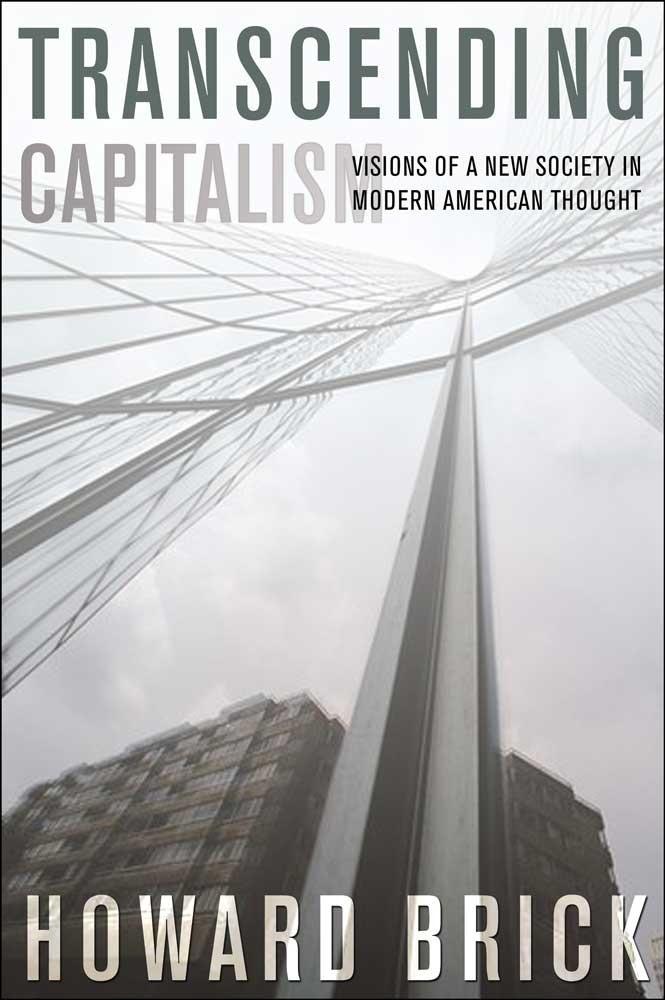
In Transcending Capitalism, Howard Brick explains why many influential midcentury American social theorists came to believe it was no longer meaningful to describe modern Western society as "capitalist," but instead preferred alternative terms such as "postcapitalist," "postindustrial," or "technological." Considering the discussion today of capitalism and its global triumph, it is important to understand why a prior generation of social theorists imagined the future of advanced societies not in a fixed capitalist form but in some course of development leading beyond capitalism.
Brick locates this postcapitalist vision within a long history of social theory and ideology. He challenges the common view that American thought and culture utterly succumbed in the 1940s to a conservative cold war consensus that put aside the reform ideology and social theory of the early twentieth century. Rather, expectations of the shift to a new social economy persisted and cannot be disregarded as one of the elements contributing to the revival of dissenting thought and practice in the 1960s.
Rooted in a politics of social liberalism, this vision held influence for roughly a half century, from its interwar origins until the right turn in American political culture during the 1970s and 1980s. In offering a historically based understanding of American postcapitalist thought, Brick also presents some current possibilities for reinvigorating critical social thought that explores transitional developments beyond capitalism.
Betaal eenvoudig met kaart, Klarna, Apple Pay of Google Pay. Niet tevreden? Je hebt altijd 14 dagen bedenktijd. Lees meer in onze voorwaarden. Heb je vragen, mail ons dan via hello@memmo.org.
Memmo maakt studeren makkelijker – waar je ook bent ter wereld. Wij brengen je cursusboeken en slimme studietools samen op één plek: samenvattingen, quizzen, podcasts en flashcards. En Ted, je studievriend die antwoord geeft op alles wat je je afvraagt. Meer dan 50.000 studenten studeren hier al – gebouwd om je sneller te laten leren en minder stress te geven.